


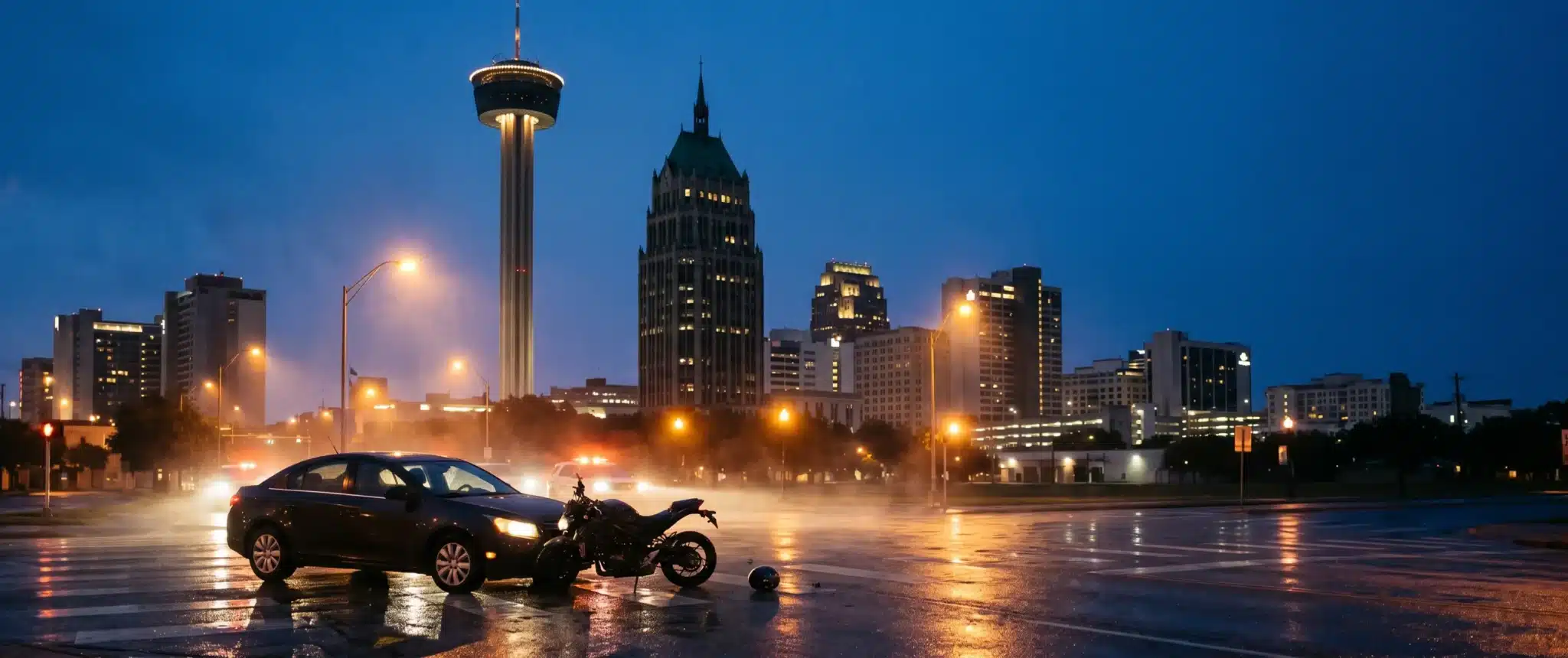
San Antonio Motorcycle Accident Lawyers
Built for the Bexar County fight.
Do I really need a San Antonio motorcycle accident lawyer?
Riders start every claim behind. The insurance company assumes you were speeding, and jurors picture the bike, not the driver who never looked. Our managing litigation attorney spent over a decade on the insurance defense side, so he knows how that bias gets built into a claim. We use that to take it apart.
Where do most San Antonio motorcycle crashes happen?
San Antonio lost 28 motorcyclists in 2025, and Bexar is one of the highest-volume counties in Texas for motorcycle crashes. They cluster on the same roads, again and again.
Interchange merges, left turns
High merge speeds meet cars turning across traffic; a driver who never sees the bike turns left, and the rider has nowhere to go.
The fast North Side stack
High speeds, frequent ramps, and lane changes put riders and distracted drivers together at the worst angles.
The Medical Center corridor
Busy stop and go traffic with constant turns into driveways is where riders get cut off and rear ended.
The Hill Country weekend run
Blind curves, gravel, and drivers who do not expect a motorcycle make these scenic roads dangerous.
West Side high speed merges
A rider in a lane change blind spot is invisible to a driver who only checks for cars.
One of the busiest crash roads
I-35 through San Antonio carries heavy commuter and truck traffic; CRIS data puts it among the top roads for motorcycle crashes.
We tie the specific road, signal timing, and sight lines to how your wreck happened, because a jury believes the road it can picture.
TxDOT CRIS data shows Loop 410, I-35, and I-10 carry the most San Antonio motorcycle crashes. Source: Texas Department of Transportation, Crash Records Information System (CRIS), 2025 preliminary, retrieved June 14, 2026.Why do insurers blame the rider?
It is the same story every time: the rider was reckless, so the rider is to blame. We name it early and take it apart with the evidence. Here is how it shows up, and how we answer it.
“The rider was speeding”
Speed gets assumed, not proven; the scene, the damage, and a reconstruction show the real number.
“I never saw the motorcycle”
That is not a defense; it is the admission. Failing to yield to a visible rider is the driver’s fault.
“He wasn’t wearing a helmet”
In Texas a legal rider’s helmet choice does not hand the driver a free pass; the focus stays on the crash.
“Bikers weave through traffic”
We separate the stereotype from your actual riding, backed by witnesses and any video.
“He chose a dangerous hobby”
Riding legally is not assuming the risk of someone else’s negligence.
“He could have avoided it”
The insurance company stacks small fault percentages on the rider to shrink the payout, so we fight every point.
The goal is simple: make the case turn on what the driver did, not on assumptions about people who ride.
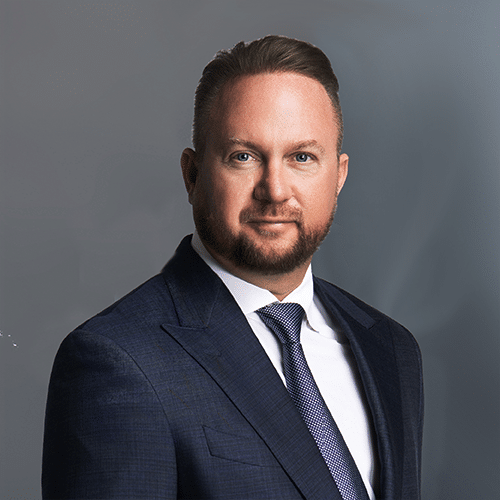
I do not pretend riders are perfect. I make the case turn on what the other driver did, because that is where the facts live, and that is where we keep the jury.
Josh Alexander · Founder & Managing Attorney
Does not wearing a helmet ruin my claim?
Usually no. A legal choice not to wear one does not erase the driver’s responsibility for the crash.
“No helmet means no case.”
Riders assume going without a helmet hands the insurer a complete defense.
Adults can legally ride without one.
Under § 661.003, a rider 21 or older may go without a helmet with an approved safety course or qualifying health coverage; under 21 must wear one. It does not make you at fault for a driver running a light.
“They’ll blame my injuries on it.”
Riders fear the insurance company will pin everything on the missing helmet and pay nothing.
They try; we keep it on cause.
We tie your injuries to the crash with the records and keep the case on the driver’s conduct. Their negligence is still their negligence.
Can I still get money if I was partly at fault?
Usually yes. Texas reduces your recovery by your fault percentage instead of erasing it (§ 33.001).
The limit is the 51% rule: more than 50% at fault and you recover nothing, which is why insurers push to inflate a rider’s share. Drag the slider.
At 20% at fault, your 20% share comes off the top; you keep $80,000 of the example.
Illustration only. More than 50% at fault bars recovery (§ 33.001). Real values depend on your facts.
The insurance company hangs a fault number on you before any real evidence is in, because every point comes off your check. Texas decides fault on the facts, not on a stereotype. Do not accept their number as final.
Josh Alexander · Founder & Managing Attorney
What is my motorcycle case worth?
There is no honest single number. It tracks your injuries, bills, lost income, the fault split, and the coverage available.
These are general severity tiers, not a promise about your case. Past results do not guarantee a similar outcome.
What we can help you recover
A fair number is built from these pieces, and from the policy limits available.
Past and future care: ER, surgery, grafts, therapy, and what comes next.
Wages missed while you heal, plus reduced earning power going forward.
Pain, scarring, and limits on what you can do the way you used to.
Your fault share reduces the award; the driver’s policy, your UM/UIM, and any commercial policy all matter.
What kind of results does J. Alexander Law get?
We will not post a motorcycle number we cannot tie to a real outcome. Here is what we stand behind today.
See all verdicts & settlements →Past results do not guarantee a similar outcome. “Millions recovered” reflects firm-wide recoveries across multiple matters, not a single or motorcycle-specific case.
You survived the road. Now the fight begins.
We carry the claim, the calls, the records, and the insurance company, so you can put your energy into healing.
What will the insurance company do first?
USAA is headquartered here, and with State Farm, Allstate, and Progressive it is on a lot of these crashes. The early moves are predictable.
Talk to a lawyer before any recorded statement. A friendly insurance company is still the other side.
The fast, friendly call
The recorded statement exists to lock you into words they can use later. You are not required to give it.
The early, low offer
Cash it and sign the release, and the claim is closed for good, even if you need more surgery next month.
The helmet and gear angle
Questions about your helmet, gear, and riding history are groundwork to shift blame onto the rider.
Watching your social media
One photo gets twisted to argue you were not really hurt. Stay off social media while your claim is open.
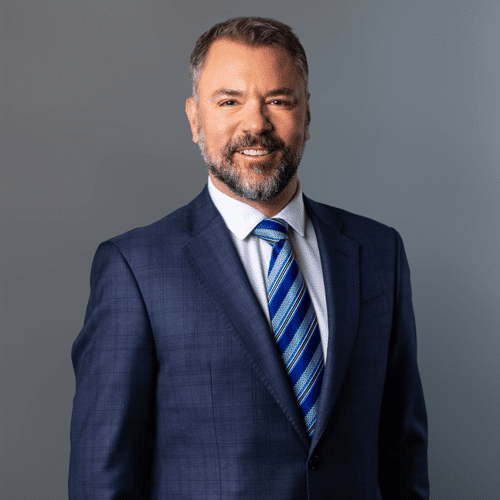
I spent over a decade telling insurance companies how to value and cut these claims. I know the first move and the lowball, because I built them. Now I use that knowledge for you.
Matthew Graham · Managing Litigation Attorney · Former insurance defense director
What should I do right after a motorcycle crash?
Get medical care, photograph the scene, say little to the insurance company, and call a lawyer fast. The scene, gear, and witnesses fade quickly.
Do not let the tow yard scrap your bike, and keep your damaged helmet and gear; they are evidence.
Get medical care right away
A record from the day of the crash ties your injuries to it; gaps in treatment are the top thing insurers use against you.
Document the scene and driver
Photograph the vehicles, road, and signals, get the driver and witness info, then pull the crash report (CR-3 via TxDOT).
Keep the bike, helmet, and gear
Do not repair or scrap anything; it shows the force involved and helps an expert reconstruct the crash.
Say little, stay offline
Do not admit fault, guess at injuries, or give the other insurer a recorded statement. One post can be used against you.
Know the deadlines
Generally two years to file (§ 16.003); a government vehicle can mean a much shorter notice deadline, so confirm yours.
Don’t sign too soon
Have a lawyer read any offer first, before you know how many policies, including your own UM/UIM, are in play.
How will you build my motorcycle accident case?
We move first: preserve the bike and gear, work the scene, pull the report, build the medical timeline, and bring in experts.
Lock down the evidence
Preserve the bike, helmet, and gear, and secure any nearby camera footage before it is gone.
Document road and witnesses
Measurements, signal timing, sight lines, and witness names from 911 and dispatch records.
Pull the CR-3 and the data
The crash report and any vehicle event data recorder can contradict the driver’s story.
Take apart “I never saw him”
Sight lines, lighting, and human factors show the driver failed to look.
Assemble the damages record
The full treatment record and future care needs, so the demand reflects the real cost.
Prepare every case for trial
Carriers pay more when they know a firm is genuinely ready to try it.
The experts a serious case calls on
When the facts call for it, we bring in the right specialists.
Rebuilds the crash from the evidence and the vehicle data to establish speed.
Shows the driver had time and line of sight to see the rider and yield.
Treating physicians and neuropsychologists who document the injury and prognosis.
Prices future care and lost earning capacity for a catastrophic injury.
Who will actually handle my case?
You reach an attorney, not a call center. Bilingual, available 24/7, and paid only if we recover.
Meet the team →
My job is to make sure the case turns on what the other driver did, not on the fact that you were on a bike. You do not pay me a dollar unless I win.
Josh Alexander · Founder & Managing Attorney · U.S. Marine Corps veteran
Directed insurance defense across a 10-state region; he knows how carriers dispute these claims because he ran that side.
- Former insurance defense director, 10-state region
- 25+ years of civil trial experience
- Licensed in TX, OK, NM & CO
- Texas Bar No. 24027186
Marine Corps veteran and trial lawyer who has recovered millions for injured Texans.
- Super Lawyers Rising Stars, 2022 to 2026
- Multi-Million Dollar Advocates, lifetime member
- U.S. Marine Corps veteran
- Texas Bar No. 24086984
A San Antonio native focused on motor vehicle crashes, catastrophic injury, and wrongful death.
- Motor vehicle & injury litigation
- J.D. with Honors, St. Mary’s Law
- Bilingual; English & Español
- Texas Bar No. 24096510
What do San Antonio riders ask us most?
Straight answers for Texas and Bexar County. A free review tells you how they apply to you.
How long do I have to file in San Antonio?
Does not wearing a helmet hurt my claim?
Can I recover if I was partly at fault?
What if the driver had no insurance?
How much does a lawyer cost?
How is a motorcycle case different?
Is lane splitting legal in Texas?
The insurer is blaming me. What now?
Free case review. No fee unless we recover.
San Antonio, TX 78249
You pay nothing unless we win. We advance the case costs and get paid out of the recovery.