


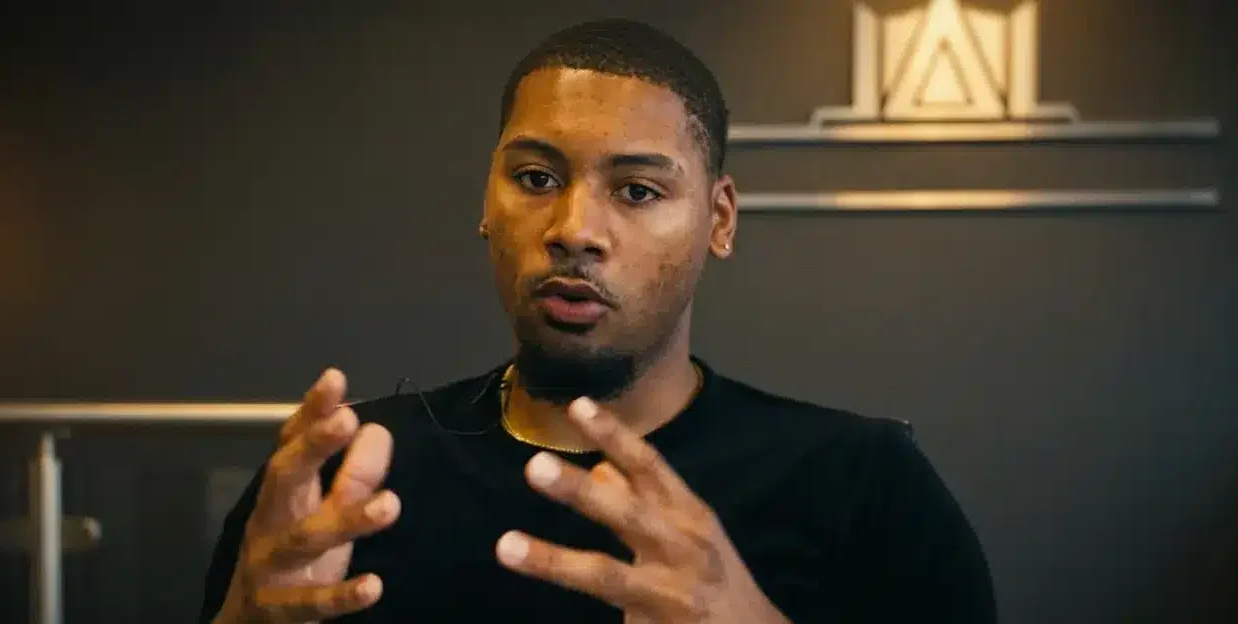
Josh was walking to his car late at night when a drunk driver hit him and the person beside him and pinned them both. He did nothing but walk, and he still ended up in a hospital with back injuries and a claim he never asked for.
J. Alexander Law, a Dallas personal injury law firm minutes up Central Expressway from downtown, serving all of Texas, ran the second one for Josh.
A pedestrian hit by a drunk driver can sue in Texas: the criminal case punishes them, the civil case pays you
A pedestrian hit by a drunk driver has a civil claim that is completely separate from the criminal case: the criminal case punishes the driver, and the civil claim pays you for medical bills, lost income, and pain and suffering. Texas also allows exemplary damages, punishment money, against drunk drivers, and a bar that over served the driver can be held responsible under the Texas Dram Shop Act.
Two things in that answer surprise people who call us after being hit while walking: the driver being drunk changes what the case is worth, and the driver may not be the only one who owes you. Josh’s case shows how both play out.
“A drunk driver hit us and pinned us”: Josh’s pedestrian accident case
In his own words: “We were walking to our car. It was pretty late at night and a drunk driver hit us and pinned us… it was pretty bad.” He and the person with him went to the hospital that night, and Josh came away with injuries to his back.
He was not in a vehicle, so nothing absorbed the impact but him: the exact exposure that makes the late night walk back to a parked car, on a downtown Dallas street or anywhere else, the most dangerous minute of a night out. Josh’s story is more common than it feels: Texas sees more traffic deaths than any other state, alcohol is a factor in a large share of them, and a person on foot has no protection at all, which is why the dense run of bars from downtown Dallas to Deep Ellum and the long walk back to a parked car make being hit while walking a foreseeable risk, not a freak one. He handed the case to J. Alexander Law, the same firm behind our pedestrian accident lawyers team, and treated his injuries while the firm ran the claim.
He did nothing but walk. Texas law makes that count for him, not against him.
Josh’s story already holds the three things a strong claim needs: a driver who chose to drink and drive, a victim with no fault of his own, and a hospital record from the same night. What follows is how those pieces turn into a case.
A person on foot has nothing to absorb a car but their own body, so pedestrian injuries tend to be severe and lasting, from broken legs and hips to spinal injuries and traumatic brain injury, and the more serious the injury the more your claim is worth; our Dallas catastrophic injury lawyers page covers those injuries and what they cost in depth.
Three pockets, one crash: who pays when a drunk driver hits a pedestrian in Texas
An ordinary crash usually has one source of recovery, and when the driver was drunk and the victim was on foot, Texas law can open up to three. Our Dallas team’s job is opening all of them.
| Source | What it pays for | What has to be proven |
|---|---|---|
| The driver’s insurance | Medical bills, lost income, and pain and suffering: the compensatory damages that cover your losses | Ordinary negligence, and since driving while intoxicated breaks the law, the DWI can prove it as negligence per se, meaning the violation itself counts as negligence |
| Exemplary damages | Punishment money awarded on top of compensation, meant to punish and deter | Gross negligence: the driver knew the risk and drove anyway, which intoxication classically shows |
| The bar that over served them | A separate claim under the Texas Dram Shop Act, adding another policy to the recovery pool | That the provider served someone obviously intoxicated, and that this caused the crash |
There is one more source, and it is your own: uninsured and underinsured motorist coverage, often written as UM/UIM. If the drunk driver has no insurance, or carries only minimum limits that fall short of your medical bills, your own auto policy’s UM/UIM coverage can step in and pay, and in Texas it protects you even when you were walking rather than driving. That is why we look at every policy within reach, because the coverage that finally makes you whole is not always the one you expect.
The recorded statement is their sharpest tool, because asking exactly where you were crossing builds a proportionate responsibility file. Every admission of jaywalking, dark clothing, or distraction raises your fault percentage, every point of fault cuts your compensatory damages, and past 50 percent you recover nothing.
Whether suing a drunk driver is worth it comes down to cost, and on a contingency fee talking to a lawyer first costs nothing, which removes the only reason to face that adversary alone. From the day one is hired, every insurer conversation runs through counsel instead of you.
A drunk driver can owe more than your losses: Texas allows punishment money on top of your compensation
Texas allows exemplary damages, punishment money on top of your compensation, when the driver showed gross negligence: they knew the risk and drove anyway. Driving drunk is the classic example courts recognize, and hitting a pedestrian makes the disregard even harder to argue away. Getting there runs as a chain, from the floor of your losses up to the punishment layer.
- The floor: compensatory damages. These cover your losses, split into economic damages (hospital bills, lost income, future care) and noneconomic damages (pain and suffering). Texas juries award both, and in pedestrian cases the pain and suffering layer carries real weight because nothing stood between you and the car.
- The record that proves the rest: the DWI arrest record. The police report, the officer’s field sobriety observations, and the toxicology findings all come out of the criminal case, and your civil claim is what puts that record to work for you.
- The number it turns on: blood alcohol content. Texas sets the intoxication line at a BAC of 0.08 percent. A reading of 0.15 percent, nearly twice the limit, is direct evidence the driver knew a serious risk and took it anyway, the conscious indifference gross negligence requires.
- The unlock: exemplary damages. The BAC proves gross negligence, and gross negligence adds punishment money on top of your compensatory recovery. It has to be proven, not promised, by clear and convincing evidence.
- The step people miss: the record does not move itself. Your lawyer pulls the arrest record, the BAC reading and officer notes included, through records requests and court ordered records requests (subpoenas), then puts it to work proving the punishment money layer.
Walking outside a crosswalk does not sink your claim: Texas only reduces it by your share of the blame
You can still recover. Texas uses proportionate responsibility: your recovery is reduced only by your share of the blame, and you are barred only if you were more than half at fault. A jury weighing a drunk driver against a person walking to their car rarely puts the pedestrian anywhere near that line.
Texas actually splits the right of way by where you cross. In a marked or unmarked crosswalk, drivers must yield to you under Transportation Code section 552.002. Crossing outside a crosswalk, you are the one who must yield to traffic under section 552.005. But even then the driver is not off the hook, because section 552.008 requires every driver to exercise due care to avoid hitting a pedestrian, to sound the horn when needed, and to take extra caution around any person who is obviously confused or incapacitated. A drunk driver, by definition, cannot exercise that care, which is why intoxication keeps the blame on the driver even when the pedestrian was struck outside a crosswalk.
Insurers love to hint that a pedestrian outside a crosswalk gets nothing, and it is not true, whether you were crossing a downtown Dallas street or a suburban parking lot. Josh was simply walking, and his claim ran on the driver’s choice, not his location.
When a pedestrian is killed: the wrongful death claim the family holds
Pedestrian crashes are the ones most likely to end in death, because a person on foot has nothing between them and the car, and when a drunk driver is the cause the loss is both devastating and preventable. When a pedestrian is killed, the civil claim does not die with them; it passes to the family. Under the Texas Wrongful Death Act, the spouse, the children, and the parents of the person who was killed can bring a claim, and a separate survival claim belongs to the estate for what the victim endured before death.
A wrongful death claim recovers different losses than an injury claim: the family’s lost financial support, the lost love, companionship, and guidance, their mental anguish, and funeral and burial costs, while the survival claim adds the victim’s own conscious pain and final medical bills. Because a drunk driver’s choice is exactly the kind of gross negligence Texas punishes, the exemplary damages described above apply to a fatal pedestrian crash too, often more forcefully. These are the hardest cases we handle and among the most serious a family can face; our Texas wrongful death lawyers page walks through who can file and what the claim is worth.
When the drunk driver flees: a hit and run pedestrian claim can still pay
A drunk driver who hits a pedestrian often runs, and it can feel like the case is over before it starts. It is not. Even in a hit and run, when the driver is never found or turns out to have no insurance, your own auto policy’s uninsured motorist coverage can pay for the same medical bills, lost income, and pain and suffering, and in Texas that coverage protects you even though you were on foot. Fleeing also rarely works: police pull nearby camera and doorbell footage, canvass for witnesses, and match vehicle debris left at the scene, and a driver who runs from an injured pedestrian faces far more serious criminal charges for leaving. The sooner someone sends preservation letters for that footage, the more of it survives, which is one more reason not to wait. And leaning on your own uninsured motorist coverage should not raise your rates, because Texas bars an insurer from surcharging you for a crash you did not cause, which a pedestrian struck by a drunk driver almost never is.
What a pedestrian drunk driver claim is worth: severe injuries and punishment money push it higher
There is no flat average, but a pedestrian claim tends to run higher than an ordinary crash for two reasons that meet in one case here: the injuries are usually severe, and a drunk driver’s gross negligence can add exemplary damages on top of your losses. A person on foot absorbs the full force of the car, so these cases involve broken bones, spinal injuries, and traumatic brain injury far more often than a fender bender does, and the more serious and lasting the injury, the larger the claim. Value turns on that severity, on how much insurance is within reach, and on whether a bar shares the blame. To see how those pieces become a number, read our guide to what a Texas claim is worth, and because the worst pedestrian injuries carry the largest claims, our Dallas catastrophic injury page covers those injuries and what a lifetime of care costs.
There is no average payout, because four things set the number in every pedestrian drunk driver case:
- The severity and permanence of the injury. A break that heals is worth a fraction of a spinal cord injury or a traumatic brain injury that changes your life for good.
- The insurance within reach. The driver’s liability policy, a bar’s commercial policy, and your own uninsured and underinsured motorist coverage can stack on top of one another.
- Whether a bar shares the blame. A Dram Shop claim opens a second, better funded source of recovery beyond the driver.
- The exemplary damages the drunk driving adds. Gross negligence puts punishment money on top of your losses, which an ordinary crash does not carry.
The first hours decide the case: what to do right after a drunk driver hits you
Get medical care the same night, even if you feel able to walk, because a record dated the night of the crash is what ties your injuries to it. After that, a few quick steps protect your claim while the proof is still there to gather. Here is the short version.
- Get medical care the same night. Even if you can walk away from the scene, a record dated that night links your injuries to the crash and is hard for an insurer to wave off later.
- Keep the crash report. It holds the officer’s notes on the driver’s intoxication and on fault, and it feeds straight into your civil claim.
- Skip the recorded statement. The driver’s insurer may call within days asking exactly where you were; you are not required to give a recorded statement, and it usually exists to build a fault file against you.
- Call a lawyer quickly. Bar and traffic camera footage that can prove a Dram Shop claim often overwrites within 24 to 72 hours, so the sooner someone sends preservation letters, the more of it survives.
Moving fast here is not about panic. It is about locking down evidence before it vanishes, and before an adjuster shapes the story without you.
From the day you call to the day it settles
Most drunk driver cases resolve through a settlement long before a courtroom, but the work behind that settlement runs in phases.
- Investigation and preservation. In the first days we send preservation letters, pull the crash report and DWI arrest record, and take over every call from the insurer so you can focus on treating.
- Treatment and building the file. While you finish medical care we build the file, because the demand we send is only as strong as the injuries and BAC evidence backing it.
- Demand and negotiation. Then comes negotiation, where the compensatory case we built decides how much leverage we have.
- Suit, only if needed. If the insurer will not pay fair value we file suit inside the two year deadline. Filing does not mean a trial, it means we are ready for one, and that readiness is usually what moves the number.
Inside a pedestrian drunk driver case, from the lawyer who runs them

The first thing I tell pedestrian victims is what this page is built on: the state’s case and your case are not the same case, and only yours pays you.
The criminal case hands us the evidence for yours, but someone has to go get it: the arrest report, the sobriety results, the blood draw. That record is how we prove the driver knew the risk and drove anyway, which opens up the punishment money.
I also ask where the driver was drinking, because a Dram Shop claim against a bar that kept serving an obviously drunk patron adds a second, better funded source: the bar’s commercial insurance, which matters most when the driver carries only minimum coverage. That claim turns on camera footage that overwrites within 24 to 72 hours, so we send preservation letters to the bars and traffic authorities fast, before the footage that beats their Safe Harbor defense is gone. The full Dram Shop claim is on our Dallas drunk driving accident lawyers page.
And a word of restraint: exemplary damages are proven, not promised. The clients who do best are the ones whose lawyer built the compensatory case so thoroughly that everything above it stands on solid ground.
Matthew Graham leads the litigation team at J. Alexander Law, where he focuses on car and serious injury cases across Dallas and the rest of Texas.
The driver’s arrest does not pay you: your money comes from a separate civil claim
The criminal case punishes the driver on behalf of the state; it does not pay your hospital bills, your missed work, or your recovery. Compensation comes from a separate civil claim against the driver’s insurer, and sometimes against a bar that over served them. If nobody starts that claim, nothing is coming, no matter the verdict.
It helps to see what the driver is actually facing on the criminal side, and why none of it lands in your pocket. A first drunk driving offense is a misdemeanor carrying a fine, possible jail, and a license suspension. The moment a pedestrian is seriously hurt, the charge can climb to intoxication assault, a felony, and if the pedestrian is killed it becomes intoxication manslaughter, a second degree felony. Those charges can send the driver to prison, but prison is punishment, not payment; the state keeps any fine, and your losses are recovered only through the civil claim running alongside it.
People wait months for the criminal verdict believing a check is at the end of it, and there is not one. Josh never made that mistake: his claim ran while the state ran its case.
Two years, one deadline: the clock to sue a drunk driver in Texas
In Texas you generally have two years from the date of the crash to file your civil claim against a drunk driver. That clock runs on its own, apart from the criminal case, so it keeps ticking while the state prosecutes the DWI, and waiting for a criminal verdict can quietly burn through your window. If those two years pass with no claim on file, the court can bar you from recovering anything at all, no matter how clear the driver’s fault was.
How Josh’s case ended: “they do very good business here”
The staff answered every question and kept him informed at each step. He puts the result plainly:
“They were very intentional about getting my case done. They didn’t take more than what they gave me. I recommend J. Alexander Law to any friends, any family who’ve been involved in accidents.”
Josh · Verified client
Reflects Josh’s individual case. Every case is different.
Josh is an entrepreneur, someone who watches how people do business for a living. His verdict on ours, “they do very good business here,” is the report card we work for.
What it cost him up front: nothing
Josh paid nothing up front, because cases like his run on a contingency fee: the firm is paid only out of what it wins for you, typically 33 to 40 percent of the final recovery in Texas. No win, no fee.
The fee is a percentage of the total recovery, including any exemplary damages a gross negligence finding adds. Our incentive points one direction: the full value of your case, not the fast discount an insurer hopes you’ll take.
Hit by a drunk driver while walking? Their DWI isn’t your compensation.
If a drunk driver hit you while you were walking in downtown Dallas, the suburbs, or anywhere in Texas, the state will handle the punishment, and someone has to handle you. The consultation is free, the case runs on contingency with no fee unless we win, and if pain showed up after the crash, our free Car Accident Injury Checker helps you put words to your symptoms before your first appointment.
Talk to a Dallas drunk driving accident lawyer today.
Call 469-807-7480 or contact us online. Se habla español.