


You’ve been in an accident, then the other driver walks over, says the words that make your stomach drop: they don’t have insurance. Morgan heard a version of it after another driver slammed into her at a North Dallas intersection and spun her car into a pole. She was told the entire cost would land on her. It did not. This entry in the J. Alexander Law Injury Log shows exactly who pays when you are hit by an uninsured driver in Texas, and how to make sure it is not you.
Someone other than you usually pays after an uninsured driver crash
Three sources can pay: your own uninsured motorist (UM/UIM) coverage, other coverage on your own policy like PIP or collision, or the driver personally. In Texas, insurers must include UM/UIM in every auto policy unless you reject it in writing. Most people find out they had it all along.
Morgan’s story, in her own words
Watch ▶
“It was going to be all on me”: Morgan’s uninsured driver crash
Morgan was driving to her morning workout through North Dallas, where Coit, Preston, and Forest Lane funnel commuters toward Central Expressway. She was going straight, almost under the light at the last intersection before the gym, when something came fast out of the corner of her eye. The next thing she knew her car had spun off the road into an electrical pole and stopped facing oncoming traffic.
Her airbags deployed and the seat belt burned her shoulder. Bystanders from the gas station on the corner ran over, called 911, called her mom, and helped her out through the passenger side because her own door would not open.
She felt okay at first. That night her neck started to hurt, and the emergency room scans showed multiple herniations in her back. She works two jobs on her feet, retail and hospitality, and the pain followed her to both, that kind of interference with work counts as lost income right alongside the medical bills.
Then came the second hit. The driver who caused all of it had no insurance.
“I’ve never had this happen before, where someone hadn’t had insurance to cover it. I was told it was going to be all on me. That’s a lot of money. That car was paid off.”
Morgan · Verified client
This review reflects one client’s individual experience. Past results do not guarantee a similar outcome.
A neighbor handed Morgan’s family a card for J. Alexander Law, the personal injury firm whose Dallas office sits on North Central Expressway, a few minutes from where crashes like hers happen every day.
The three places the money can come from in Texas
When the at-fault driver has nothing, the search moves to coverage you control. In order of how often they actually pay, here are the three sources.
Who pays after an uninsured driver crash Texas auto policies
Texas auto policies
| Source | What it can cover | The catch |
|---|---|---|
| Your UM/UIM coverage | Medical bills, lost wages, pain, and vehicle damage caused by an uninsured driver | You claim against your own insurer, and they can still fight you the way the other side would |
| Other coverage on your policy | PIP or MedPay for medical bills and some lost income, collision for the car | Pays regardless of fault, but limits are usually small |
| The driver personally | A lawsuit and a judgment against them | A driver who could not afford insurance often has nothing to collect, so this is the last resort |
Those sources pay for a few categories of loss. Medical bills cover treatment already paid and the future care your injury still needs. Lost income covers the wages you missed and any drop in what you can earn going forward, the way Morgan’s car crash affected both her jobs. Pain and suffering covers the physical and emotional toll on your daily life. Vehicle damage covers the car itself, usually through collision coverage rather than UM. PIP and MedPay sit alongside all of it, paying medical bills, with PIP also replacing some lost wages, regardless of who caused the crash, which usually makes them the fastest money in the file.
Fault decides which source pays, so start with the point people get backwards: an uninsured driver is not automatically at fault, because carrying no insurance is a paperwork failure while fault turns on who actually caused the crash. Texas uses modified comparative fault, so you can still recover if you were 50 percent or less responsible, with your award reduced by your share; at 51 percent or more you recover nothing. That bar applies whether you claim against your own UM coverage or sue the driver directly, because once you open a UM claim your own insurer steps into the uninsured driver’s shoes and can argue your share of blame the way a defense lawyer would. So never volunteer at the scene. State the facts and let the evidence assign responsibility. And yes, that third row is real: you can sue an uninsured driver personally in Texas, but someone who could not afford insurance usually cannot pay a judgment, which is why the coverage hunt comes first.
When the other driver had insurance, just not enough
Uninsured motorist coverage (UM) pays when the driver who hit you had no policy at all. Underinsured motorist coverage (UIM), the other half of the same coverage, pays when they have insurance but not enough to cover what they cost you. Both live on your own auto policy.
The arithmetic is what makes UIM matter. Texas sets its minimum limits at 30,000 per injured person, 60,000 per crash, and 25,000 for property damage, the amount a driver carries unless they paid for more. Say the driver who hit you carried that 30,000 minimum and your medical bills and lost wages come to 80,000. Their insurer pays up to 30,000, your UIM steps in for the difference above it up to your own UIM limit, and the per-person figure caps what any single claimant can collect. Without UIM, the gap between what they carried and what you lost is the part that lands on you.
Every UM and UIM coverage carries a dollar limit which is the most that source can pay no matter how large your losses, and it sits on the “declarations” page of your policy, which is why reading that page is the first step in any claim. Stacking is what happens when more than one policy in your household carries UM: depending on how the policies are written, those limits can sometimes be added together for a higher ceiling, so it pays to read every household declaration page, not just your own.
Knowing where the coverage stops matters as much as knowing you have it. UM will not pay a dollar above your limit. It generally will not repair your own vehicle, because that is collision coverage’s job, a separate bucket on the same policy. It typically will not apply if you were hurt committing a crime, if the vehicle was in an excluded commercial use, or if the driver who hit you is a family member already listed on your policy, and punitive damages usually fall outside it too.
Texas adds uninsured motorist coverage to every auto policy unless you rejected it in writing
There’s a high chance this applies to you, Texas law requires insurers to include UM/UIM coverage in every auto policy unless you reject it in writing. If no one can produce a signed rejection form, the coverage is likely on your policy. Many people learn this for the first time after a crash.
This is the single most important thing to check before you accept that the loss is yours. Agents quote policies to win on price, and UM/UIM sometimes gets dropped along the way, but dropping it requires your signature. People reject it for a few reasons: to shave the premium, or on the mistaken assumption that their health insurance or collision coverage fills the same gap, which it does not in the same way. The waiver only counts if you signed it, so if you do not remember signing one, the coverage is probably still on your policy.
Free policy check
Not sure whether you have UM coverage? Send us the declarations page of your auto policy and we will read it for you, free, no strings. Call 469-807-7480 or send it through the case review form linked at the bottom of this page.
When the driver never stopped: how UM covers a hit and run
Your uninsured motorist coverage also pays when the driver who hit you fled and was never identified, because Texas treats a hit and run the same as a driver who carried no policy. The one thing that changes is proof. With no insurer on the far side to confirm the crash, you have to show that a second vehicle was actually involved, and that proof usually comes from the police report, the physical damage on your car, or an independent witness. Report the hit and run to police promptly, because a timely report is often the single thing that makes the claim payable, and before anyone leaves the scene photograph the damage and get the name and number of every witness you can.
A clean UM claim should not raise your rates
Using your own uninsured motorist coverage is not the same as causing a crash, and a legitimate claim where you were not at fault should not raise your premium. In Texas an insurer cannot lawfully surcharge you for a crash you did not cause, because that claim belongs on the no-fault side of your record. If a renewal notice ever treats a clean UM claim as chargeable, that is a billing error worth disputing, not a reason to walk away from coverage you already paid for.
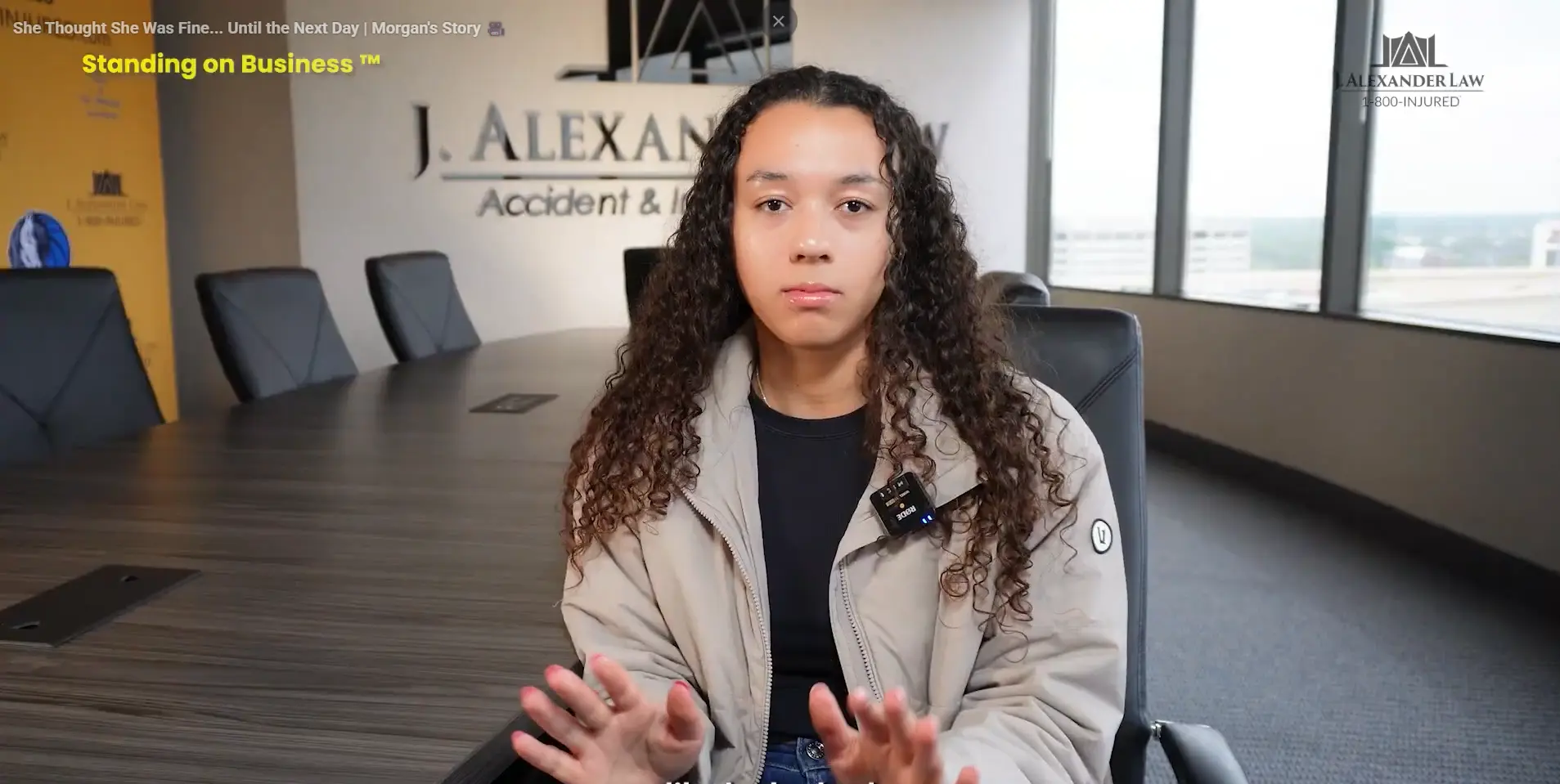
One phone call got Morgan’s claim resolved and paid for her car
Morgan did one thing. She made one call, gave her statement once, and we took care of the rest. The free case review is where the work in this log began: the firm verified the other driver’s insurance status in writing, pulled her policy file, and mapped what her claim would need.
“I gave my statement once and I feel like they just took it from there. I just felt like a weight was lifted off my shoulders when I wasn’t the one having to talk to the insurance or having to go through all these hoops to get things done.”
Morgan · Verified client
This review reflects one client’s individual experience. Past results do not guarantee a similar outcome.
The firm handled all insurance communication, kept her treatment on track, and updated her at each stage so the quiet stretches never turned into panic. An uninsured motorist’s claim takes months, not weeks; verification, the coverage hunt, treatment, and negotiation each take their turn, and what made the wait bearable is that she always knew which stage her case was in.
The crash that was supposed to be all on her ended with her claim resolved and money in her pocket toward a replacement vehicle.
Inside an uninsured motorist claim, from the lawyer who runs them

When a client tells me the other driver had no insurance, I refuse to take it at face value. Drivers say they are uninsured when their policy lapsed last week and reinstated yesterday, so we verify it directly, in writing, before we plan anything else.
Then I ran what I call the coverage hunt, and a decade on the insurer side taught me where coverage hides. We pull the client’s full policy file, not just the ID card, and look for UM, UIM, PIP, MedPay, and collision. We check whether the written rejection form actually exists, because in Texas the coverage is in the policy unless someone signed it away. We read every auto policy in the household, because UM coverage on a family member’s policy can sometimes apply, and if the client was driving for work we look at the employer’s coverage too.
Here is the part that surprises people. Once we find UM coverage, the fight is not over. Your own insurer steps into the shoes of the uninsured driver and evaluates you the way a defense team would. An uninsured motorist claim gets denied or lowballed for the same reasons any claim does: gaps in treatment, thin documentation, an unverified crash story. So we build the file the way I would have feared on the other side, every line of the demand tracing to a document, because the coverage hunt tells us what can pay, but the documentation, the medical records, the bills, the injury photos, the police report, and the pay stubs and employer letters that prove lost income, decides how much of it does. Texas already put the coverage on most policies; the documentation is what unlocks it.
The pattern I trust after all these years is simple. The clients who get paid in uninsured driver cases are almost never the ones with the loudest argument. They are the ones whose lawyer found coverage no one else thought to look for.
Matthew Graham leads the litigation team at J. Alexander Law. Before joining the plaintiff’s side, he directed insurance litigation for a 10 state region of one of the nation’s largest auto insurers, which is why the firm’s uninsured and underinsured motorist claim work starts with the very tactics insurers use, turned around.
❦
How a Texas uninsured motorist claim actually gets filed
An uninsured motorist claim moves through a fixed sequence, and each step sets up the one after it. Here is the order the firm works it in.
- Confirm the driver was truly uninsuredGet it in writing, because a policy that lapsed one week can be reinstated the next and quietly change the answer.
- Pull the full policy fileRead the declarations page for UM, UIM, PIP, MedPay, and collision coverage and the dollar limit on each.
- Notify your own insurerTell them in writing that you are making a UM claim, since the claim runs against your own policy.
- Treat your injuries and gather the proofKeep medical records and bills, injury photos, the police report, and pay stubs or an employer letter for lost income.
- Submit a demand, negotiate, and file if neededPut forward a demand where every figure traces to a document, negotiate, and file suit before the two-year deadline if it does not resolve.
The two-year deadline that applies even to a claim against your own insurer
Texas gives you two years from the date of the crash to file, under Texas Civil Practice and Remedies Code Section 16.003, and that deadline applies to an uninsured motorist claim against your own insurer exactly as it does to a suit against the at-fault driver. Because the claim runs on months rather than weeks and eats into that same window, the safest move is to start early and let a lawyer track the deadline while you focus on recovering. Once the window closes the right to recover is gone no matter how strong the file, and the closer it gets, the less the insurer fears trial and the weaker your negotiating position becomes.
If you were the uninsured driver, your options are different, not gone
This page is about being hit by an uninsured driver while you carried insurance. If you were the one driving without insurance when someone else hit you, your situation differs: you can still pursue the at-fault driver for your injuries, but you separately face fines and a possible license suspension for the lapse. It turns on its own facts, so call us at 469-807-7480 and we will tell you where you stand.
If an uninsured driver hit you in Texas, do not accept the loss as yours
If a driver with no insurance hit you in North Dallas or anywhere in Texas, do what Morgan did before you accept that the cost is yours. From Preston Hollow to Lake Highlands, our office on North Central Expressway handles these claims every week: we verify what coverage actually exists, then fight for it. A free case review costs nothing and carries no commitment, and the contingency fee means nothing upfront and nothing at all unless money is recovered.
24/7 · Free consultation · No fee unless we win
Talk to a Dallas uninsured motorist claim lawyer today.
Call 469-807-7480 or contact us online. Se habla español.