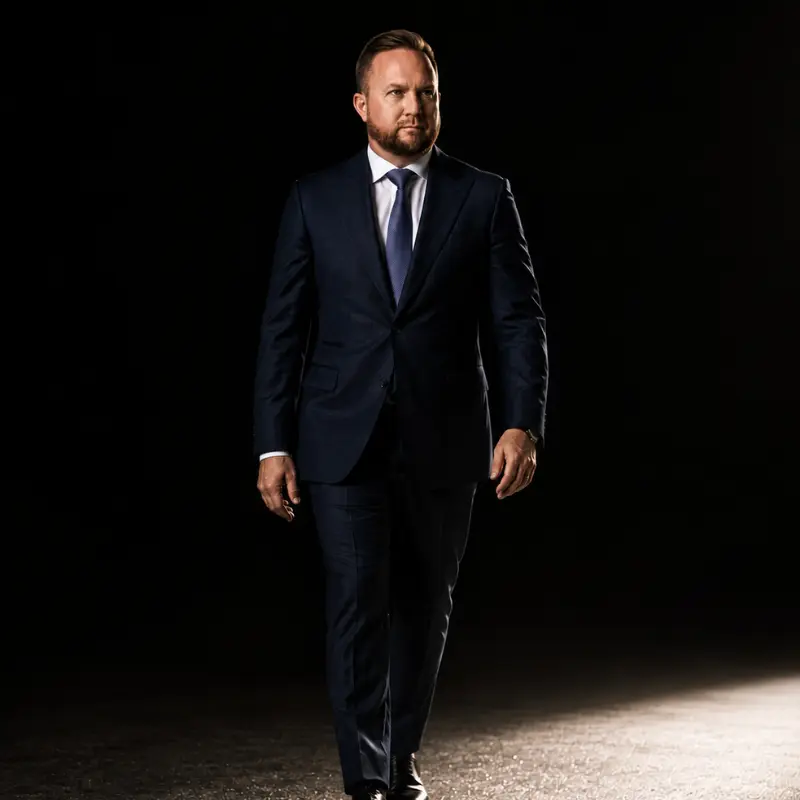
Reviewed by Josh Alexander, Founder & Managing Attorney | Updated
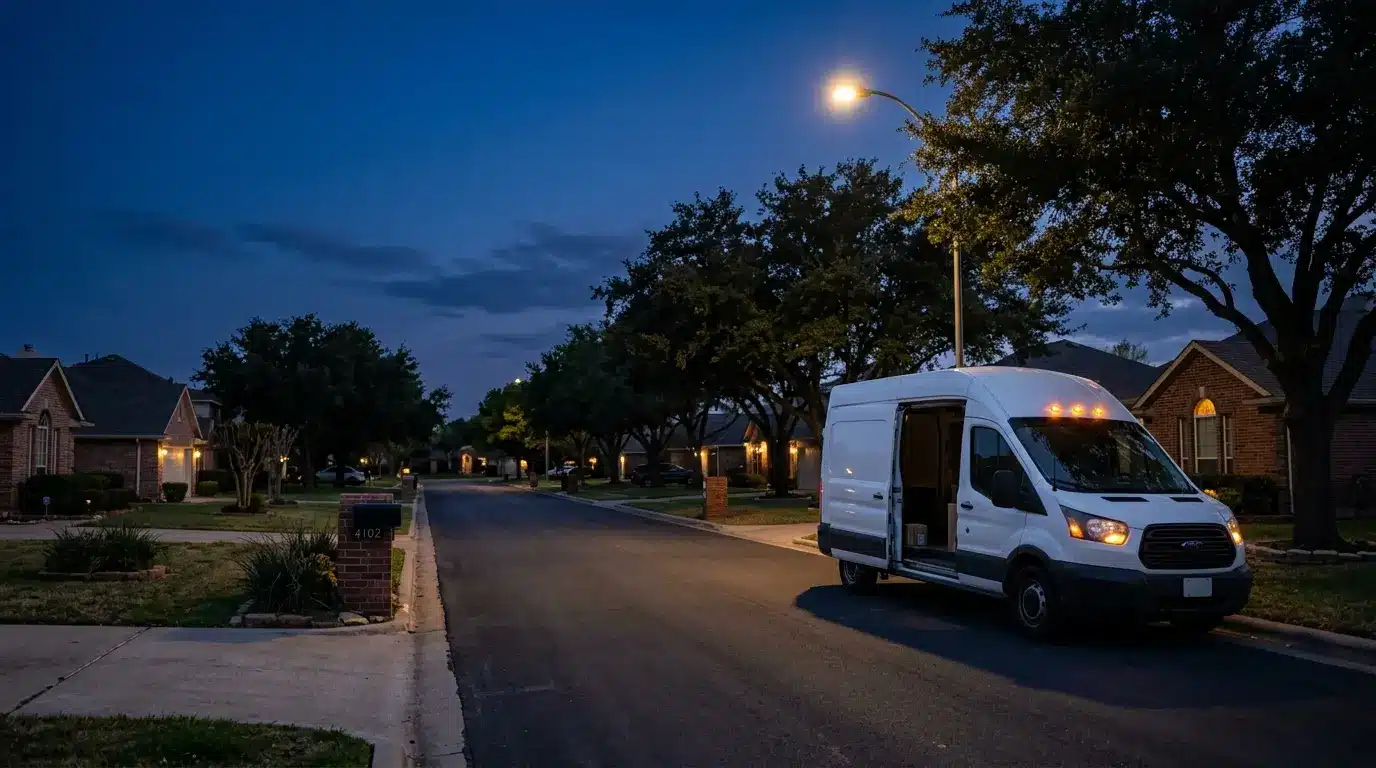
Hit by a delivery vehicle in Texas? The driver who hit you often works for a company you have never heard of, not the brand painted on the van. Our delivery truck accident lawyers find that company using the crash report, the fleet number, and the driver’s paperwork, because that company is the one that owes you money.
Reflects total client recoveries across hundreds of resolved matters. Past results do not guarantee a similar outcome.
The logo on the van is usually not who the driver works for.
An Amazon van is usually driven by a smaller company that Amazon hires to run its routes. A FedEx vehicle depends on which part of FedEx ran the route, while a UPS package driver normally does work for UPS. A mail truck is different again: that claim is federal and leaves Texas court entirely.
Why does that matter? Your claim goes against the company that employed the driver, not against the logo. Your two year deadline does not pause while you look for that company, so finding the name late means time wasted on the wrong defendant.
So finding the driver’s actual employer is our first job on every delivery claim. Further down this page, our company vehicle accident guide explains why an employer has to pay for its driver’s crash at all.
A delivery van claim in Texas carries a two year deadline to file suit.
You have two years from the date of the crash to file your lawsuit; that deadline comes from Texas Civil Practice and Remedies Code Sec. 16.003. We mark that date the week your file opens. Exceptions are narrow, so confirm your date with an attorney instead of assuming one covers you.
The second rule is shared fault. If part of the crash was your fault, the money you collect drops by that percentage, and you collect nothing if a jury puts your share above 50 percent, Sec. 33.001. For example: prove 100 dollars of loss at 20 percent fault, and you collect 80.
One warning: a mail truck follows neither rule. That claim goes against the federal government on federal deadlines, which are shorter in practice than the Texas deadline. Our Texas USPS mail truck accident lawyer page covers that claim start to finish.
Which delivery company hit you decides your case.
Each company hires its drivers differently, so each one is responsible for its drivers differently. Before we write anything, we use the crash report to confirm who employed the driver. That answer decides which company you name, which insurance pays, and where the claim is filed.
Amazon
Amazon usually hires a smaller local company, called a Delivery Service Partner, to run its routes. That smaller company owns the van and employs the driver, not Amazon. So your claim usually goes against that delivery company and the driver, not against Amazon itself.
UPS drivers work for UPS itself; there is no smaller company in between. So after a UPS truck wreck, you know who to claim against from day one. UPS is the one carrier where the logo and the employer match.
A mail truck crash is federal. The claim goes against the United States government on a federal form with federal deadlines, and no auto insurer is involved at any stage. It is the one delivery claim handled completely outside the Texas court system.
FedEx runs two systems: Ground routes have been driven by separate contractor companies, while FedEx Express used its own employee drivers. We find out which one ran your route from the paperwork, not from the logo on the truck. Until we check, nobody can say for sure which company you claim against.
A box truck or a smaller carrier works the same way: the first question is still who employed the driver. The difference is the weight, because a heavier vehicle leaves worse injuries and a larger claim. Tell us the logo and the date at 469-807-7480, and we identify the employer from the crash report before anyone files anything.
Who is liable after a delivery van crash?
Two parties are usually liable, not one. The first is the driver, for the way the van was driven. The second is the company the driver worked for, because Texas law makes an employer responsible when its driver causes a crash on the job; our company vehicle accident guide explains that rule.
Here is the catch with delivery vans: the employer is often not the brand on the van. Amazon, for example, pays smaller local companies to drive its routes. Those companies own the vans and pay the drivers, even though the van still says Amazon on the side.
That is why we confirm the right company before asking anyone for money. Send the claim to the wrong company, and it writes back a month later saying the driver was not theirs. You lost a month, and your two year deadline kept counting the whole time.
How we build your case
1Identify the employer. The CR 3 crash report lists who owns the van, and that name is often a company. We also write to the brand asking, in writing, who drove this route on this day.
2Send the preservation letter. We write to that company in the first week and put it on notice of its duty to keep the route data, the vehicle data, and any camera footage. The letter is dated and delivered, so no one can claim it was never asked.
3Open the claim and take the calls. We notify the insurer, open the file, and become the contact point. Adjusters call us instead of you, and you stop giving statements to a company paid to reduce what it pays.
An insurer you have never heard of called about your crash
Do not ignore that call; it is a clue. An insurance company only calls about the businesses it covers, so the company that caller represents is probably the company that actually ran the route, even if you never saw its name on the van.
Before you say anything else, write down three names: the insurance company, the adjuster who called, and the business they say they represent. Give those names to us, and we check them against the van owner listed on your crash report.
Do you have to give the insurer a recorded statement?
No. No law requires you to give the other side a recorded statement, and saying no politely does not hurt your claim.
Why do adjusters push for one so early? Because a recording made in week one locks in your story before slower injuries show up, and one wrong guess on tape can be used to raise your share of the blame. Decline, write down who called, and send the call to us; our guide on dealing with insurance companies in Texas explains the rest of their tactics.
We go after the delivery company’s insurance.
When a delivery van hits you, the other side of your claim is not a regular driver with a personal auto policy. The other side is a company, its commercial insurance policy, and adjusters who handle claims like yours every day. Sometimes two insurance companies even call about the same crash: one for the driver’s company and one for the brand.
Be careful with both callers, because anything you tell one insurer can reach the other. Write down every name, hand the list to us, and let the calls come to this office instead of your phone.
Early offers are low for a simple reason: the insurer builds the number from the bills that exist so far, and your future treatment is not in it. You do not have to accept an early offer, and you do not have to deal with the insurer alone.
The records inside the delivery van
Write down the crash time tonight
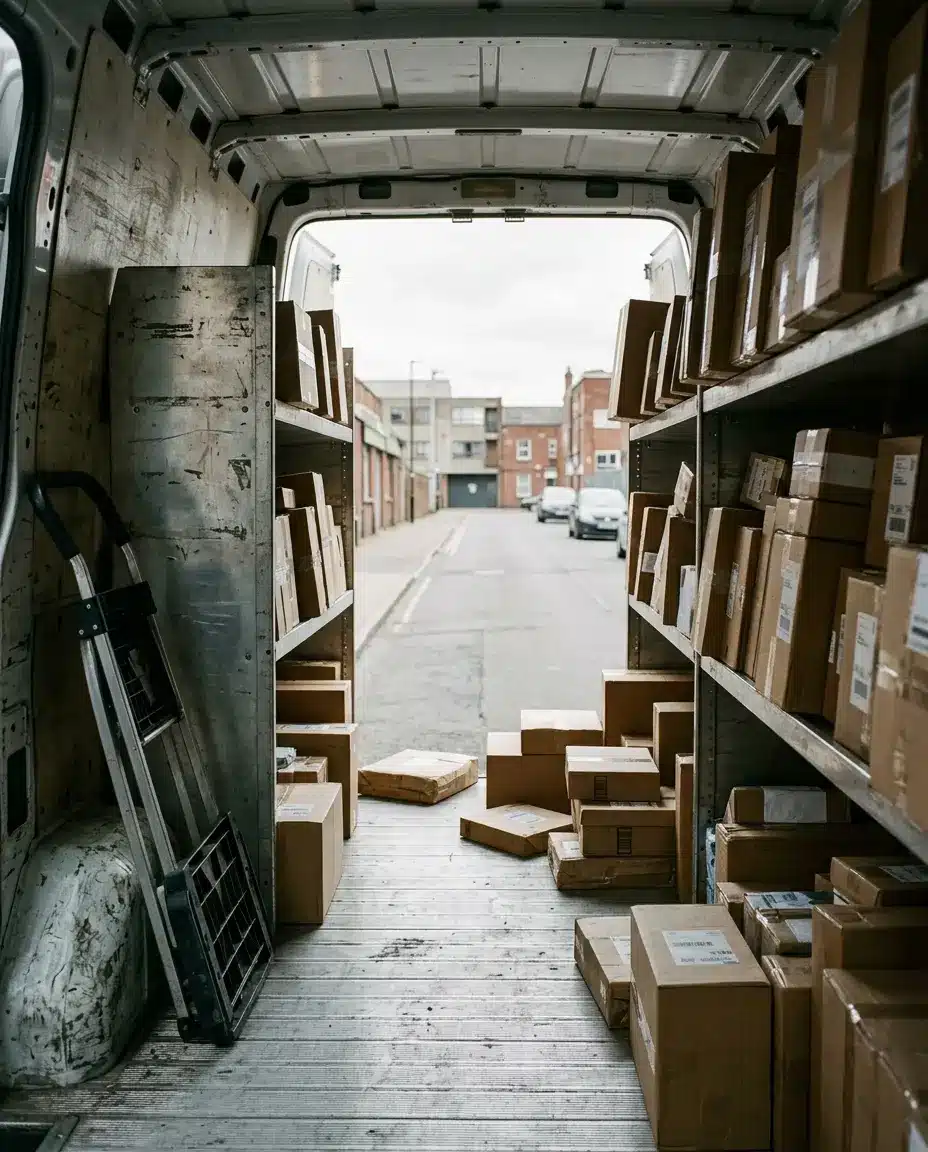
Delivery work is recorded stop by stop, and none of those records are kept forever. We match your crash time against those records to show where the van was and what it was doing. So write down the exact time tonight, down to the minute, before it fades.
Then see a doctor and keep every record. If you wait weeks for that first visit, the insurer will argue your injury came from something else. Our guide on what to do after a crash in Texas covers the rest of the first 48 hours.
Every package the driver scanned creates a time stamped stop. That shows where the van was, to the minute, and how rushed the whole shift was. If the records show too many stops and not enough time, we use that as evidence the company pushed the driver too hard.
The route manifest
The route manifest is the company’s planned list of stops, in order. It shows how many deliveries the company expected one driver to make that day. It is the company’s own record of what it asked of the driver.
Telematics and cameras
Many vans record speed, hard braking, and GPS location, and some carry cameras pointed in and out. That data can run right up to the second of the impact, so we request it in writing before it is recorded over or deleted.
Doorbell video and your photos
A simple doorbell clip can catch the van on your street and show how it was being driven. Save any clip and every witness phone number the same night, because a neighbor’s camera can record over its footage within days.
What you can recover.
After a delivery crash, Texas lets you claim money in four categories. What any single claim is worth depends on the injury, the medical record, and the proof of fault.
Medical expenses
Treatment already billed, plus future care your own doctor puts a written cost on. A guess written later does not count; the doctor’s estimate does.
Lost income
The pay you missed while you could not work, proved with pay stubs, plus future income lost if the injury changes what work you can do.
Property damage
Repair or replacement of your wrecked vehicle and the personal property damaged inside it, including a rental for the time yours is unavailable.
Losses with no invoice
Physical pain, mental anguish, disfigurement, and physical impairment never arrive as a bill, so they have to be recorded in your medical chart. Tell the doctor at every visit what you can no longer do.
“Open a folder today and put everything in it: the tow bill, each receipt, each missed shift, the pharmacy printout. Months from now, when we sit down to draft your demand, that folder is what we build it from. Whatever isn’t in there is money the carrier never has to pay.”
Josh Alexander
Founder & Managing Attorney
Marine Corps veteran
Sample results from actual past cases. More recoveries are on our full results page. Past results do not guarantee a similar outcome.
Who handles these claims
You reach an attorney, not a call center. Calls are answered in English and in Spanish.
Josh Alexander
Founder & Managing Attorney
A Texas trial lawyer and Marine Corps veteran, with over ten years in the courtroom and millions recovered for clients across the state. On a delivery claim he confirms the employer first, then proves the fault and the losses.
Ran insurance defense litigation for over ten years at the country’s second largest auto insurer, so he knows how the other side prices a file. He gets the preservation letter out in week one.
Nine years representing injured Texans in vehicle, truck, catastrophic injury, and wrongful death claims, and she takes calls in English and in Spanish.
Sometimes, and it depends on who employed the driver rather than who painted the van. On an Amazon route the employer is usually a separate delivery company, while a UPS driver is normally the carrier’s own employee, and a mail truck is federal and different again. We settle which of those you are in before naming anyone.
What happens if a delivery driver gets into an accident?
Usually there are two claims, not one. One is against the driver for the way the van was driven, and the other is against the company that employed the driver at the moment of the crash. On a delivery route that is not always the company whose logo is on the door, and working out which company it is comes first.
Is it worth hiring a lawyer after a delivery van crash?
When you were hurt and a business is on the other side of the crash, usually yes. The employer question alone can take months of written requests before anyone argues about money. Our guide on whether a car accident lawyer is worth it works through that decision, including the situations where hiring anybody would cost you more than it returns.
What does hiring a delivery accident lawyer cost?
Nothing up front, and nothing at all if the case recovers nothing. Our fee is a share of the recovery, and case expenses and any medical bills still owed come off the total too, which is why the amount you take home is never the settlement figure people repeat to each other. Ask us to walk you through those deductions before you sign; we would rather you know the take home number on day one.
What if no insurance covers the delivery van that hit you?
Then the claim turns to your own policy, where uninsured and underinsured motorist coverage exists for exactly this situation. That coverage has its own limits and its own rules about the order claims are made in. Call us before you open a claim on your own coverage, because a claim filed in the wrong order is hard to undo.
Was it a mail truck rather than a delivery van?
Then this page is the wrong one. A postal vehicle claim goes against the federal government on its own form and its own deadlines, and none of the contractor questions here apply to it. Our Texas USPS mail truck accident lawyer page covers that claim start to finish.
From Josh Alexander
“I’ve spent years asking the same question inside Texas courtrooms: what really happened, and who is responsible for it? Insurance companies are built to pay out as little as possible. Trucking companies are built to protect their drivers’ records, not yours. My job is to make sure that changes. You don’t pay me a dollar unless I win. That’s the only way I’ve ever done this.”
Josh Alexander
Founder & Managing Attorney
Marine Corps veteran, Texas trial lawyer
What this promise means for your delivery claim
Josh’s promise works the same way on a delivery claim. You bring the crash report, the date of the crash, and the logo you saw on the van. We identify the employer, send the preservation letter, and take the insurance calls so you do not have to.
What if the employer turns out to be a different company than the brand on the van? Nothing changes for you. We name the right company, and nothing you gave us gets wasted.
Hit by a delivery truck? No fee unless we recover.
Tell us what happened and which logo was on the van. You pay nothing up front, we advance the case costs, and our fee comes only out of what we recover for you. The first thing we check is which company was actually behind the route.
Free consultation, 24/7 · Se habla español · Serving all of Texas
Attorney advertising. Josh Alexander is responsible for the content of this page; principal office 12801 N. Central Expressway, Suite 1100, Dallas, TX 75243. Prior results do not guarantee or predict a similar outcome in any future case. The information on this page is for general purposes only and is not legal advice; contacting the firm or submitting a form does not create an attorney-client relationship. Amazon, FedEx, UPS, and USPS are trademarks of their respective owners, named here only to describe the types of claims this firm handles; this firm is not affiliated with, endorsed by, or acting on behalf of any of those companies. Se habla español.