


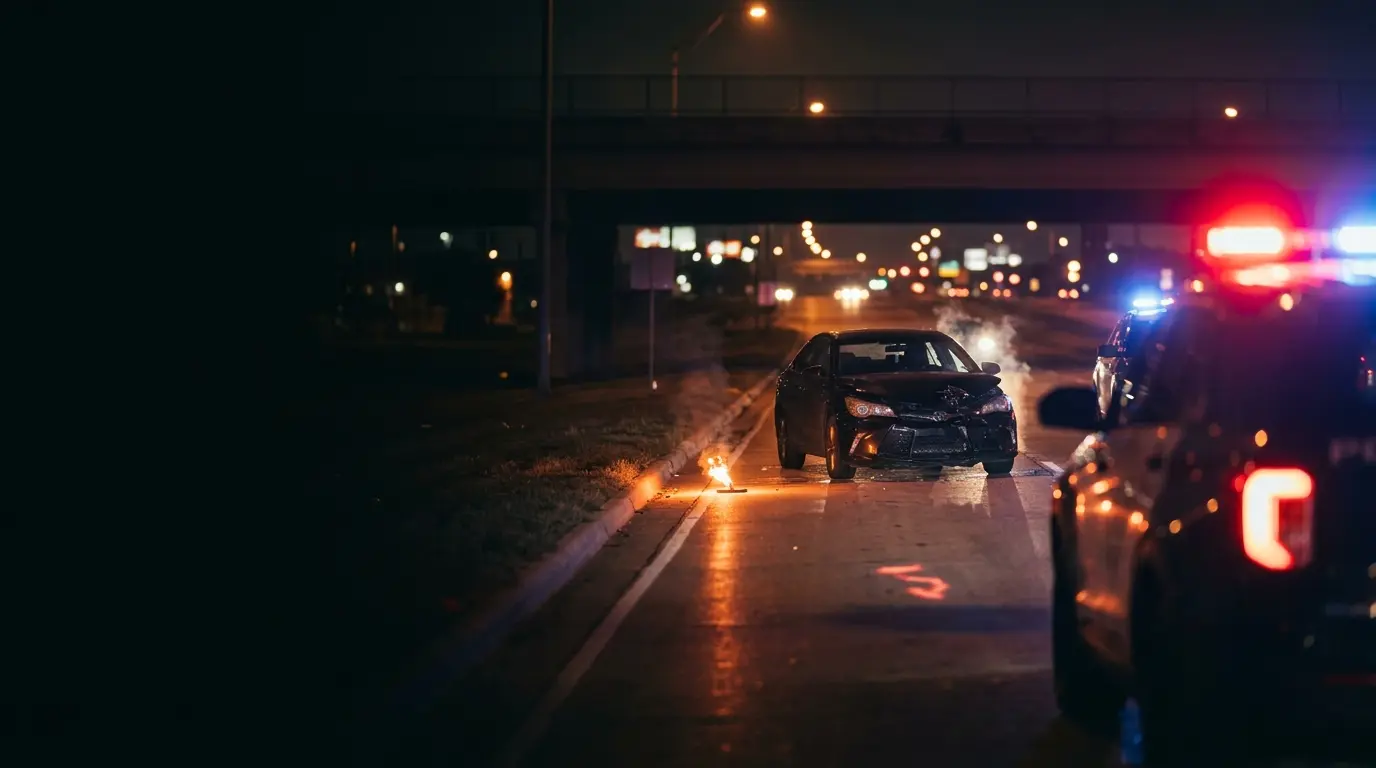
Texas Police Chase Accident Lawyers
Reviewed by Josh Alexander, Founder & Managing Attorney | Updated
If you were hurt in a police chase, you were likely not part of it. The fleeing driver, the government agency involved in the pursuit, or both may be responsible. Because government claims have short deadlines and limits on compensation, we move quickly to identify who may be at fault and preserve the evidence.
No attorney’s fee unless we recover compensation for you. We explain case expenses before you hire us.
Rated 4.9 from 568+ Google reviewsImportantGovernment notice deadlines can be much shorter than the normal two-year deadline to file a lawsuit.
- $100M+
Recovered across resolved client matters
- 75+
Years of combined legal experience
- 568+
Google reviews
- 5
Years named to Super Lawyers Rising Stars
Reflects total client recoveries across hundreds of resolved matters. Past results do not guarantee a similar outcome.
How We Identify Who May Be Responsible
We investigate every potentially responsible party, including the fleeing driver and any government entity involved in the pursuit. A police chase crash can involve two separate claims: one against the fleeing driver, and another, in limited circumstances, against a government entity.
Claim against the fleeing driver
The fleeing driver may be liable under ordinary Texas negligence rules. The harder question is often whether the fleeing driver has insurance or assets available to pay a claim, because that driver may have little or no available insurance coverage.
1 What you face
No immunityOften little coverage
Potential claim against a government entity
A city, county, or state agency may have available funds, but government immunity rules can make a claim difficult. It also brings two legal protections, capped damages, and a notice period that can run out in months.
2 What you face
Immunity by defaultCapped damagesNotice due fast
Police pursuit cases can involve a difficult tradeoff: the fleeing driver may be easier to hold liable but unable to pay, while a government entity may have resources but legal immunity defenses.
We investigate both potential claims at the same time. We also review available uninsured and underinsured motorist coverage, which may be important if the fleeing driver lacks sufficient insurance.
We file against the driver whether or not the agency claim survives. Your uninsured and underinsured motorist coverage may be an important source of recovery if the fleeing driver lacks sufficient insurance, depending on your policy and the coverage available.
How We Evaluate Claims Against Government Agencies
We assess whether the Texas Tort Claims Act may allow a claim despite governmental immunity. Government entities are generally protected by immunity, and the Act may allow a claim in narrow situations, including when an on duty government employee causes a crash while operating a motor vehicle.
That is why an officer’s driving may create a potential claim under the Act. But a potential motor vehicle claim does not end the analysis. The emergency response exception and official immunity may still block recovery.
1 Defense 1: Emergency response exceptionDoes the emergency response exception apply?
Emergency response rules can apply a higher standard than ordinary negligence.
Under Section 101.055(2) of the Texas Civil Practice and Remedies Code the Act does not reach an employee responding to an emergency call, or reacting to an emergency situation. That protection holds where the action complied with the laws applicable to emergency action.
A higher standard may applyReckless disregard
If no law or ordinance specifically governs the officer’s conduct, the key question may become whether the conduct showed conscious indifference or reckless disregard for public safety.
2 Defense 2: Official immunityDoes official immunity protect the officer?
Official immunity is a separate protection that can defeat a claim on its own.
Official immunity may protect an officer who was acting within the scope of authority, using discretion, and acting in good faith. It is a separate protection from the emergency response exception. The Texas Supreme Court applied official immunity in a 2024 police pursuit case, and the outcome of any other claim depends on its own facts and evidence.
Discretionary actGood faith
Read those two defenses together
The legal question is not only whether the officer made a mistake. It is whether the evidence can overcome the protections Texas law gives emergency responders.
Recklessness is a high legal standard. We evaluate the pursuit policy, dispatch records, video, speed data, and road conditions early to assess whether a claim is viable.
How We Apply the 2024 Texas Supreme Court Rulings
What the Court said
“Police officers must make their decisions about pursuing a suspect rapidly and while under pressure.”
City of Houston v. Rodriguez, No. 23-0094 (Tex. 31 December 2024). Judgment reversed and rendered, claims dismissed.
What these rulings changed
We use those decisions to evaluate the evidence before advising you whether a government claim is viable. These rulings made government pursuit claims harder, but they did not eliminate them. On December 31, 2024, the Texas Supreme Court issued two important police pursuit decisions, and in both cases the Court ruled for the governmental defendants.
In City of Houston v. Rodriguez the Court resolved the case on official immunity without reaching the emergency exception. A companion case, City of Austin v. Powell, addressed the exception itself.
How courts evaluate an officer’s good faith
Courts ask whether a reasonably prudent officer could have believed the need to apprehend the suspect outweighed the risk to the public under the circumstances. The question is not simply whether the officer made the right decision in hindsight.
Can evidence overcome a good faith defense?
Evidence of reckless conduct may be relevant to challenging a good faith defense, but the standard is demanding and depends on the record. A concurrence described that as an act the operator knew, or should have known, carried a high risk of injury.
What these decisions mean for your case
We tell clients this openly. These decisions reinforced that police pursuit claims against government entities are difficult and highly fact specific. We build the strongest claims with objective evidence, including pursuit policies, video, dispatch records, vehicle data, and crash reconstruction, to show whether the pursuit, the driving, or policy compliance created an unreasonable risk beyond a split second judgment call.
Read City of Houston v. Rodriguez · Read City of Austin v. Powell
Why early records requests matter
We seek the pursuit policy, dispatch and radio traffic, in car and body camera video, vehicle data, and relevant GPS records as early as possible. We also retain a reconstruction engineer early, since speed and distance carry the argument that testimony cannot.
We work your notice deadline first, because it can fall due in months
We work the earliest notice period first, because it is the one that expires soonest. Suit against a private driver runs on the ordinary two year limit, and a claim against a city, county or state agency does not.
How We Protect Government Notice Deadlines
We identify the applicable notice rule and work toward the earliest deadline that may apply. Texas law generally allows no more than six months to give formal notice to a governmental unit, and some cities require notice much sooner by charter.
Some cities require notice far sooner than six months. A shorter local notice deadline can end a claim before a lawsuit is filed, and missing an applicable notice deadline can prevent a claim from moving forward, even when the facts are otherwise strong.
We identify the government entity and review the applicable notice rule as early as possible, then work toward the earliest deadline that may apply.
Our guide to Texas filing deadlines, including the shorter periods that may apply to government claims, sets out how this sits alongside the ordinary two year limit for suit.
What Texas notice law generally requires
- Formal notice is generally due within six months. A governmental unit is entitled to notice not later than six months after the day the incident occurred.
- What the notice has to say. It must reasonably describe the injury claimed, the time and place, and the incident itself.
- A city charter may require notice sooner. A charter may require notice sooner than the six month state law deadline, and Section 101.101(b) ratifies those charter periods.
- Actual notice is limited and should not be assumed. Actual notice may satisfy the requirement in limited circumstances. Do not assume that a police report, crash report, or agency investigation removes the need for formal notice.
Do not wait for the criminal case to end. A prosecution against the fleeing driver does not automatically pause a governmental notice deadline.
Examples of Serious Injury Results
These examples come from serious injury cases across the firm’s practice. Past results do not guarantee a similar outcome.
- $15M18 wheeler, wrongful death
Recovered for a family after a fatal collision with a commercial truck.
- $2.55M18 wheeler crash
Resolved for a client seriously hurt in a wreck with a tractor trailer.
- $1M18 wheeler crash
Recovered after a heavy truck caused a high impact highway collision.
- $750K18 wheeler crash
Settlement for injuries from a commercial truck collision.
- $716KMotor vehicle accident
Recovered for a driver injured by another motorist’s negligence.
- $350KMotor vehicle accident
Settlement for a client rear ended in Texas traffic.
Examples of serious motor vehicle results, none of which involved a police pursuit. Past results do not guarantee a similar outcome.
How We Identify the Damages Cap That May Apply
We determine which government entity was involved and explain how the applicable cap may affect the claim. Texas law limits damages against government entities, and the cap depends on whether the defendant is a state agency, a municipality, or another local government unit.
This means a severe injury claim may be limited even when the losses are much greater, which is one reason we identify every potentially responsible party.
These statutory limits generally apply regardless of how serious the injury is. A catastrophic injury can face the same legal compensation limit as a less severe injury when the same governmental cap applies.
We identify every agency involved and assess which damage cap may apply to each potential claim. More than one agency may be involved in a pursuit, so we assess each agency’s role before deciding which claims to pursue.
Statutory limits
| State agency, per person | $250,000 |
|---|---|
| State agency, per occurrence | $500,000 |
| Municipality, per person | $250,000 |
| Municipality, per occurrence | $500,000 |
| Other local government, per person | $100,000 |
| Other local government, per occurrence | $300,000 |
| Property damage, any of them | $100,000 |
Source: Section 101.023 of the Texas Civil Practice and Remedies Code. See also Sections 101.055 and 101.101.
How We Preserve the Evidence That Can Decide Your Claim
WeeksSome pursuit records run on short retention schedules
Police-pursuit cases often turn on agency records, including video, dispatch traffic, vehicle data, and pursuit policies. We move quickly to request and preserve those records before they are deleted or overwritten.
The crash report is only one piece of evidence. Key records often belong to the agency that conducted the pursuit.
Police pursuit policy
Many agencies maintain written pursuit policies that address when officers may begin, continue, or end a pursuit. A departure from policy can be important evidence, but the policy, the applicable law, and the crash facts must be evaluated together.
Dispatch, radio traffic, and CAD records
These fix what the officer was told and what was known about the suspected offense. They also show whether a supervisor ordered the pursuit stopped.
In car and body camera video
Speed, road conditions, traffic and the moment of impact. Video also shows whether lights and siren were running.
Patrol vehicle data, GPS records, and dispatch timestamps
Patrol vehicles record speed and position. That data answers questions no witness can, and it does not soften with time.
Training, supervision, and prior discipline records, when relevant and obtainable
What the officer was taught about pursuits, and whether the same conduct had been raised before.
The alleged offense that started the pursuit
This shows why the chase started at all. The seriousness of the suspected offense can affect how courts evaluate the need to continue a pursuit against the risk to the public.
How We Document the Full Cost of a Police Chase Crash
We document every loss the crash caused, then evaluate the available insurance and any applicable government cap. A police chase crash can cause the same categories of losses as other Texas injury claims, including medical expenses, lost income, property damage, and non economic harm, and statutory caps may limit the total damages available when a government entity is involved.
Medical care
Every bill the collision has already generated, and the cost of care still ahead, put in writing by the doctor treating you.
Lost income
Income the crash has taken so far, and what the injury will keep taking from your ability to earn.
Property
Your vehicle, anything ruined inside it, and getting around while it is off the road.
Pain, impairment, and other non economic losses
Pain, mental anguish, scarring, physical impairment, and permanent limitations may be part of a claim, subject to any applicable government cap.
Wrongful death after a police chase crash
A fatal police chase crash may give surviving family members a wrongful death claim. In Texas, a surviving spouse, children, or parents may be able to bring one.
Wrongful death deadlines can differ from personal injury deadlines. Speak with a lawyer promptly, because government notice deadlines may still apply much earlier.
The statutory cap still applies to a death claim against a government body. Our Texas wrongful death lawyer page for a fatal police chase crash explains how a family brings one.
What We Do First to Protect Your Claim
We start by protecting the notice deadline and evidence while you focus on medical care. Government notice deadlines and evidence retention periods can begin immediately after the crash, so the first days matter more here than in an ordinary car accident claim.
General steps for any Texas crash are set out in our guide to what to do after a car accident in Texas.
Four things that protect the claim
- Get medical care and keep records. Prompt medical care protects your health and creates records connecting your injuries to the crash.
- Identify every agency involved. City police, county sheriffs, and state agencies may be subject to different notice rules and damages caps.
- Do not wait for the criminal case to end. A criminal case against the fleeing driver does not automatically pause government notice deadlines.
- Act quickly on the crash date. The crash date helps determine the earliest notice deadline that may apply.
Where Police Chase Accidents Happen in Texas
We investigate the entire route a pursuit travelled, not only the point of impact. These crashes rarely happen where the chase began, and the people they hurt are often several miles from whatever started it.
Are you hurt at an intersection?
A vehicle running a red light against cross traffic reaches most of the people a pursuit hurts.
Was it on a highway or frontage road?
Closing speeds are highest here, and a fleeing driver taking a ramp the wrong way produces a frontal impact.
Were you on foot?
Pedestrians and cyclists have no protection at all from either vehicle. These are the most serious injuries we see.
Did it end in a residential street?
Chases often finish in neighborhoods, where parked cars and driveways leave nowhere for anyone to go.
We take pursuit cases across Texas, whichever agency was driving. We put an investigator on the route the chase actually took, not only on the point of impact.
Free Case EvaluationYour legal team
The Lawyers Who Handle Your Police Chase Claim

Josh Alexander
Founder & Managing AttorneyA Marine Corps veteran and Texas trial lawyer who has recovered millions for hundreds of injured clients across Texas and Oklahoma.
Meet Josh
Matthew Graham
Managing Litigation AttorneySpent over a decade directing insurance defense litigation for a 10 state region of the country’s second largest auto insurer. Now he works for the injured.
Meet Matthew
Laura Rivas
Senior Associate AttorneyNine plus years representing the injured in motor vehicle, 18 wheeler, catastrophic injury, and wrongful death claims. Bilingual, English and Spanish. Texas Bar No. 24096510.
Meet Laura


Client reviews
What Clients Say About Working With Us
“They took the time to answer all of my questions and made me feel confident in them. The whole staff has been friendly and professional.”
Cecilia G.
Google review“After speaking with them, we were put at ease right away. They made sure my physical therapy was covered and have been invaluable to us.”
Kelly H.
Google review“Excelente servicio al cliente, son muy atentos con sus clientes. La comunicacion es muy buena; te ayudan a cualquier hora.”
Salvador T.
Google review
Reviews from actual clients. Past results do not guarantee a similar outcome.
Resources We Built to Help After a Police Chase Crash
Texas deadlines for filing a government accident claim
Learn about the notice periods and lawsuit deadlines that may apply after a crash involving a government entity.
Texas crash report codes after a police pursuit
Understand the information and codes that may appear on a Texas crash report after a pursuit related collision.
How high speed crash forces can cause injuries
See how high speed impacts can affect the body.
What to do after a car crash in Texas
Learn the immediate steps that can protect your health and preserve important evidence.
How contingency fees work in Texas injury cases
Understand attorney’s fees, case expenses, and what happens before you hire a lawyer.
Dealing with insurers after a police chase crash
Learn how insurance coverage, recorded statements, and uninsured motorist claims can affect a case.
Questions We Answer About Police Chase Accident Claims
Answers to common police chase accident questions. Each answer links back to the section that covers it in full.
Talk to an attorney today
Tell us the crash date and the agency involved. We will identify the earliest notice deadline that may apply.
(469) 807-7480No attorney’s fee unless we recover compensation for you.
Can you sue a city or government agency after a police chase crash in Texas?
Sometimes. A claim may exist against a city, county, or state agency if an officer’s driving contributed to the crash. But governmental immunity, emergency response rules, and official immunity can make these claims difficult. More on immunity.
Is ordinary negligence enough in a Texas police chase claim?
Not in every case. In an emergency response case, ordinary negligence may not be enough. The evidence may need to show reckless disregard for public safety, or a violation of a law governing the emergency action.
How long do I have to notify the city?
Texas law generally allows up to six months under Section 101.101, but some cities require notice sooner by charter. Your actual deadline may be earlier than six months, and you should not assume a police report satisfies the notice requirement. More on notice.
Are damages against a government entity capped in Texas?
Yes. Texas law caps what a government entity can be required to pay, and the amount depends on which type of entity is involved. See the full cap table.
What if the fleeing driver hit me, not the police?
The fleeing driver may be liable, but insurance coverage can be limited. Your uninsured and underinsured motorist coverage may also be an important source of recovery, depending on your policy, and a claim against the agency may still exist alongside it.
Did the 2024 Supreme Court decisions change anything?
The decisions reinforced that pursuit claims against government entities are difficult and depend heavily on the facts, the officer’s conduct, and the available records. Neither decision bars every pursuit claim. More on the ruling.
What does it cost to hire a lawyer?
Your consultation is free. We explain attorney’s fees and case expenses before you hire us, and we charge an attorney’s fee only if we recover compensation.
Hurt in a police pursuit in Texas? There is no fee unless we recover.
Tell us the crash date and the agency involved. You will speak with an attorney rather than an intake screener.
There is nothing to pay at the outset. The first thing we calendar is the earliest notice deadline that may apply to your claim.
No attorney’s fee unless we recover compensation for you. Free consultation, 24/7 · Se habla español · Serving all of Texas
Attorney advertising. Josh Alexander is responsible for the content of this page; principal office 12801 N. Central Expressway, Suite 1100, Dallas, TX 75243. Prior results do not guarantee or predict a similar outcome in any future case.
The information on this page is for general purposes only and is not legal advice; contacting the firm or submitting a form does not create an attorney-client relationship. Statutory citations are to the Texas Civil Practice and Remedies Code as of August 2026 and may change. Se habla español.