


18 Wheeler Accident Lawyer
Reviewed by Josh Alexander, Founder and Managing Attorney. Updated .
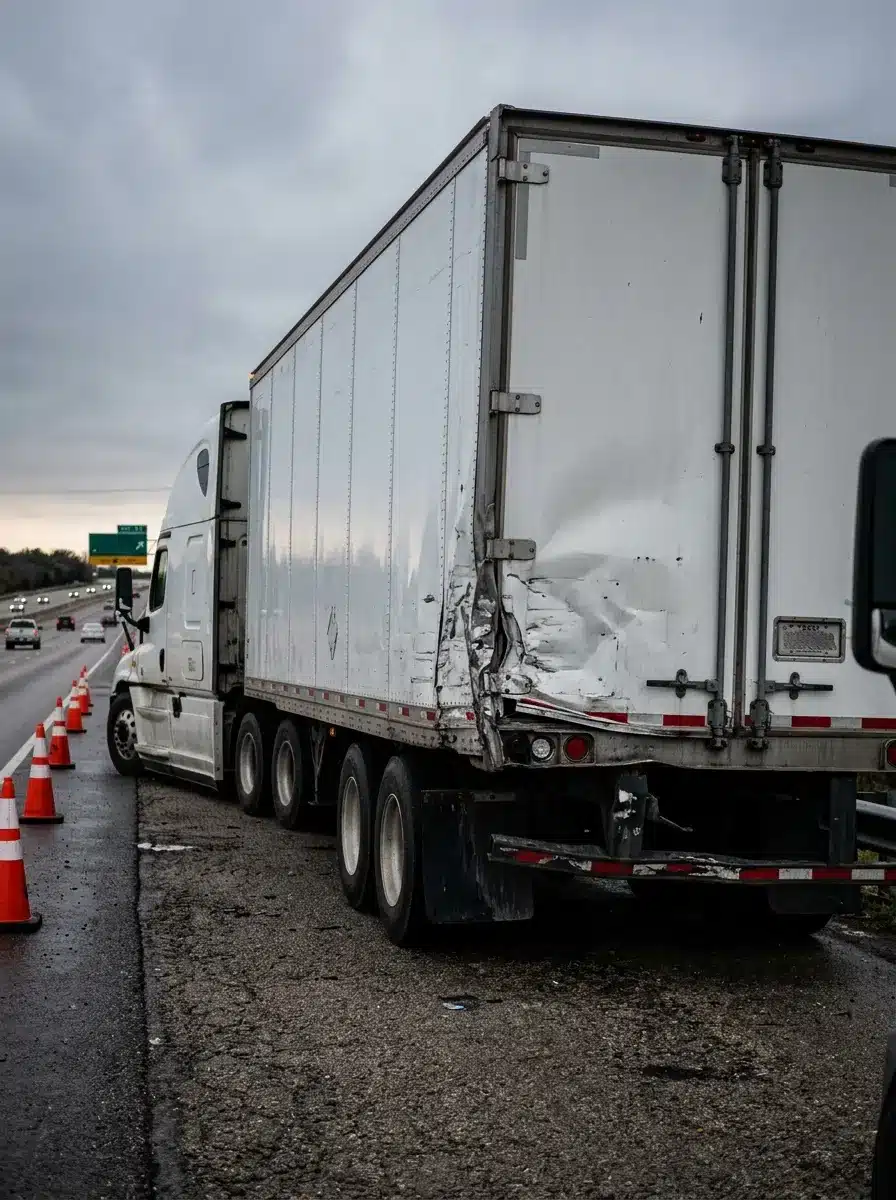
People often use terms such as semi truck, 18 wheeler, tractor trailer, and big rig to describe the trucks involved in these crashes. After a serious crash, the truck and its records may help show how it happened and who had the power to prevent it.
No fee unless we win. English and Espanol available.
4.9 stars from 568+ Google reviews- $100M+
Recovered for Texas clients
- 75+
Years of combined attorney experience
- 568+
Google reviews
- 5
Years named to Super Lawyers Rising Stars
Past results do not guarantee a similar outcome. Attorney recognitions and ratings do not guarantee future results.
The Truck and Its Records May Help Explain What Happened
After an 18 wheeler crash, the truck may contain evidence that does not exist in an ordinary car accident. That evidence can help show how the collision happened and whether the truck was safely operated, maintained, and equipped.
The truck’s engine module may record speed, braking, and throttle activity before impact. Electronic driver logs may show whether the driver had enough rest or exceeded available driving hours. The trailer, tires, brakes, cargo, and rear guard can show whether the truck and trailer were properly maintained, loaded, and operated.
What Evidence Can Disappear?
| Evidence | Typical Retention Period | Who May Have It |
|---|---|---|
| Intersection and business video | Days | Cities, businesses, and nearby property owners |
| Dash camera and in cab video | Days to weeks | The trucking company, based on its own retention settings |
| Driver duty logs | Generally six months | The trucking company |
| Tractor, trailer, tires, and damaged parts | Until repaired or disposed of | The carrier, repair shop, or storage yard |
City and business cameras are often the first evidence to disappear. We work to identify nearby camera owners and send preservation requests before the footage is overwritten.
When you hire J. Alexander Law Firm, we move to identify the truck, preserve the records, and protect the physical evidence before the trucking company repairs, moves, or controls it.
How We Build Your 18 Wheeler Accident Case
After a serious crash, the carrier and its insurer may begin investigating immediately. We work to identify and preserve available evidence before records are lost, overwritten, or repaired.
When you hire J. Alexander Law Firm, we work to preserve the truck, its electronic data, and the physical evidence needed to explain how the crash happened.
| What We Do | How It Protects Your Claim |
|---|---|
| Identify the tractor, trailer, and carrier | The tractor and trailer may belong to different companies, be stored in different locations, and involve separate insurance coverage. |
| Send preservation demands quickly | We request that the truck, trailer, video, engine data, driver logs, maintenance records, cargo documents, and damaged parts are not repaired, deleted, or discarded. |
| Inspect the physical truck evidence | Tire tread, brake condition, rear guards, lights, cargo equipment, and damage patterns can show whether the truck was safe to operate before the crash. |
| Obtain and analyze available data | Engine data, electronic logs, camera footage, GPS records, dispatch messages, and maintenance files can help show what happened before impact. |
| Identify every responsible company | The driver may be only one part of the case. We identify every company that owned, operated, loaded, maintained, scheduled, or controlled the truck or trailer. |
| Handle the trucking company’s insurer | We communicate with the insurer, evaluate the evidence, and protect you from being pushed into accepting the trucking company’s version of events. |
The carrier moves quickly after a serious crash. We move quickly to protect your evidence, your claim, and your ability to show what happened.
Why an 18 Wheeler Crash Is Different
An 18 wheeler crash often involves different evidence, safety rules, and potentially responsible companies than a typical car crash. A loaded tractor trailer can weigh up to 80,000 pounds, more than 20 times the weight of a typical passenger car.
Why a Truck’s Weight Matters
A loaded tractor trailer can require more stopping distance and can create far greater force in a collision. It also creates evidence that is not available in an ordinary car wreck.
If the truck was overweight, that is not a matter of opinion. We can investigate the truck, trailer, cargo, bill of lading, and loading records to determine what the truck was carrying and whether its weight contributed to the crash.
Federal weight limits help us investigate whether the truck was operating safely. Under 23 U.S.C. 127, an Interstate combination is generally limited to:
20,000 pounds on a single axle
34,000 pounds on a tandem axle
80,000 pounds gross weight for a qualifying five axle combination
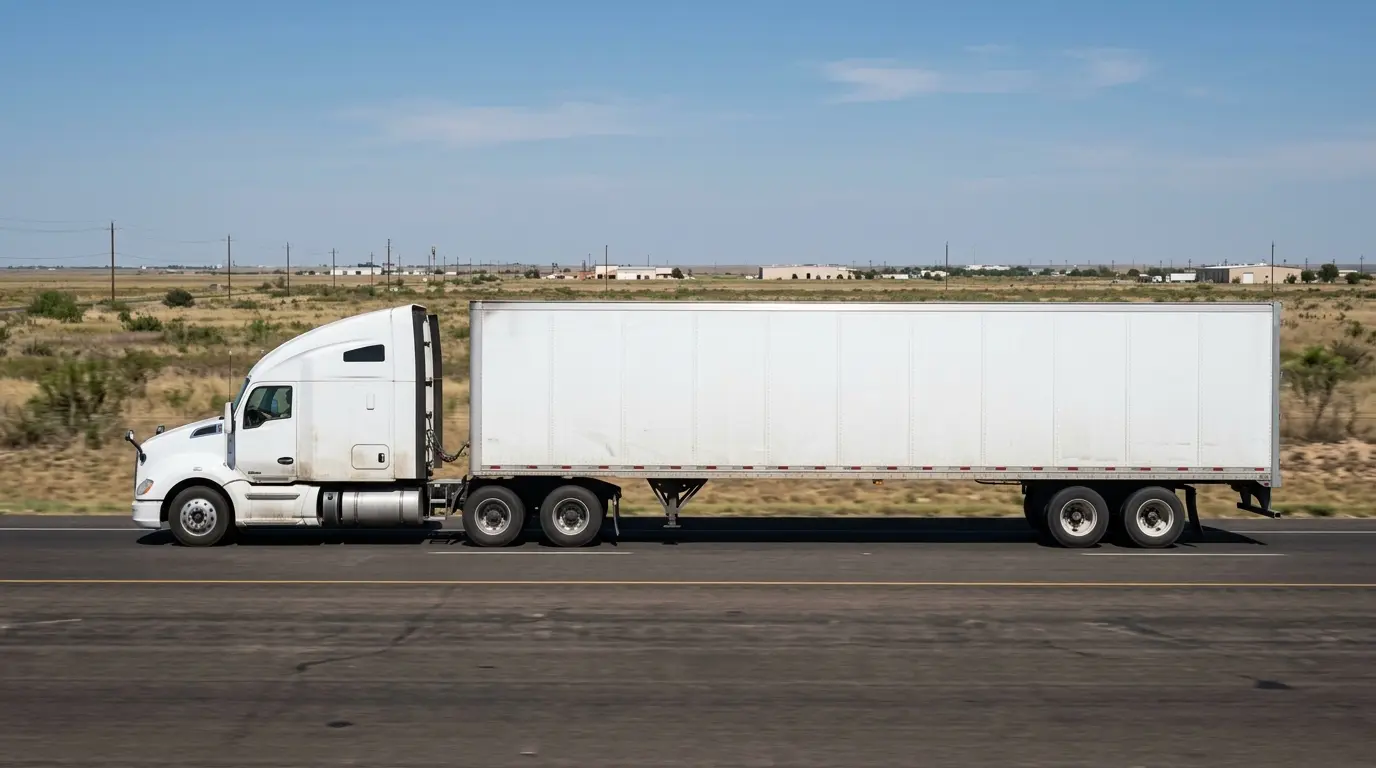
An 18 wheeler also consists of two separate units:
- The tractor, or cab, which pulls the load.
- The trailer, which carries the freight and connects to the tractor at the fifth wheel.
Because the tractor and trailer move differently, a trailer can jackknife, swing wide through an intersection, roll over on a curve, or sweep across lanes the cab never entered.
More Than One Company May Be Responsible
The truck driver may have caused the collision, but the driver is often not the only party we investigate. Depending on how the crash happened, we may look at the:
- Motor carrier
- Tractor owner
- Trailer owner
- Freight broker
- Shipper
- Loading company
- Maintenance company
- Repair shop
- Manufacturer of defective equipment
How we use this information: We identify who owned the truck, who controlled the trailer, who loaded the freight, who maintained the equipment, and who set the driver’s schedule. That investigation helps us find every company that may be responsible, not just the driver who was behind the wheel.
Semi Truck, Tractor Trailer, Big Rig, and 18 Wheeler: Is There a Difference?
Usually, no. These are common names for the same type of heavy truck and trailer combination. Whether you call it a semi truck, tractor trailer, big rig, or 18 wheeler, we investigate the same core evidence: the truck, trailer, driver, company records, and data from before the crash.
- 18 wheeler
- The full tractor trailer combination, named for the wheel count on a typical five axle rig
- Semi truck
- Commonly used for the tractor that pulls the semitrailer
- Tractor trailer
- The two connected units: the tractor that pulls the load and the trailer that carries the freight
- Big rig
- An informal term for a large tractor trailer
You do not need a different lawyer because someone calls the truck a “semi” instead of an “18 wheeler.”
What matters is the investigation. At J. Alexander Law Firm, we look for the evidence that can show how the crash happened, whether the truck was safe to operate, and which company had the power to prevent it.
What the Truck’s Black Box Can Record
Trucks may have an engine control module, event data recorder, or other electronic system that records information from before and during a crash. Available fields and retention vary by truck and system, and some data may not survive the collision.
Electronic data can help test a driver’s account of sudden braking, lane changes, speed, or visibility.
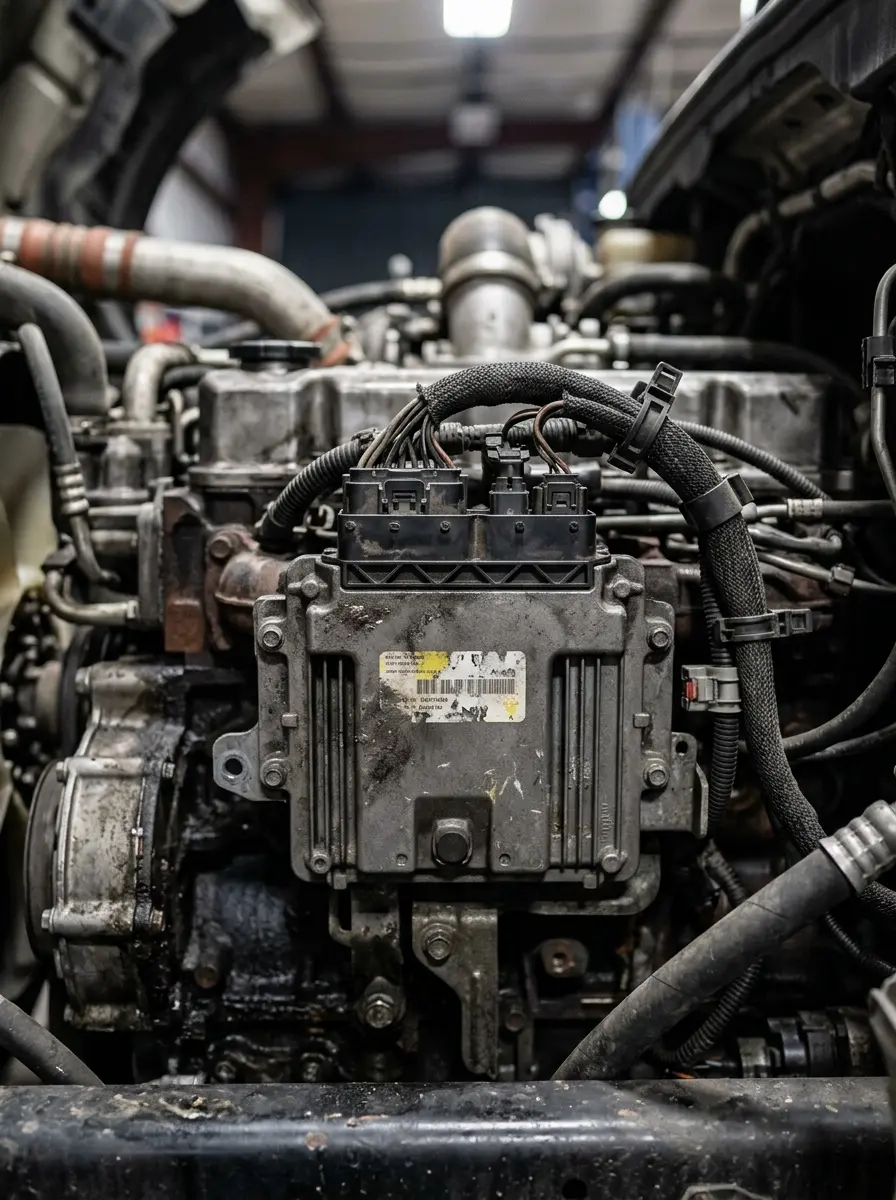
Depending on the truck, the available data may include:
- Truck speed before impact
- Brake application
- Throttle position
- Hard braking events
- Engine activity
- Time and sequence of events before impact
| Evidence | What It May Show |
|---|---|
| Engine control module | Speed, braking, throttle, and other data from before impact |
| Electronic logging device | Driving time, rest periods, duty status, and possible fatigue violations |
| In cab video | Mirror checks, driver conduct, traffic conditions, and lane position |
| Forward facing video | Road conditions, traffic movement, signals, and the collision sequence |
| Maintenance records | Prior defects, repairs, inspections, and known equipment problems |
| Cargo records | What was loaded, how much it weighed, and which company loaded it |
| What the officer may record | What the truck may record |
|---|---|
| Initial observations, driver statements, witness accounts, and roadside fault conclusions | Speed, braking, throttle, engine activity, and other events recorded before impact |
| What each driver remembers after the crash | What the truck’s system captured as the crash happened |
| A starting point for the investigation | Evidence that may confirm or challenge the starting point |
A police report is an important starting point. Electronic data, video, and physical evidence may confirm or challenge the initial account.
We also investigate required post crash drug and alcohol testing. A missing test, a missing result, or a record that was never created may be important evidence about how the trucking company handled the crash.
How we use this evidence: We work to preserve available engine module data before the truck is repaired or returned to service. We compare the recorded speed, brake timing, throttle activity, and video against the driver’s statement, police report, and physical damage. When the trucking company tries to place blame on you, the truck’s own data may tell a different story.
Rear End Semi Truck Accidents
A loaded tractor trailer generally needs more distance to stop than a passenger car, and its air brake system creates delay before the brakes fully engage.
Air pressure must travel through the brake lines before the trailer brakes fully engage, which means the rear of the truck may begin braking after the tractor has already started to slow. That delay is built into the system, and it can matter when we evaluate following distance, brake timing, and avoidability.
If a semi truck hit you from behind, we investigate:
- The truck’s speed before impact
- When the driver first applied the brakes
- Whether the driver was following too closely
- Whether the driver was distracted or fatigued
- Whether the truck was overloaded
- Whether the brakes were properly adjusted
- Whether engine data contradicts the driver’s account
How we investigate rear end truck crashes: We look at whether the driver had enough distance to stop, when braking began, whether the brakes were working properly, and whether fatigue, distraction, speed, or following distance contributed to the impact. Our goal is to use the recorded evidence to show why the collision was preventable, not allow the carrier to reduce the case to a driver’s after the fact explanation.
For a more detailed discussion of these crashes, visit Rear Ended by a Semi Truck in Texas.

Hit by a semi truck or 18 wheeler in Texas? Tell us what happened. We will explain what evidence may still exist and what we can do to protect it.
Jackknife Accidents and Brake Defects
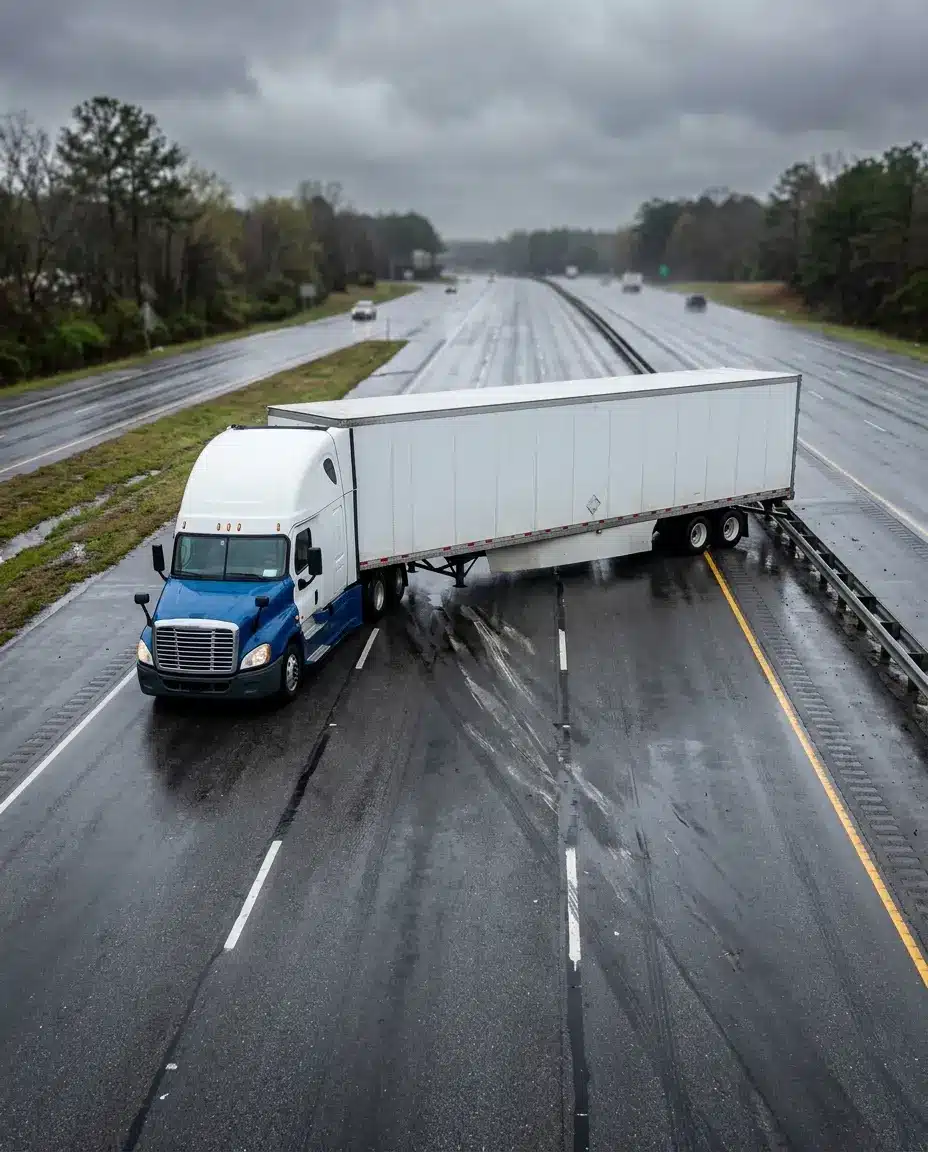
A jackknife accident occurs when the trailer swings outward and folds toward the tractor at the fifth wheel. As the trailer slides, it can cross multiple lanes, strike nearby cars, or trap drivers who were never directly in front of the truck.
A jackknife is not automatically the truck driver’s fault. But it is not automatically unavoidable just because the road was wet, either. The question is whether the driver’s speed, braking, load, and equipment condition were safe for the road conditions at that moment.
| Possible Cause | What Can Happen | Evidence We Investigate |
|---|---|---|
| Hard braking | Trailer wheels lose traction and slide sideways | Engine module speed and brake application data |
| Light or empty trailer | Less weight over the trailer axles can reduce grip | Bill of lading, cargo weight, and loading records |
| Wet or icy roadway | Reduced traction increases the risk of a trailer swing | Weather information, video, and the driver’s speed |
| Brake adjustment problem | Uneven braking can pull the trailer out of line | Maintenance file, brake records, and post crash inspection |
| Shifting cargo | Moving freight can destabilize the trailer | Loading records and cargo securement documents |
How we investigate a jackknife crash: We compare the truck’s speed and braking data with the bill of lading, cargo records, maintenance file, repair history, roadside inspection history, and post crash inspection findings. That investigation can show whether the trucking company allowed an unsafe truck, poorly maintained brakes, an unstable load, or an unsafe driving schedule onto the road.
A jackknife case may involve more than the driver. We investigate whether the carrier, loading company, or maintenance provider contributed to the conditions that caused the trailer to lose control.
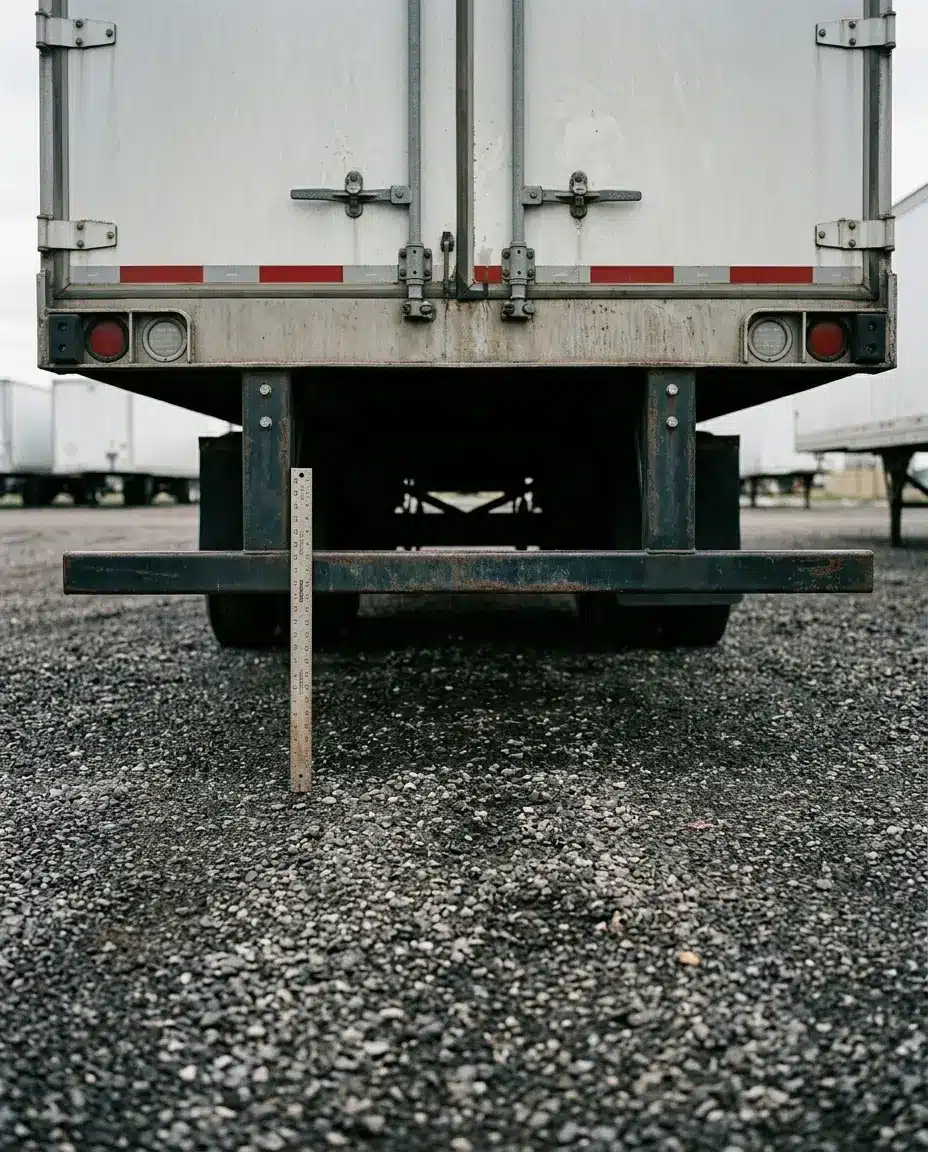
Underride Accidents and the 22 Inch Rule
An underride accident occurs when a passenger car travels underneath the rear of a trailer instead of striking the trailer’s rear guard.
These crashes can cause catastrophic injuries because a passenger car’s bumper may pass beneath the trailer. The trailer deck can then strike the windshield and upper passenger compartment, areas not designed to absorb that kind of impact.
Guard height
No more than 22 inches above the ground
A guard that sits too high may not prevent an underride crash
Guard width
Within 4 inches of each side edge
A guard that is too narrow can leave dangerous gaps
Rear position
Within 12 inches of the trailer’s rear
A recessed guard may allow the trailer deck to reach the passenger compartment first
Covered trailers
Generally trailers with a GVWR of 10,000 pounds or more built on or after January 26, 1998
The trailer’s build information may determine whether the rule applies
Federal rules require rear underride guards on many trailers, subject to the rule’s scope and exemptions. They do not impose a universal federal requirement for side guards.
That does not mean a side underride crash lacks evidence. In those cases, we investigate trailer lighting, reflective tape, visibility, lane position, weather, driver conduct, and why the trailer was in or near the roadway.
How We Use Guard Evidence
The trailer’s build plate can help us determine whether the federal rear guard rule applied to that specific trailer. We work to preserve and inspect the trailer before the carrier repairs it, moves it, sells it, or returns it to service.
We measure the guard, document its condition, photograph the trailer, and investigate which company owned, maintained, or controlled it. If the guard was too high, too narrow, improperly positioned, damaged, or missing where required, that physical evidence can help show that the trailer was not safe to operate.
Truck Blind Spots and Unsafe Lane Changes
Tractor trailers have blind spots much larger than those around a passenger car. Trucking companies often call these areas “no zones.”
But a blind spot does not excuse an unsafe lane change or turn. Truck drivers are trained to account for cars that may be beside the trailer, close in front of the cab, or directly behind the trailer before moving over.
Where Are a Truck’s Blind Spots?
FrontAhead of the cab
Left sideSmaller, still dangerous
Right sideLargest blind spot
RearBehind the trailer
The four “no zones”
| Blind Spot | Why It Is Dangerous |
|---|---|
| Directly in front of the cab | The truck’s hood and elevated seating position can hide cars close to the tractor. |
| Along the right side | Usually the truck’s largest blind spot, extending from the cab past the trailer. |
| Along the left side | Smaller than the right side blind spot, but still dangerous when the driver changes lanes. |
| Directly behind the trailer | Most trailers have no rear window, and many rigs do not have a rear facing camera. |
If a truck sideswiped your car, the driver may claim they did not see you. That is only the beginning of the investigation, not the end of it.
How We Investigate Blind Spot Truck Accidents
We look for in cab video, forward facing footage, mirror checks, lane markings, damage patterns, witness statements, and available truck data. That evidence can help show whether the driver checked the lane before moving over, used a turn signal, or changed lanes without making sure it was safe.
We do not accept “I did not see you” as a complete explanation. Our job is to determine whether the driver took the steps required to make a safe lane change.
For more information about these crashes, see 18 Wheeler Sideswiped My Car.
Hit by a semi truck or 18 wheeler in Texas? Tell us what happened. We will explain what evidence may still exist and what we can do to protect it.
Wide Turns and “Squeeze” Accidents
A tractor trailer often swings left before making a right turn because the trailer wheels follow a tighter path than the tractor. The driver may need extra room to keep the trailer from striking a curb, pole, sign, or another object.
That movement can create an opening on the truck’s right side. A nearby driver may reasonably believe the truck is changing lanes and move into that space. But when the truck turns right, the trailer swings back across the opening and can trap your car against a curb, median, pole, or another truck.
These crashes are often called squeeze accidents.
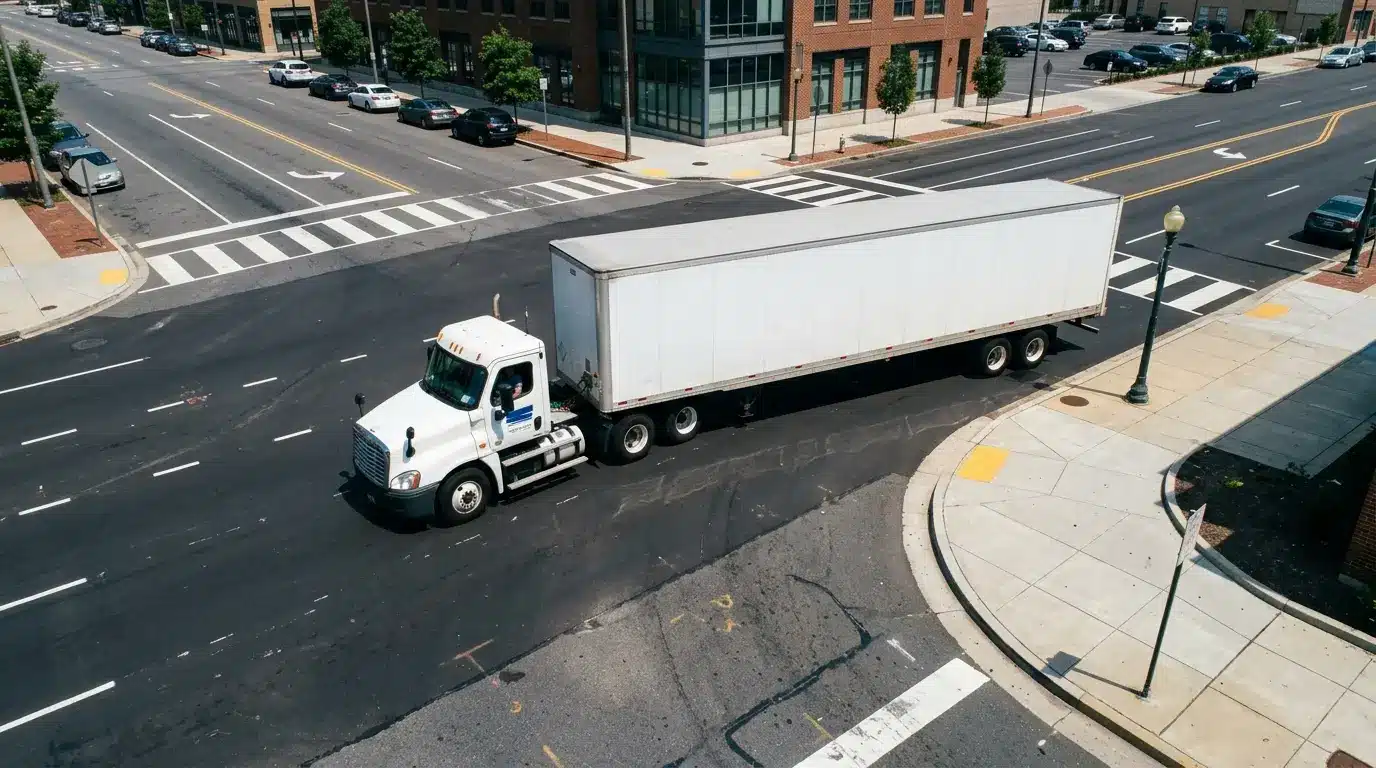
What We Investigate
When a wide turn crash occurs, we look for evidence showing:
- Whether the truck used a right turn signal
- The tractor’s angle and lane position before the turn
- Whether the driver checked mirrors before turning
- In cab and forward facing video
- Intersection and nearby business camera footage
- Speed and braking data before the collision
- Witness accounts and physical damage showing where each driver was positioned
How We Prove a Squeeze Accident
The truck driver may claim that you should not have entered the space beside the trailer. Our investigation focuses on whether that space reasonably appeared to be an open lane, whether the driver signaled the turn, and whether the driver checked for nearby cars before committing to the maneuver.
We work to locate truck camera footage, intersection video, business surveillance footage, witnesses, and truck data before they disappear. That evidence can show where the tractor was positioned, whether the driver checked mirrors, and whether the truck gave you a meaningful warning before the trailer swung back across your path.
Intersection and business footage may overwrite within days. We move quickly to identify camera owners and request preservation before the video is gone.
Cargo Shifts, Rollovers, and Falling Freight
A truck rollover is often about more than speed.
The way a trailer is loaded can affect how it handles a curve, ramp, sudden stop, or emergency maneuver. A high load raises the trailer’s center of gravity, making it more likely to tip. A partially filled tanker creates another risk: liquid cargo can surge from side to side and shift thousands of pounds during a turn.
Cargo can also fall from a trailer, spill into traffic, or shift inside the trailer and affect the truck’s steering and stability.
Federal cargo securement rules require freight to be loaded and secured so it does not leak, spill, blow, fall, or shift in a way that affects truck stability or steering.
| Regulation | What the Rule Requires | What a Failure May Show |
|---|---|---|
| 49 CFR 393.100(b) | Cargo must be secured to prevent leaking, spilling, blowing, or falling | Freight entered the roadway and created a danger |
| 49 CFR 393.100(c) | Cargo must not shift in a way that affects stability or steering | The load moved and contributed to loss of control |
| 49 CFR 393.102(a)(1) | Securement must withstand 0.8 g forward, 0.5 g rearward, and 0.5 g sideways | Cargo shifted during an ordinary hard stop or turn |
| 49 CFR 393.102(a)(2) | Tie downs must meet the required working load limit | The trailer had too few straps, chains, or improperly rated equipment |
The trucking company may not be the company that loaded the trailer. Depending on the facts, the shipper, warehouse, terminal, loading company, or freight broker may also have a role in the investigation, and separate insurance coverage that may apply.
Coverage may also come from more than one company, and the federal minimums depend on the carrier’s operation, the truck, and the cargo. For how we identify the companies and the coverage behind the truck, see our commercial truck accident lawyers page.
How We Investigate Cargo Failures
We request the bill of lading, cargo securement records, loading paperwork, cargo weight information, inspection records, and available communications between the carrier, shipper, terminal, and loading company.
A shifted load or falling freight can turn one truck crash into a case against several companies. We investigate the truck, the trailer, the cargo, and every business that had a role in putting that load on the road.
Those records can help us determine:
- Who loaded the freight
- What the trailer was carrying
- How much the cargo weighed
- Whether the load was secured correctly
- Whether the cargo shifted before or during the crash
- Whether another company, not just the motor carrier, contributed to the dangerous condition
Truck Driver Hours of Service Violations
Truck drivers can spend long hours behind the wheel. Federal hours of service rules limit how long many truck drivers may work and drive because fatigue can affect reaction time, judgment, braking, and attention.
For your case, the important question is simple: was the driver legally and safely able to be behind the wheel when the crash happened?
How the Driving Limits Work
The rules are easier to understand when you follow the driver’s work schedule:
| Rule | What It Means |
|---|---|
| 10 consecutive hours off duty | Before driving again, the driver generally must first take 10 consecutive hours off duty. |
| 14 hour work window | Once the driver comes on duty, a 14 hour window begins. That clock generally does not pause for meals, loading, traffic, or other breaks. |
| 11 hour driving limit | Within the 14 hour window, the driver may drive no more than 11 total hours. |
| 60/70 hour weekly limit | A driver generally may not exceed 60 on duty hours in 7 days or 70 on duty hours in 8 days, depending on whether the carrier operates every day of the week. |
Electronic logging devices can show when the driver began work, drove, rested, loaded cargo, and ran out of available driving hours.
If the driver exceeded those limits, or the trucking company created a schedule that pushed the driver beyond them, that may be evidence of fatigue and company level responsibility.
How We Investigate Truck Driver Fatigue
We compare electronic logs with dispatch records, GPS data, route information, delivery deadlines, loading records, and other available documents.
A driver may appear to have followed the rules on paper. But the surrounding records can show whether the trucking company created an unrealistic schedule, encouraged the driver to keep moving, or ignored warning signs that the driver was too tired to operate the truck safely.
Fatigue is not always visible after a crash. We use the driver’s electronic records and the company’s schedule to determine whether the truck should have been on the road at all.
Source: 49 CFR 395.3.
Hit by a semi truck or 18 wheeler in Texas? Tell us what happened. We will explain what evidence may still exist and what we can do to protect it.
Truck Tire Blowouts and Maintenance Failures
A truck tire blowout is not always unavoidable bad luck. It may show that the truck should not have been on the road.
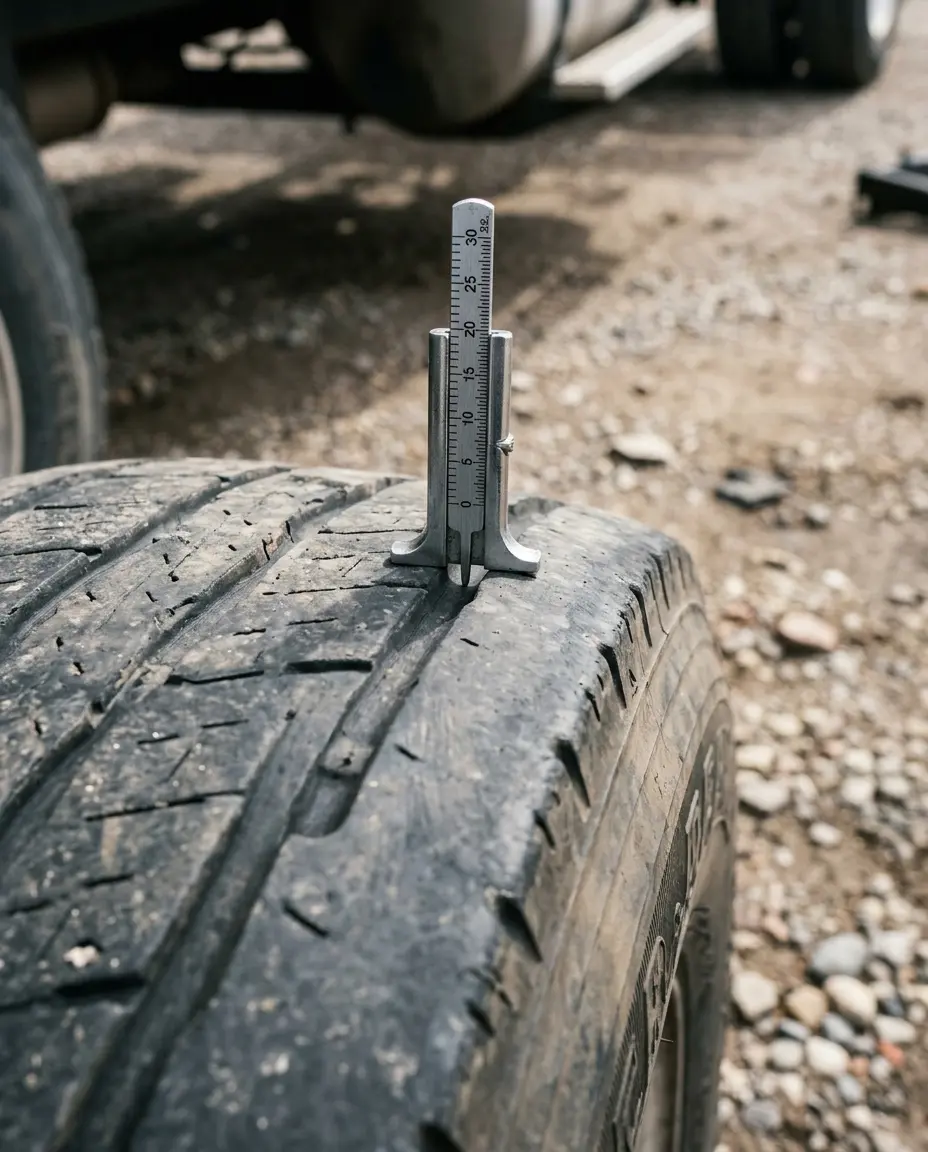
Under 49 CFR 393.75, federal tread depth requirements include:
4/32 inch
Front steering tires on a truck tractor
2/32 inch
Other truck tires
Minimum tread depth
A flat tire or an audibly leaking tire may also place the truck out of service.
A steer tire blowout can cause the driver to lose steering control. A trailer tire blowout can send tire debris into traffic lanes behind the truck.
Federal regulations also prohibit certain regrooved tires on the steering axle of a truck tractor. Tire depth is measured in a major groove, away from tie bars and fillets. Those details matter because a maintenance failure can often be established with a gauge and inspection, not simply competing opinions about what caused the blowout.
The tire itself may become important evidence.
How we investigate a truck blowout: We work to preserve the tire before it is discarded and compare it with inspection reports, maintenance records, repair documents, and roadside inspection history. If the tire was worn, leaking, defective, improperly maintained, or out of service before the crash, that may point to a preventable company failure.
Trailer Type Can Change the Evidence
The type of trailer affects how a truck can fail, what evidence matters, and which companies may be responsible.
| Trailer Type | Common Risk | Key Evidence |
|---|---|---|
| Dry van | Hidden cargo shifts | Bill of lading, loading paperwork, cargo records |
| Flatbed | Freight falls or comes loose | Scene photographs, straps, chains, and tie down ratings |
| Tanker | Liquid surge and rollover | Fill level, cargo records, hazardous material documentation |
| Car hauler or lowboy | High center of gravity and securement failure | Chains, working load limits, and cargo records |
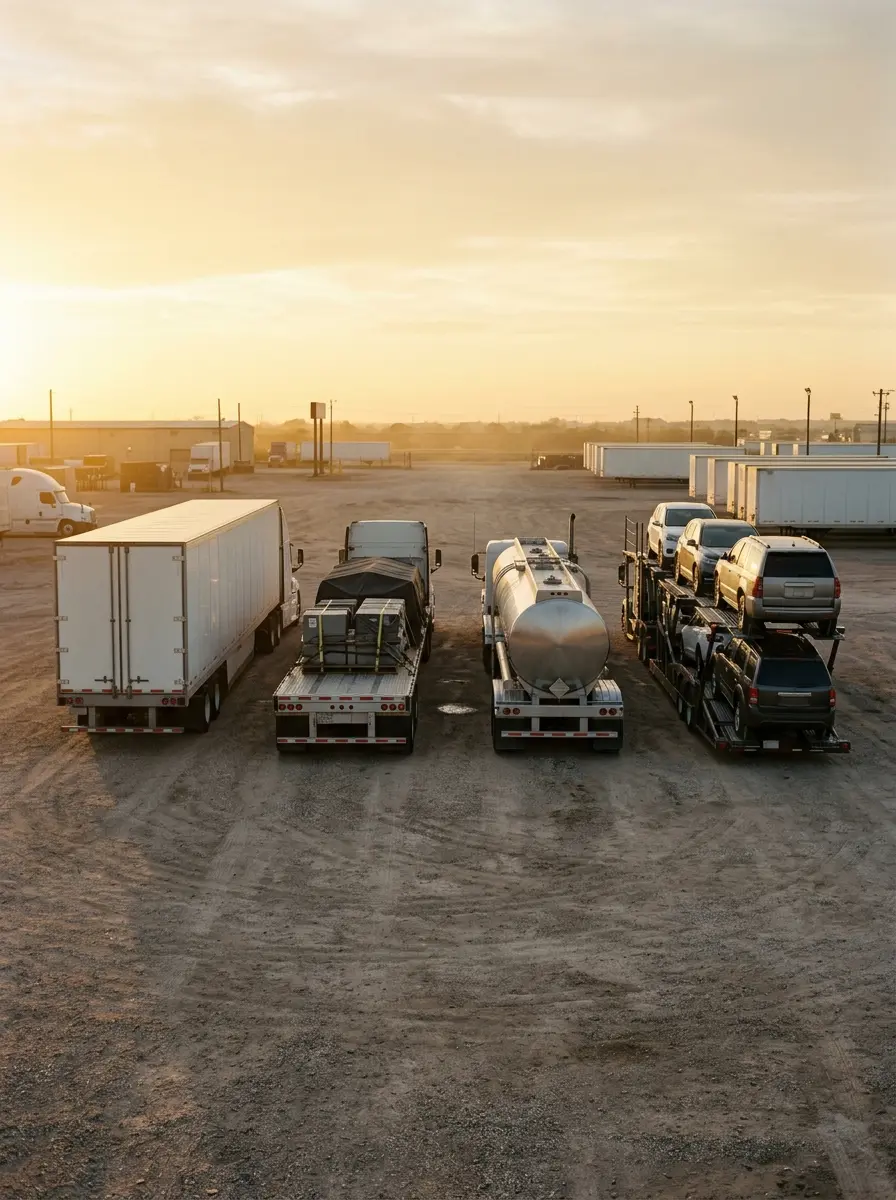
A trailer may be owned by a company separate from the motor carrier. The freight may be loaded by a separate shipper or warehouse. Those distinctions are why we request the paperwork alongside the truck itself.
Why the trailer type matters to your case: A dry van, flatbed, tanker, lowboy, or car hauler leaves different evidence behind. We tailor the investigation to the trailer involved, the cargo it carried, the company that loaded it, and the equipment that should have kept the load stable and secure.
What We Do to Protect Your 18 Wheeler Claim
The trucking company has a head start after a serious crash. It may know where the tractor and trailer are stored, who owns each unit, what data the truck recorded, and which records may disappear first.
When you hire J. Alexander Law Firm, we move quickly to protect the evidence before the carrier repairs the truck, returns it to service, or controls the story of what happened.
Our 18 Wheeler Investigation Process
Locate the tractor and trailer
The tractor and trailer may be stored in different yards, counties, or states, and may belong to different companies. We work to identify both units before repairs begin.
Send preservation demands
We request that the truck, trailer, electronic data, tires, cameras, cargo documents, logs, maintenance files, inspection records, and damaged parts be preserved.
Obtain available electronic evidence
We seek available engine module information, electronic logs, in cab and forward facing video, dispatch messages, GPS data, and other records that may show what happened before impact.
Inspect and measure physical evidence
We may examine the rear guard, tires, brakes, lights, cargo securement equipment, and damage patterns before repairs change the evidence.
Identify every responsible company
The driver may be only one piece of the case. We identify every company that owned, operated, loaded, maintained, scheduled, or controlled the truck or trailer.
A guard height violation, worn tire, brake problem, or cargo securement failure is not simply an opinion about what caused the crash. It may be physical evidence documented through measurements, photographs, inspection findings, maintenance records, and the truck’s own data.
If the Trucking Company Blames You
Texas uses a modified comparative fault rule. If you are found more than 50 percent responsible for the crash, you may be barred from recovering compensation.
That is why preserving the evidence matters. Engine data, braking information, truck video, inspection findings, cargo records, and physical measurements can help keep fault where the evidence places it, not where the trucking company or its insurer wants it to be.
For broader information about fault, filing deadlines, insurance coverage, and compensation in truck accident claims, see our Texas Truck Accident Lawyers page.
Questions After an 18 Wheeler Crash
From Josh Alexander
“The trucking company is already protecting its driver’s records within hours of the crash. The whole case comes down to who locks down the data first. My job is to make sure we are first, so you can focus on getting better while we get to work.”
(469) 807-7480 Free Case EvaluationNo fee unless we win. English and Espanol available.
Is a jackknife always the truck driver’s fault?
No. A jackknife shows that something went wrong, but we investigate whether speed, braking, cargo weight, road conditions, maintenance, and trailer condition made it preventable.
Was the trailer required to have an underride guard?
Many trailers are required to have a rear underride guard under federal law. The guard must meet specific height, width, and placement standards.
Is it my fault if I was in a truck blind spot?
Not automatically. Truck drivers must account for blind spots before changing lanes or turning. We look at video, mirror checks, lane position, damage patterns, and truck data.
How do you prove the driver was too tired?
Electronic logs, dispatch records, delivery schedules, GPS data, and other records may show whether the driver exceeded available hours or was pressured to drive while fatigued.
The truck’s cargo came off. Who is responsible?
The carrier may be responsible, but the loading company, shipper, warehouse, terminal, or broker may also be involved. Cargo records and bills of lading help identify those parties.
Is a tire blowout just an accident?
Not always. We investigate whether the tire met tread depth requirements, was leaking, had a known defect, or should have been removed from service before the crash.
What should I photograph after an 18 wheeler crash?
If it is safe to do so, photograph the truck’s USDOT number, carrier name, tractor number, trailer number, license plate, where each driver stopped, visible damage, and the trailer’s rear guard. Those details can help us identify the truck, locate the carrier, and send preservation demands before the truck is repaired or the records disappear.
We Know How Trucking Companies Defend These Cases
We understand how carriers respond after serious crashes. They begin gathering records, reviewing data, and managing evidence quickly.
We move quickly for you, too.

Free consultation
Hit by an 18 Wheeler in Texas? Let Us Look at the Truck.
The trucking company is already moving. The sooner you contact us, the more likely the evidence your case depends on will still exist.
- No fee unless we win
- English and Espanol
- Available 24/7
Attorney Advertising. J. Alexander Law Firm, PC, principal office 12801 N. Central Expressway, Suite 1100, Dallas, TX 75243. Prior results do not guarantee or predict a similar outcome. This page provides general information about Texas law and is not legal advice about your situation. Reviewing this page or contacting the firm does not create an attorney client relationship. Statutes and regulations cited are described in general terms and may have exceptions, conditions, and deadlines that apply differently to your facts. Se habla espanol.