


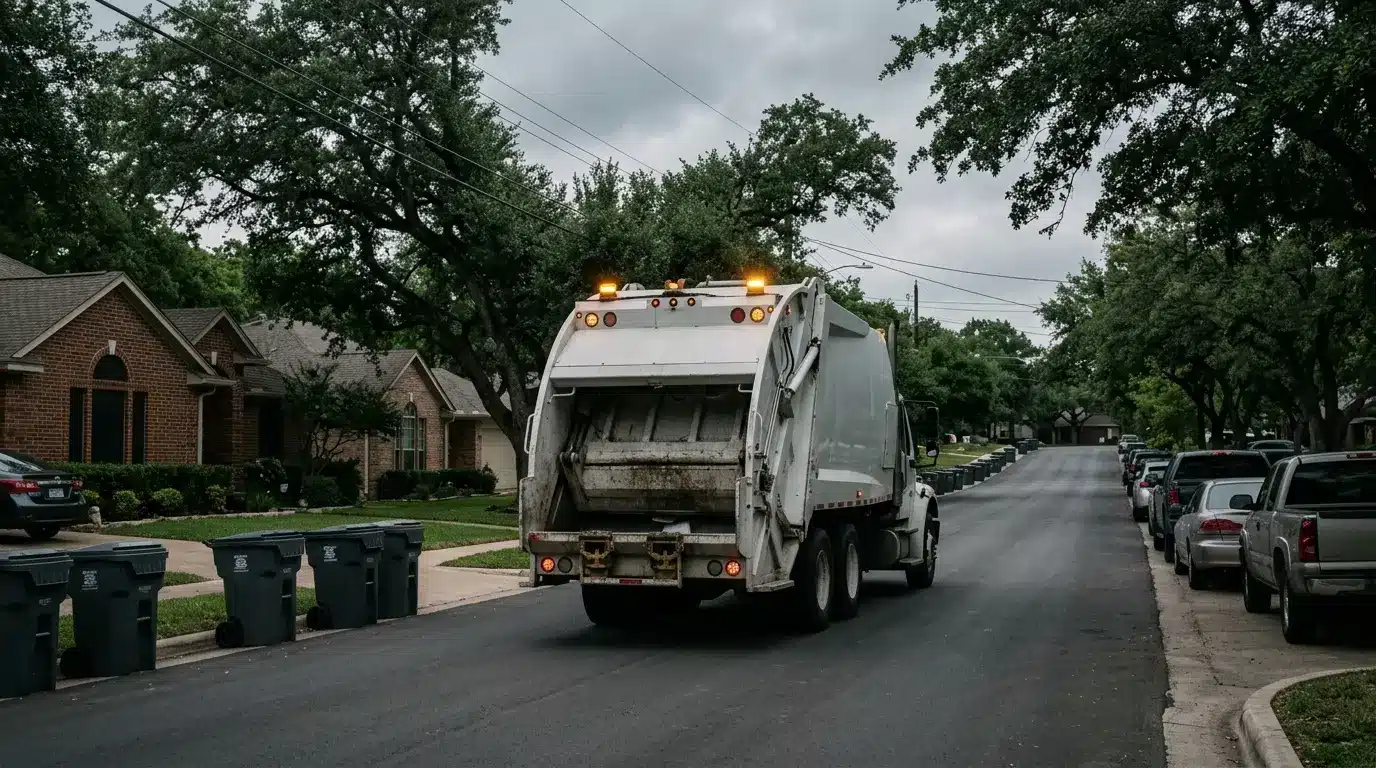
Texas Garbage Truck Accident Lawyers
After a garbage truck crash, one of the first questions is who operated the route, not simply who drove the truck. A city may collect waste using its own employees and vehicles or contract with a private waste company. That distinction can affect who may be responsible, the evidence available, the deadlines that apply, and the rules governing your claim.
Garbage trucks make frequent stops, back along narrow residential streets, and operate while crew members work nearby. Many garbage trucks have rear, side, or cab facing cameras, along with GPS and route data. An operator may overwrite or delete this evidence under its retention policy, making prompt preservation important.
- $100M+
Recovered for Texas Clients
- 75+
Years of Combined Attorney Experience
- 568+
Google Reviews
- 5
Years of Super Lawyers Rising Star Recognition
 Dallas Stars
 Sporting United
 Super Lawyers Rising Stars
 Multi Million Dollar Advocates Forum
 Million Dollar Advocates Forum
 Texas Trial Lawyers Association
Past results do not guarantee a similar outcome. Attorney recognitions and ratings do not guarantee future results.
Who Operated the Garbage Truck on Your Street?
After a garbage truck crash, an important question is not only who drove the truck, but also who operated the collection route.
Your city may collect trash using its own employees and vehicles, or it may contract with a private waste company to provide collection services. That distinction can affect the parties involved, the evidence available, the deadlines that apply, and the rules that may limit recovery.
The truck itself can provide important information about the operator. If you can do so safely, photograph the company name, city or government markings, unit number, license plate, and any visible route information. Those details can help identify the operator before available video, GPS data, or route records are overwritten, deleted, or lost.
| Question | Private waste company | City or county operator |
|---|---|---|
| Notice requirement | Texas personal injury deadlines and standard claim procedures generally apply. | A claim against a governmental unit generally requires prompt statutory notice. Texas law generally provides a six month notice deadline, and a city charter or ordinance may require notice sooner. |
| Recovery limits | Texas Tort Claims Act damage caps generally do not apply merely because a private company provides waste collection services. Other legal, contractual, insurance, or factual limits may still affect recovery. | Statutory damage limits may apply if the Texas Tort Claims Act permits a claim against the governmental unit. |
| Potential defendants | Depending on the facts, potential defendants may include the waste company, a vehicle or equipment owner, a contractor, or another private business involved in the route. | Depending on the facts, potential defendants may include the governmental unit and, in some cases, a private contractor or company involved in the route. |
| How to identify the operator | Look for company markings, unit numbers, route records, and other company information. | Look for city, county, or agency markings; unit numbers; public service records; and the applicable collection arrangement. |

The name on the side of the truck is a starting point, not an answer. We examine the markings, unit number, and collection contract to determine which company or agency operated that route.
Why Garbage Truck Crashes Happen on Residential Streets
Garbage trucks can create traffic risks that differ from those of many other commercial vehicles. They make frequent stops, repeatedly pull into traffic, back through narrow spaces, and operate while crew members work around the vehicle.
The collection route can provide important evidence. Stop patterns, GPS data, camera footage, crew assignments, and service records may help show how the truck was being operated when the crash occurred.
Stopping in Traffic Without a Turn Lane
A collection truck may stop in the travel lane every few houses to collect bins or containers. Drivers behind the truck may try to pass as it pulls into traffic, turns, or crew members enter the roadway. Video footage, route data, turn signal use, truck position, and crew activity can help determine how the conflict developed before the collision.
Backing Up on Narrow Residential Streets
Backing is often part of a residential collection route, especially on cul de sacs, alleys, and narrow streets. A driver rearward view may be limited by the size of the truck, parked cars, bins, and crew activity. Rear camera footage, backup alarms, GPS data, route records, and crew communications may help show what was behind the truck before it moved.
When Crew Activity Affects a Driver Attention
Collection workers may step off the truck, walk behind it, cross in front of it, or move between bins as the route continues. That activity can divide a driver attention and require careful coordination between the driver and crew. The issue is not simply whether a worker was nearby. It is whether the truck was operated safely while crew members, pedestrians, cyclists, or other vehicles were nearby.
Children and Cyclists Obscured by Parked Cars
Parked cars, bins, fencing, landscaping, and the truck itself can obstruct a driver view of pedestrians and cyclists. A child stepping from between parked cars or a cyclist approaching a stopped truck may be difficult to see, particularly as the truck begins moving. The street layout, parked vehicles, camera footage, and route direction can help show what the driver could see and when.
How We Reconstruct a Residential Route Crash
- 1Request and review available stop pattern and GPS data for the block where the crash occurred.
- 2Compare the truck movement with available information about backing activity and crew positions.
- 3Document the road layout, parking conditions, and sight lines using scene evidence, photographs, video, and available records.
- 4Compare any available video footage with the route, vehicle, and scene evidence.
This work can help build a fact based account of how the crash happened rather than leaving the operator and its insurer as the only sources of information.
When a Garbage Truck Hits a Pedestrian or Cyclist
A garbage truck can cause life changing injuries even at low speeds. Pedestrians and cyclists have no vehicle frame, seat belt, or airbag to protect them from the force of a collision.
A low speed crash can still cause serious injuries. The size and weight of the truck, the point of contact, its direction of movement, and whether the person was struck, pinned, or run over can all affect the severity of the injuries.
Pedestrians and Cyclists Have Little Protection From Impact
A person on foot or on a bicycle may absorb much of the collision force directly. Fractures, crush injuries, traumatic brain injuries, spinal injuries, and internal injuries can occur even when the visible vehicle damage appears limited.
Backing Crashes Require a Focused Investigation
A person behind a truck may not be visible in the driver mirrors. Rear camera footage, backup alarms, crew assignments, spotting practices, and GPS data may help show what was behind the truck and how it was being operated before it moved.
Public Ownership Can Change the Claim Process
If a city, county, or other governmental unit operated the truck, government notice requirements and statutory damage limits may apply, regardless of the severity of the injuries. That makes it important to determine whether a private contractor, equipment owner, maintenance provider, or another company also played a role in the crash.
Being partly in the roadway does not automatically prevent an injured pedestrian or cyclist from pursuing a claim. In cases governed by Texas proportionate responsibility law, a claimant recoverable damages may be reduced by the percentage of responsibility assigned to that claimant. Recovery is generally barred only if the claimant percentage of responsibility is greater than 50 percent. Fault should be evaluated using the available evidence, not an insurance adjuster initial opinion alone.

Insurers may argue that a person on foot or on a bike contributed to the crash. What the driver could actually see, and when, is often a question the evidence can answer.
What the Garbage Truck May Have Recorded Before the Crash
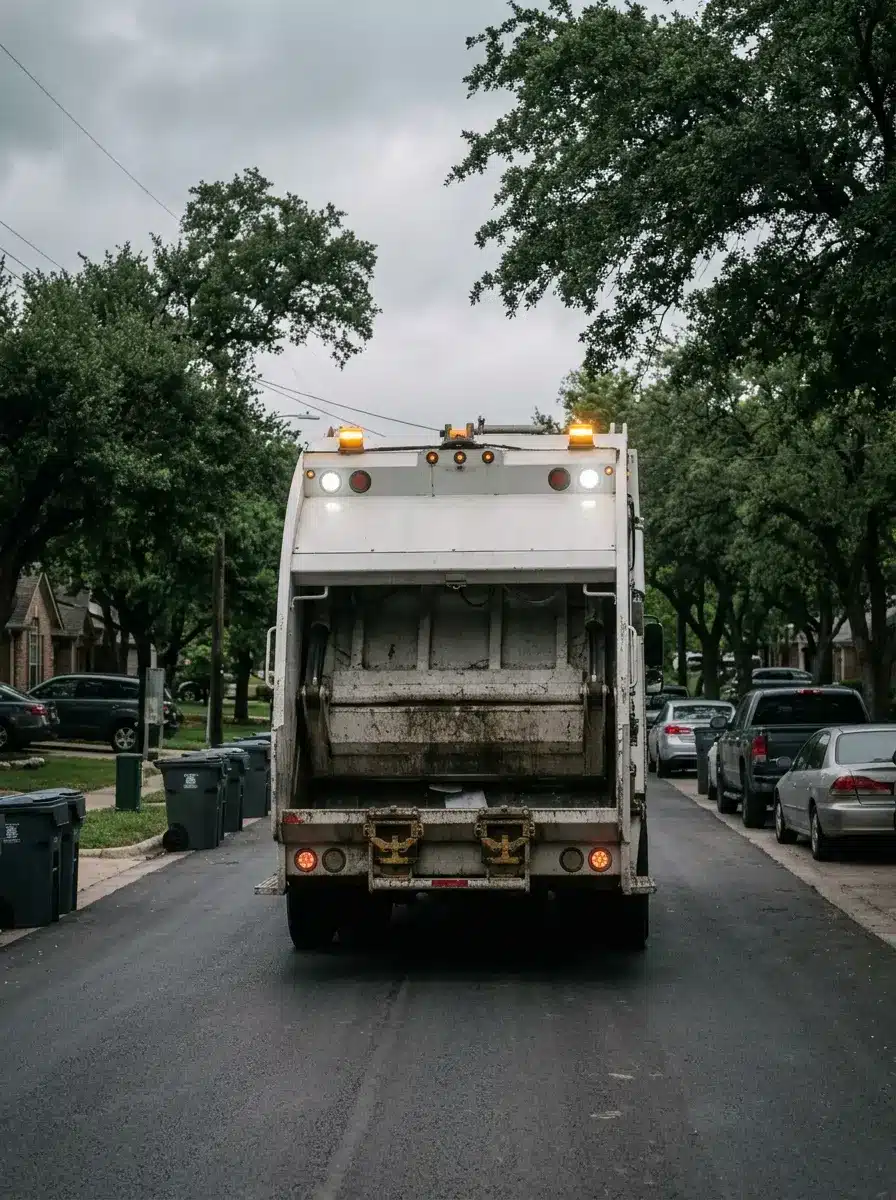
Modern collection trucks may carry several types of route specific evidence. Depending on the fleet, a truck may have rear, side, forward, or cab facing cameras; GPS data; route logs; and records of lift, arm, hopper, or service activity.
This evidence may help show where the truck stopped, when it moved, what was within the camera field of view, and whether crew members or others were near the truck.
| Potential Record | What It May Show | Why Prompt Action Matters |
|---|---|---|
| Rear and side facing cameras | What may have been behind or beside the truck as it moved | Video may be overwritten or deleted under the operator retention policy |
| Forward and cab facing cameras | Road conditions, available views of driver activity, and events leading up to the crash | The operator may control access to the footage and retain it under its standard policies |
| GPS and route data | Stops, timestamps, route path, and, in some cases, vehicle speed or movement data | It may help place the truck near the crash location at a particular time |
| Lift, arm, hopper, or service records | Whether collection equipment was operating and when service activity occurred | These records may help show crew activity and route timing |
When a City or County Operated the Garbage Truck
A city, county, or other governmental unit may own and operate the truck directly. In those cases, the Texas Tort Claims Act may affect notice requirements, whether a claim is permitted, the available recovery, and which entities may be involved.
For certain injuries arising from the operation or use of a motor driven vehicle, Texas law provides a limited waiver of governmental immunity. The law that may allow a claim can also impose notice requirements and statutory limits on recoverable damages.
| Governmental entity | Bodily injury or death: per person | Bodily injury or death: per occurrence | Property damage: per occurrence |
|---|---|---|---|
| State government or municipality | $250,000 | $500,000 | $100,000 |
| Other local governmental unit | $100,000 | $300,000 | $100,000 |
The applicable damage limit depends on the governmental entity involved. A municipality, county, special district, and state agency may be subject to different rules and damage limits under the statute.
Your Legal Options May Depend on Where You Were When the Truck Hit
The legal analysis can differ depending on whether you were in another vehicle, walking, cycling, near your property, or working on the collection crew.
You Were Driving or Riding in Another Vehicle
Your claim may involve a private waste company, a governmental entity, or both, depending on who operated the truck and what the evidence shows.
You Were Walking or Cycling
Pedestrian and cyclist cases often focus on backing, visibility, camera footage, crew activity, and the movement of the truck along the route. Injuries can be severe even when the truck was moving slowly.
Your Property Was Damaged
A garbage truck can damage parked vehicles, fences, mailboxes, landscaping, structures, and other property. Statutory property damage limits may apply when a governmental entity operated the truck.
You Were Working on the Garbage Truck
A crew member injury may involve workers compensation, a nonsubscriber claim, or a third party claim against someone other than the employer. That analysis differs from a claim brought by a driver, passenger, pedestrian, cyclist, or property owner outside the garbage truck.
Documenting Your Injuries and Identifying Available Coverage
Garbage truck crashes are sometimes underestimated because the truck was moving slowly or because the visible vehicle damage appears limited. Medical records, scene evidence, and route data can matter more than the appearance of the vehicles.
Prompt medical evaluation can help document symptoms and injuries before an insurer argues that the condition came from something else. Imaging, treatment records, work restrictions, and evidence of your abilities before the crash can all be relevant.
| Question | Evidence That May Help | Why It Matters |
|---|---|---|
| Did the crash cause the injury? | Prompt medical evaluation, crash records, video, witness statements, and treatment history | Insurers often dispute causation in low speed crashes |
| How serious is the injury? | Imaging, treating provider records, treatment plans, work restrictions, and recovery history | Serious injuries can occur even when vehicle damage appears limited |
| What coverage may apply in a private company claim? | Insurance policies, contracts, operator records, and vehicle ownership information | More than one company may be involved in the route or the vehicle |
| What rules may apply in a governmental claim? | The identity of the governmental entity, statutory damage limits, notice records, and any contractor relationships | Deadlines, procedures, and recoverable damages can differ from a private claim |
We work to assemble the medical records, the evidence of how the injury affected your work and daily activities, the vehicle ownership and contract documents, and the available insurance information. Together those records can help connect the crash to the injury and identify the coverage that may apply.
Other Parts of Your Garbage Truck Accident Claim
This page focuses on the route operator, residential collection pattern, camera evidence, and public versus private issues that make garbage truck claims different.
Filing Deadlines and the Claim Process
For the general claim process, preservation letters, damages, and Texas filing deadlines, see our Texas truck accident lawyers page.
Dump Trucks and Mixers
For loose loads, weight tickets, quarry records, batch tickets, and the company that filled the bed, see our dump truck accident lawyers page.
Private Commercial Operators
For carrier authority, owner operator arrangements, contractors, brokers, shippers, and insurance analysis, see our commercial truck accident lawyers page.
Claim Value
For a fuller explanation of the factors that affect a truck accident claim value, see average truck accident lawsuit value in Texas.
Questions After a Garbage Truck Crash
Talk to an attorney today
Tell us the street, the day, and what was written on the truck. That is usually enough to start.
469-807-7480Do I Sue the City or the Trash Company?
It depends on who owned and operated the truck and route. A city may use municipal employees and vehicles, or it may contract with a private waste company. Truck markings, unit numbers, route records, video footage, and the collection contract can help identify the responsible parties.
How Long Do I Have if It Was a City Truck?
A claim against a Texas governmental unit generally requires formal notice within six months of the incident. A city charter or ordinance may impose a shorter deadline. The notice must generally identify the injury or damage, the time and place of the incident, and what happened. A separate deadline to file suit may also apply, so act quickly.
Is There a Limit on What I Can Recover From a City?
Yes. The Texas Tort Claims Act limits recoverable damages when a governmental unit is liable. The applicable cap depends on the entity. For example, claims against municipalities generally have different limits from claims against other local governmental units.
Can You Sue a City for a Garbage Truck Crash?
In some cases, yes. The Texas Tort Claims Act includes a limited waiver of governmental immunity for certain injuries arising from the operation or use of a motor driven vehicle. Whether a claim is available depends on the facts, the governmental entity, required notice, and other legal defenses.
The Truck Backed Into Me. Whose Fault Is That?
Fault depends on the facts. Evidence such as rear camera footage, backup alarms, crew activity, traffic conditions, sight lines, and route data can help determine whether the driver, another party, or both contributed to the crash.
I Hit the Truck While Going Around It. Am I Automatically at Fault?
No. Fault may depend on the truck position, warning lights, signals, stop pattern, crew activity, lane placement, traffic conditions, and available camera footage. Texas comparative responsibility rules can affect recovery when more than one party contributed to a crash.
I Work on the Truck and Got Hurt. Is This the Right Page?
Usually, a worker injury requires a different analysis. Depending on the employer coverage and the facts, the claim may involve workers compensation, a nonsubscriber claim, or a claim against a negligent third party. Contact us to discuss the circumstances.
What Should I Do Today?
If you can do so safely, photograph the truck, company or city markings, unit number, license plate, street, and crash scene. Seek medical care, preserve any available photos or video, and contact an attorney promptly to address route data, camera footage, and any government notice deadline.
A Defense Side Perspective From Matthew Graham
Before joining J. Alexander Law Firm, R. Matthew Graham spent more than ten years representing trucking companies and insurers on the defense side. That experience informs the firm approach to early investigations involving route records, fleet cameras, preservation requests, and insurer communications.
When a garbage truck crash occurs, the operator and its insurer may begin collecting information about the driver, truck, route, and scene. Our firm works to identify the entities involved and seek preservation of relevant video, GPS data, route records, and service information before routine retention practices remove or overwrite it.

Hit by a Garbage Truck in Texas? Let Us Find Who Ran the Route.
The truck may be back on its route, and its cameras may already be recording over the crash. Tell us what happened. We can work to identify the operator, seek preservation of the route data and video, and address any government notice deadline that may apply to your claim.
- No fee until we win
- Bilingual English and Espanol
- 24/7 intake
Attorney Advertising. J. Alexander Law Firm, PC, principal office 12801 N. Central Expressway, Suite 1100, Dallas, TX 75243. Prior results do not guarantee or predict a similar outcome. This page provides general information about Texas law and is not legal advice about your situation. Reviewing this page or contacting the firm does not create an attorney client relationship. Statutes and regulations cited are described in general terms and may have exceptions, conditions, and deadlines that apply differently to your facts. Se habla espanol.