


Commercial Truck Case Result
$325,000 Settlement After Commercial Truck Failed to Yield in Hood County
The crash report states that a commercial tractor trailer pulled into the intersection of U.S. 377 and State Highway 171 near Cresson and failed to yield to our client's pickup truck, which had the green light.
Commercial Truck Collision
U.S. 377 and SH 171 · Cresson, Hood County, Texas
The Result
Attorney Laura Rivas obtained a $325,000 settlement for a construction worker injured when a commercial tractor trailer entered an intersection against a red light and failed to yield to his pickup truck near Cresson, Texas.
The case required litigation, detailed medical development, and a complete presentation of the client's injuries, treatment, work related limitations, future care needs, and the clear fault of the commercial driver. The settlement was reached on .
Settlement Amount: $325,000. Resolved during litigation on . Attorney: Laura Rivas.
The Commercial Truck Crash
The collision occurred at approximately 4:45 a.m. on , at the intersection of U.S. Highway 377 and State Highway 171 near Cresson in Hood County, Texas.
Our client's pickupGreen light
- 01Our client was driving his pickup truck eastbound on U.S. 377.
- 02He had a green light and was lawfully proceeding through the intersection.
Commercial tractor trailerRed light
- 01At the same time, a commercial tractor trailer had been stopped at a red light on State Highway 171.
- 02The commercial driver pulled the tractor trailer into the intersection and failed to yield the right of way to our client.
ImpactThe commercial truck's left front area struck the rear passenger side area of our client's pickup truck.
The official Texas Peace Officer's Crash Report identifies the commercial truck driver as the contributing driver.
The officer's narrative states that the tractor trailer pulled into the intersection and failed to yield to the pickup truck traveling through the intersection on a green light.
The report does not identify a contributing factor for our client.
Read the redacted Hood County crash report (PDF)The Collision Was Not Minor
The at fault vehicle was a commercial tractor trailer combination reported at approximately 80,000 pounds.
- Vehicle configuration
- The vehicle configuration included a commercial Peterbilt tractor and a trailer.
- Crash report
- The crash report identified the tractor as having disabling damage.
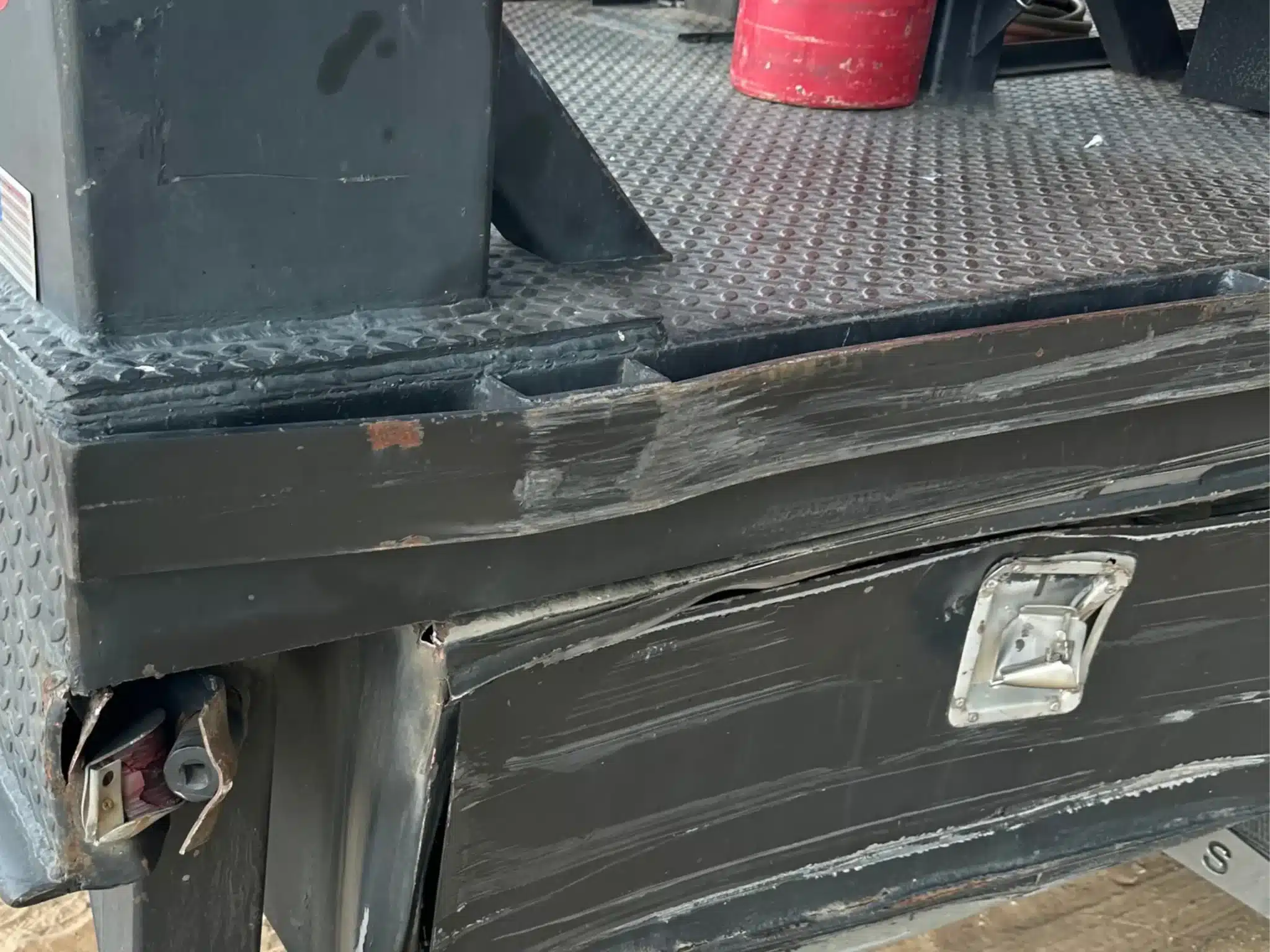
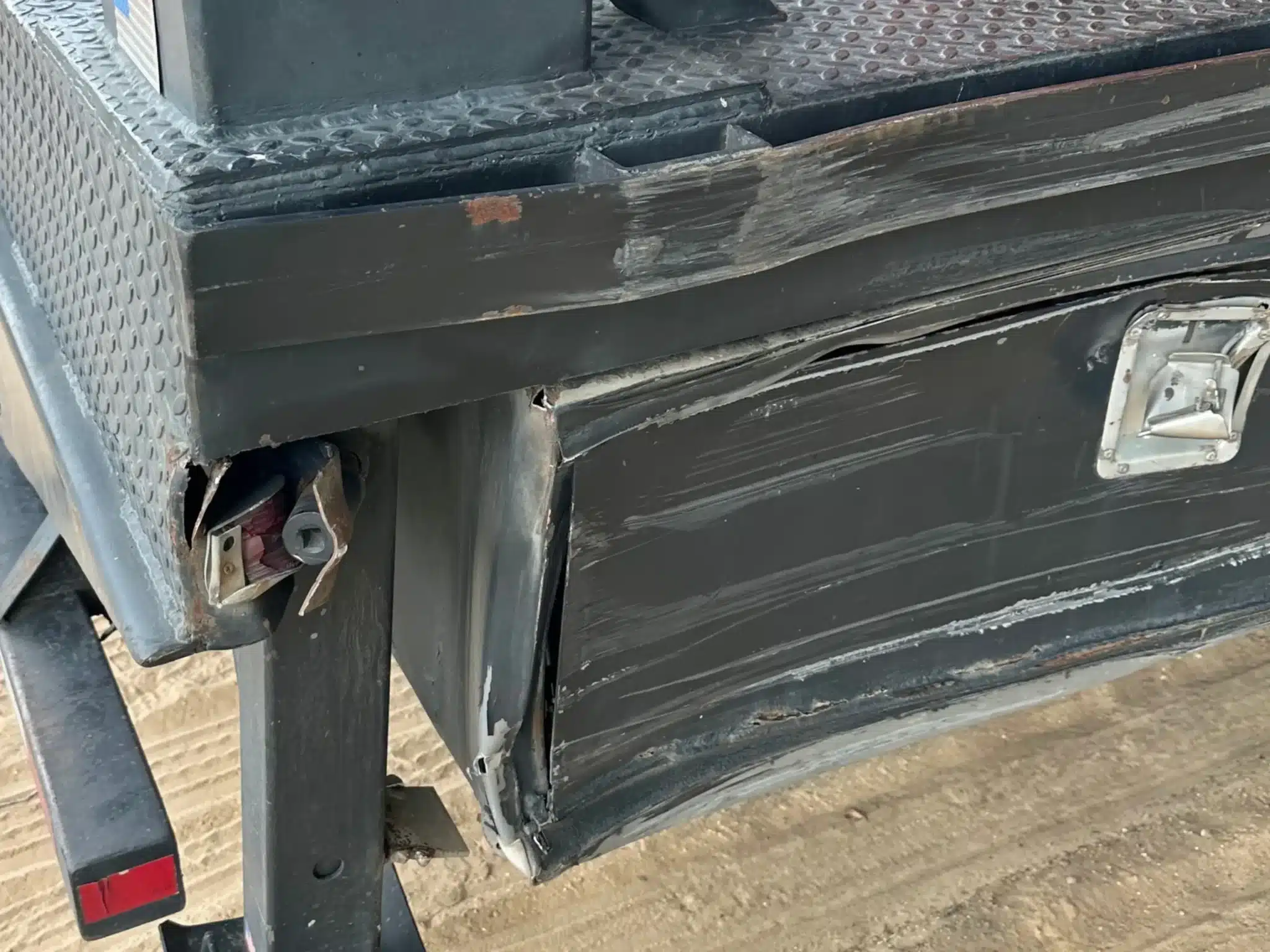
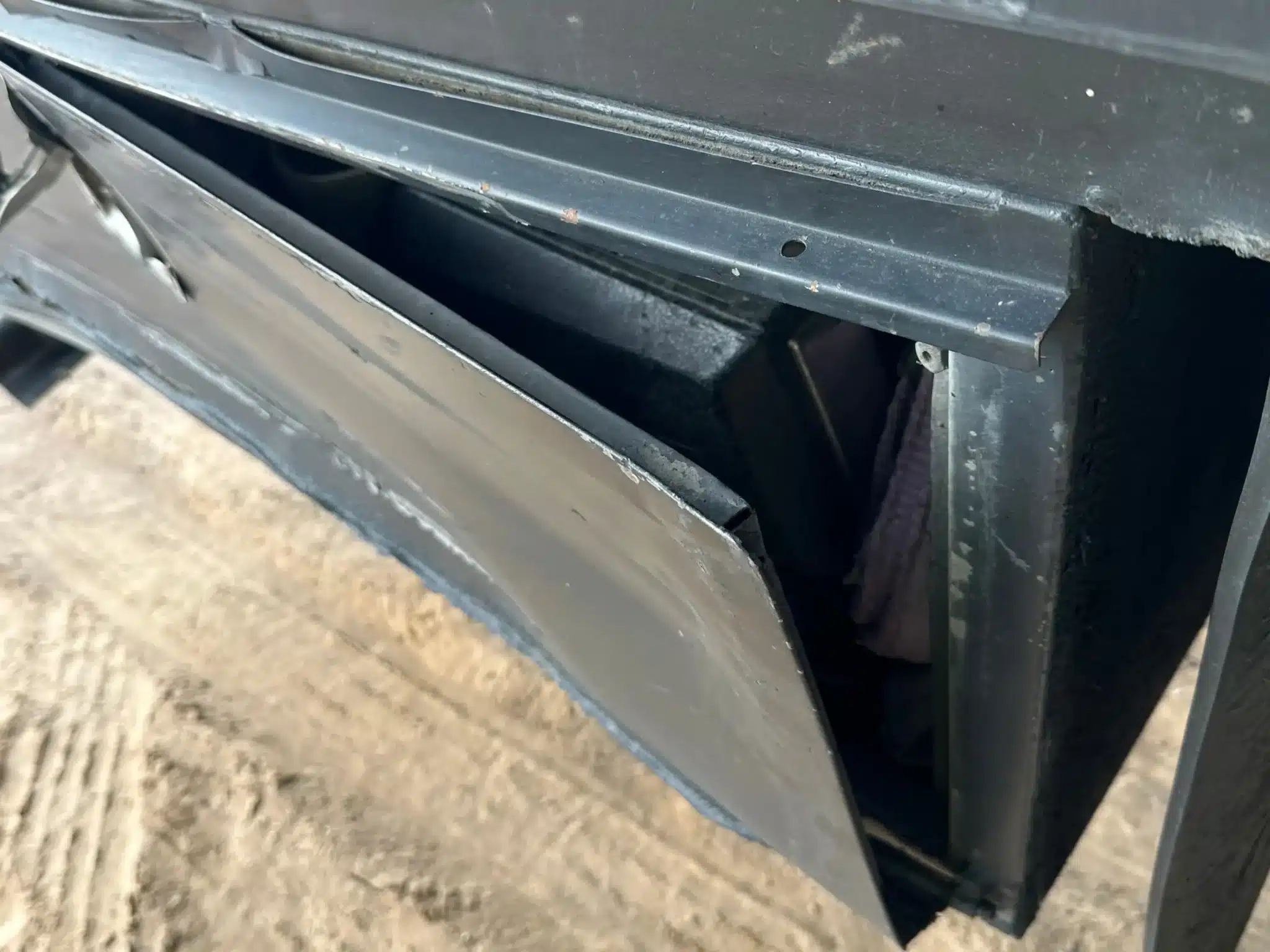
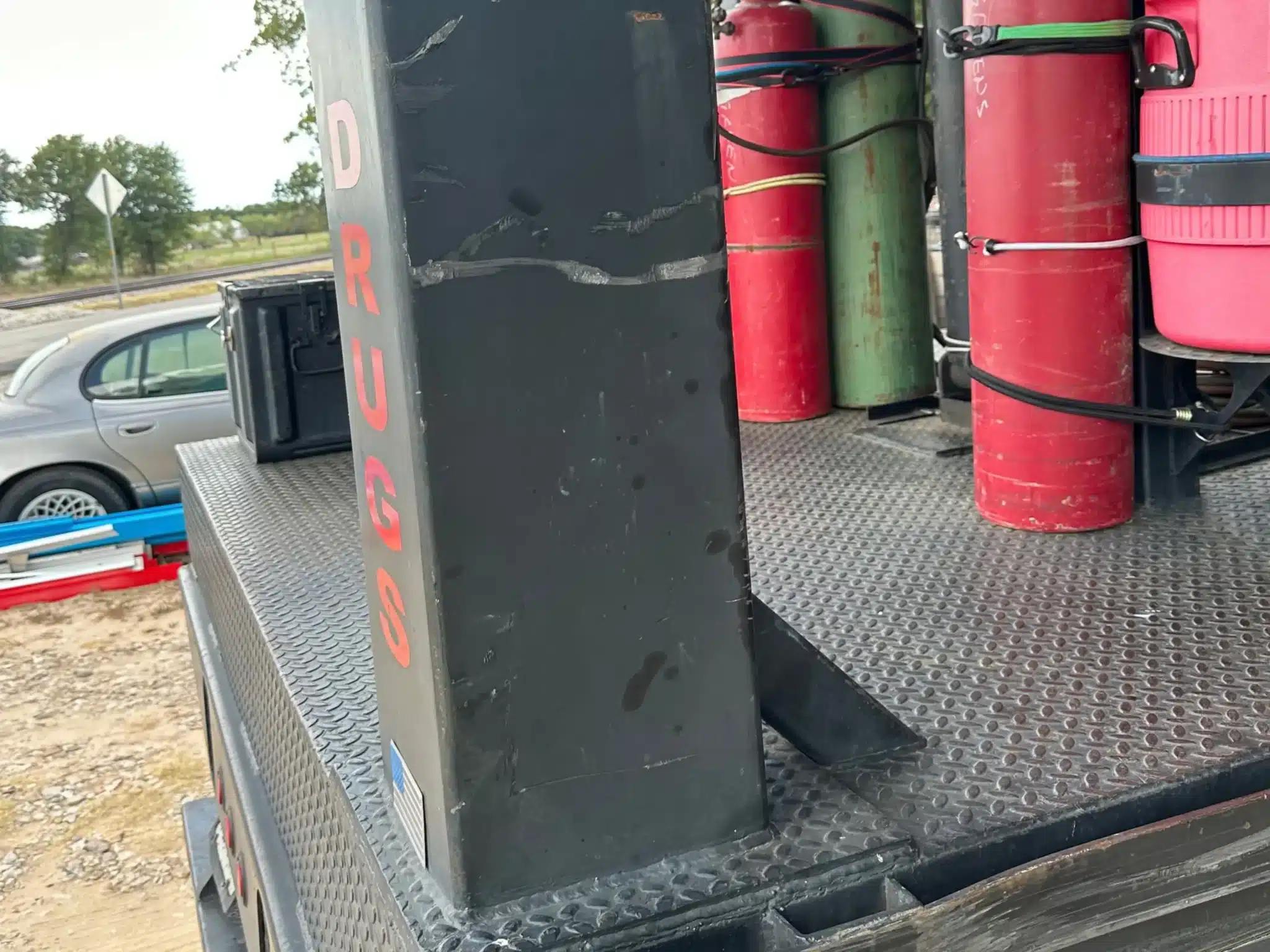
- Post crash photographs
- The post crash photographs documented visible damage to the commercial trailer and equipment, including scraping, bent metal, deformation, and damage around the trailer's rear and side structure.
Those photographs helped document the force involved in the crash and rebut any effort to minimize the collision as a minor event.
The crash did not occur because our client failed to pay attention or entered the intersection without the right of way.
The commercial truck driver had been stopped at a red light and then drove into the path of a pickup truck that was traveling through the intersection with a green light.
Injuries and Symptoms
Before the collision, our client reported no prior injury treatment, prior pain management treatment, prior surgeries, or pre crash history requiring the extensive care that followed.
After the collision, he developed pain and symptoms involving multiple parts of his body.
12 reported complaints
His complaints included:
- 01Neck pain.
- 02Neck pain radiating into the left arm.
- 03Left hand numbness.
- 04Left shoulder pain.
- 05Daily headaches.
- 06Poor sleep.
- 07Mid back pain.
- 08Low back pain.
- 09Pain in both elbows.
- 10Left wrist pain.
- 11Muscle spasm.
- 12Pain and limitations affecting the left knee.
The collision affected more than his comfort. It led to ongoing medical appointments, diagnostic imaging, prescription medication, chiropractic care, interventional pain management procedures, neurological evaluation, and orthopedic consultations.
Extensive Medical Treatment
The client began treatment shortly after the crash and continued treating for more than a year.
His care included chiropractic treatment, medication management, advanced imaging, pain management, neurology, fluoroscopy guided procedures, and orthopedic consultations.
Chiropractic Treatment
From September 9, 2024, through December 9, 2024, the client attended 26 chiropractic visits.
The treatment included electrical stimulation, traction, hot and cold therapy, ultrasound, manual therapy, and therapeutic exercise.
His chiropractic diagnoses included cervical radiculopathy, cervical and left shoulder sprains, post traumatic headache, muscle spasm, and myalgia.
At the start of treatment, he reported neck pain radiating to the left arm, numbness in the left hand, left shoulder pain, recurring headaches, and disrupted sleep.
Pain Management
The client began pain management care in September 2024 and remained under care through at least September 2025.
Early pain management records documented neck pain, mid back pain, low back pain, left shoulder pain, bilateral elbow pain, left wrist pain, and head pain.
His physicians prescribed muscle relaxants, anti inflammatory medication, topical pain relief medication, gabapentin, tramadol, and celecoxib.
The treatment plan evolved as his symptoms continued.
He underwent multiple pain management procedures performed under fluoroscopy, including:
Six procedures under fluoroscopy
- A left knee steroid injectionMore than 70 percent reported relief
- A left knee genicular nerve blockMore than 70 percent reported relief before symptoms returned
- A left knee genicular nerve radiofrequency ablationApproximately 75 percent reported relief
- A left L5-S1 transforaminal epidural steroid injectionApproximately 80 percent reported relief
- A left shoulder subacromial steroid injectionApproximately 80 percent reported relief
- A repeat left L5-S1 transforaminal epidural injectionMore than 80 percent reported relief
The need for repeated injections and interventional procedures demonstrated that the client's symptoms persisted well beyond the initial period after the crash.
MRI and Diagnostic Findings
The client underwent substantial diagnostic testing to determine the nature and extent of his injuries.
MRI 01
Cervical Spine
A cervical MRI documented:
- 01A 2.5 mm disc herniation at C4-5.
- 02A 2 mm disc herniation with bone spurring at C5-6.
- 03A 4 mm disc and bone spur complex at C6-7.
- 04Moderate spinal canal narrowing.
- 05Moderate to severe narrowing around the nerve openings from C5 through C7.
MRI 02
Lumbar Spine
A lumbar MRI documented:
- 01Disc bulges and bone spurs from L3 through S1.
- 02Disc degeneration.
- 03A 3.5 mm L5-S1 disc bulge contacting both L5 nerve roots.
MRI 03
Left Shoulder
A left shoulder MRI documented:
- 01A high grade, near full thickness tear involving the supraspinatus tendon.
- 02Partial involvement of the infraspinatus tendon.
- 03Biceps tendinosis.
- 04AC joint arthritis.
- 05Bursitis.
- 06Mild muscle wasting and fatty change.
MRI 04
Left Elbow
A left elbow MRI documented:
- 01High grade common extensor tendinosis with partial tearing.
- 02Triceps tendinosis.
- 03Advanced cartilage wear.
- 04A small joint effusion.
Neurological testing also documented moderate chronic left lumbosacral radiculopathy and moderate peripheral neuropathy affecting both legs.
The neurological provider diagnosed a concussion without loss of consciousness and post traumatic headaches. While the headaches eventually resolved, the client continued reporting neck, low back, and left shoulder pain.
Effect on a Construction Worker
Our client worked in construction and remained on regular duty while receiving treatment.
Continuing to work did not mean the crash had no effect on him.
Construction work requires physical ability, including lifting, carrying, pushing, pulling, bending, reaching, standing, walking, climbing, maintaining balance, and working safely around tools, equipment, and other workers.
Neck pain, back pain, radiating arm symptoms, shoulder pain, knee pain, hand numbness, headaches, and sleep disruption can significantly affect a person whose livelihood depends on physical labor.
The client had to manage pain while continuing to meet the demands of his work.
He also had to attend ongoing treatment, take prescribed medication, undergo diagnostic testing, participate in chiropractic care, and receive interventional pain procedures.
An orthopedic extremity examination documented a mild limp, reduced left quadriceps strength, reduced left shoulder strength, a mild varus deformity, and continuing symptoms involving the left knee and shoulder.
An orthopedic spine specialist diagnosed cervical and lumbar radiculopathy, disc displacement, and chronic post traumatic pain.
Future Care Recommendations
The client's physicians did not treat this as a short term injury claim.
In October 2025, orthopedic specialists documented continuing complaints and recommended additional care.
- Orthopedic spine surgeonThe orthopedic spine surgeon recommended a cervical epidural injection at C7-T1.
- If symptoms persistedIf symptoms persisted, the surgeon recommended consideration of a left L5-S1 laminotomy with discectomy.
- Orthopedic extremity surgeonThe orthopedic extremity surgeon recommended further evaluation of the left knee and identified possible future treatment that could include a left total knee replacement and left rotator cuff repair if the client's symptoms continued.
The records also included future care estimates for potential shoulder repair, lumbar surgery, knee replacement, elbow treatment, repeat injections, radiofrequency ablation, and future therapy.
Future medical recommendations were important because they showed that the consequences of the commercial truck crash were not confined to the date of collision or the first few weeks of care.
The records also documented recommended future treatment and associated estimates. Future care estimates are separate from incurred medical charges, but they were relevant to evaluating the client's continuing medical needs and the potential long term consequences of the crash.
Litigation and Resolution
The clear crash report was a critical part of the case, but proving fault was only the beginning.
The case still required comprehensive preparation to demonstrate the full scope of the client's damages.
Claim development
Attorney Laura Rivas developed the claim around:
- 01The official crash report and officer's finding that the commercial driver failed to yield.
- 02The fact that our client had the green light and right of way.
- 03The commercial nature of the tractor trailer collision.
- 04The physical damage to the commercial equipment.
- 05The client's symptoms following the crash.
- 06More than a year of treatment.
- 07Chiropractic care, imaging, medications, pain management procedures, neurology, and orthopedic consultations.
- 08MRI and diagnostic findings involving the cervical spine, lumbar spine, left shoulder, and left elbow.
- 09The effect of the injuries on a client whose work required physical labor.
- 10Ongoing pain, functional limitations, and recommendations for future care.
Because the case proceeded into litigation, the evidence had to withstand close scrutiny.
The litigation process created an opportunity to fully present the commercial driver's failure to yield, the substantial treatment that followed, and the real effect of the injuries on the client's life and work.
On , Attorney Laura Rivas secured a $325,000 settlement for the client.
When a Commercial Driver Fails to Yield
$325,000 Settlement
Resolved during litigation on
Attorney: Laura Rivas
Resolved during litigation on
Attorney: Laura Rivas
This result reflects the importance of immediate investigation, preservation of commercial vehicle evidence, strong liability development, complete medical documentation, careful analysis of future treatment needs, and persistent advocacy when a commercial driver fails to yield the right of way.
See more case results from J. Alexander Law, or learn how the firm handles commercial truck accident cases across Texas.
Attorney Review

Case handled by: Laura Rivas, Senior Associate Attorney
Settlement reached:

Reviewed by: Josh Alexander, Founder and Managing Attorney
Published:
Last reviewed:
Case Result Disclaimer
Every case is different. Past results do not guarantee a similar outcome. Results depend on the facts of the collision, liability evidence, available insurance coverage, the nature and extent of injuries, medical treatment, damages, future care needs, and other case specific circumstances.
13Contact
Hurt in a
Hurt in a
Commercial Truck Crash?
If a commercial driver failed to yield and you were injured, J. Alexander Law can review the facts of your situation.