A wide Texas intersection at dusk, where side impact collisions happen most

Dallas T bone accident lawyer.

Reviewed by Josh Alexander, Founder & Managing Attorney · Updated August 2026

A T bone accident can change your life in seconds. When another driver hits the side of your vehicle, the impact can cause serious injuries. Proving fault often depends on evidence that may disappear quickly. We investigate Dallas intersection crashes by reviewing traffic signal timing records, vehicle damage, crash reports, nearby surveillance footage, and available vehicle data. Read below to find out how we can help you.

Rated 4.9 from 568+ client reviews
$100M+

Recovered for clients

75+

Years of combined experience

568+

Client reviews

5

Years Super Lawyers Rising Stars

Reflects total client recoveries across hundreds of resolved matters. Past results do not guarantee a similar outcome.

Right of way

Right of way violations cause broadsides.

Most T bone crashes happen because one driver had the right of way and another driver failed to yield. The drivers’ statements alone may not show who had the right of way at the time of the crash.

Common failure to yield violations include:

  • Running a red light or stop sign
  • Turning left across oncoming traffic
  • Pulling out of a driveway or parking lot into moving traffic

Speeding and distracted driving can make these crashes more severe, but they often accompany a failure to yield rather than cause the broadside collision by themselves. A T bone crash occurs when one vehicle enters another vehicle’s path and strikes its side.

A driver who does not see a red light, stop sign, or approaching vehicle may not brake before impact. That can make a side impact collision especially dangerous.

The right of way presumption
A driver who was required to stop and yield at an intersection, and who then collides with a vehicle that had the right of way, is presumed not to have yielded the right-of-way.

Tex. Transp. Code § 545.151(f)

This presumption sets the default, not an automatic finding of fault. Other evidence can challenge it. Even if the presumption applies, a Dallas County jury may assign part of the blame to the injured driver, which can reduce that person’s recovery. The evidence we may collect includes:

  1. 01Traffic signal controller logs showing when each signal changed
  2. 02Video from businesses, homes, doorbell cameras, or nearby vehicles
  3. 03Vehicle damage patterns, including the location and depth of the impact
  4. 04Crash reports and witness statements
  5. 05Event data recorder information, sometimes called black box data

The crash

Side impact crashes cause serious injuries.

A T bone accident happens when the front of one vehicle strikes the side of another vehicle. These crashes often happen at intersections, driveways, and parking lot exits. The vehicles form a T shape at the point of impact.

Why a side impact does more damage

The front of a vehicle has several feet of structure designed to absorb crash energy before it reaches the people inside. The side of a vehicle has far less protection. It may include only the door, an inner panel, and the pillars around the door.

With less space to absorb the force, a side impact can cause major damage at speeds that might cause less severe damage in a rear end collision. When the impact comes through a door, the force can reach the person inside much more directly.

IIHS, using federal fatality data, reported that side impacts accounted for 22 percent of passenger vehicle occupant deaths in 2024. Frontal impacts accounted for 59 percent, and rear impacts accounted for 5 percent. This statistic describes where fatal impacts occurred on a vehicle. It does not show how often a T bone crash is fatal.

Many people survive side impact crashes. The limited protection between the striking vehicle and the occupant is what makes these collisions particularly dangerous, and in fatal cases a wrongful death claim may take the place of an injury claim.

Have an attorney review your crash
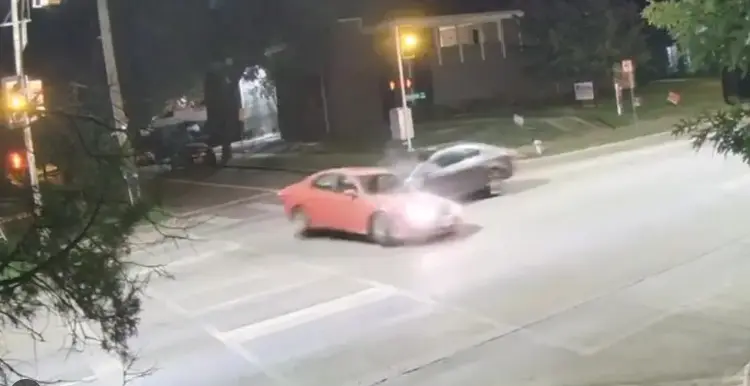
Two vehicles forming a T shape after a side impact at a Dallas intersection
The front of one vehicle meets the side of another, and the two form a T.

This crash may also be called

  • A side impact collision
  • A broadside collision
  • A right angle collision

What a struck door does to the body behind it

In a side impact crash, force pushes the body sideways rather than forward. The head and neck may move laterally, while the arm, ribs, hip, and knee closest to the door can absorb the impact or be injured by the door pushing inward.

A T bone crash can cause whiplash even without a rear end impact. The neck is forced sideways, which can strain soft tissues and cause other neck injuries.

Common injuries include:

  • Neck and back injuries, including whiplash and disc herniation
  • Shoulder, rib, and collarbone fractures on the struck side
  • Pelvis, hip, and knee injuries caused by door intrusion
  • Head injuries, including concussions from lateral movement or contact with a vehicle pillar
  • Internal or abdominal injuries that may not appear immediately
  • Psychological injuries, including post traumatic stress and anxiety about driving
How these injuries become a claim

Injuries form the basis of both parts of a Dallas injury claim. Medical records and employment records may support economic damages, including medical care already received, medical care reasonably expected in the future, lost income, and lost earning capacity.

The injuries may also support non economic damages, including physical pain, mental anguish, physical impairment, and disfigurement. Anxiety, post traumatic stress, and fear of driving after a violent crash may be included in a claim for mental anguish.

In most cases, an injury lawsuit must be filed within two years of the crash. Future medical needs should be identified and included before that deadline expires. Tex. Civ. Prac. & Rem. Code § 16.003(a).

The force that injures an occupant can also total the vehicle. Photograph and measure damage around the door and side of the vehicle before it is released or sent to a salvage yard.

If a T bone crash causes a death, the case may involve both a wrongful death claim and a survival claim. A wrongful death claim addresses certain losses suffered by surviving family members. A survival claim seeks damages the person who died could have pursued if they had survived. These claims may have a two year deadline running from the date of death. Tex. Civ. Prac. & Rem. Code § 16.003(b).

Fatal and catastrophic crashes can also create losses that exceed the at fault driver’s available insurance coverage. In those cases, identifying all possible coverage can be especially important.

Serious side impact injuries may cost more than the $30,000 per person liability coverage Texas drivers are generally required to carry. Tex. Transp. Code § 601.072. Depending on the facts, available coverage may include uninsured or underinsured motorist coverage, an employer’s policy if the other driver was working, or commercial coverage tied to the vehicle.

Any percentage of fault assigned to an injured person can reduce the available recovery, so the severity of the injuries and the available insurance coverage both have to be evaluated carefully.

If the driver who hit you was intoxicated or acted with conscious indifference to an extreme risk, Texas law may allow exemplary damages in addition to compensatory damages. Exemplary damages require proof of fraud, malice, or gross negligence by clear and convincing evidence. Tex. Civ. Prac. & Rem. Code § 41.003.

An ordinary failure to yield violation does not automatically meet that standard. A gross negligence claim may increase the value and complexity of the case, especially when the underlying injuries already exceed available minimum insurance coverage.

Source: IIHS Fatality Facts 2024, passenger vehicle occupants, compiled from the federal Fatality Analysis Reporting System.

Recoveries

T bone accident recoveries.

$15M
18 wheeler, wrongful death

Recovered for a family after a fatal collision involving an 18 wheeler.

$2.55M
Tractor trailer crash

Recovered for a client seriously injured in a tractor trailer crash.

$1M
Commercial truck crash

Recovered after a commercial truck caused a high impact highway collision.

These are examples of past results. Past results do not guarantee or predict a similar outcome.

Video evidence

Video evidence can prove fault in Dallas.

A traffic camera mounted above a Dallas intersection
Cameras above a Dallas crossing. The ones that record are rarely the ones on the mast.

Video can be some of the strongest evidence in a Dallas T bone crash case. Footage may show which vehicle entered the intersection against a red light or failed to yield. That can help establish who had the right of way.

Right of way is important because Texas proportionate responsibility rules can reduce a person’s recovery based on their percentage of fault. Video showing which driver entered on a green light can limit an insurer’s ability to blame the other driver.

Read more

A dispute involving a left turn often requires the same evidence as a red light dispute: video footage and traffic signal timing data. Both can help show where each vehicle was when the light changed. Tex. Transp. Code § 545.152.

Video may be erased within days or weeks. Footage from a nearby gas station, business, home, or doorbell camera may be more valuable than highway camera footage.

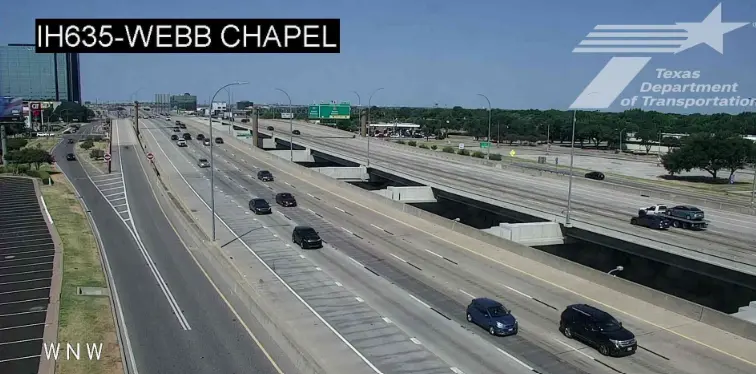
TxDOT traffic cameras

TxDOT cameras monitor traffic live. TxDOT holds only the crash report.

Read more

TxDOT traffic cameras show live traffic conditions. TxDOT states that its camera footage is not recorded, and that it is generally the custodian of the crash report rather than of traffic camera video.

TxDOT can provide the CR-3 crash report. A regular copy may be purchased through the CRIS system for $6, while a certified copy costs $8. Requests for police dash camera footage, officer body camera footage, field notes, and scene photographs generally must be made to the agency that investigated the crash.

I-30US 75I-635

Dallas Police records and video

The Open Records Unit provides reports. The City Secretary handles video.

Read more

The Dallas Police Department Open Records Unit can provide accident reports, including CR-3 reports. The City of Dallas City Secretary’s Office handles requests for police body camera and in car video.

Requests may be submitted through the City of Dallas open records portal or by email at openrecords@dallas.gov. The City generally requests 5 to 10 business days to respond. Under the Texas Public Information Act, a government body that cannot provide records within 10 business days must certify that in writing and provide a date when the records will be available. Tex. Gov’t Code § 552.221(d).

CR-3 reportIn car video

Traffic signal controller logs

Signal data may show what each light displayed and exactly when it changed.

Read more

Traffic signal data may show what each light displayed and when the signal changed.

The City of Dallas operates traffic signals and traffic management systems. Signal controller data may be important when both drivers say they had a green light. Even without crash video, signal timing may help show whether one driver entered the intersection too late.

Signal timing data

DART buses and rail cameras

A DART bus or train passing the scene may have recorded the intersection.

Read more

A DART bus or train passing through the area may have recorded the intersection or nearby roadway.

DART’s camera system covers buses, trains, platforms, bus stops, and facilities. Public information requests may be sent to openrecords@dart.org. Include the route number, location, and a specific time range whenever possible.

Route numberTime range

Dallas County Sheriff video

If deputies responded, patrol car or body camera footage may be available.

Read more

If Dallas County Sheriff’s deputies responded to the crash, patrol car or body camera footage may be available through a public information request.

Include the crash report number, if available, to help identify the records.

Report number

Business and doorbell cameras

A gas station, store, or home camera is often the only recording of the crash.

Read more

A nearby gas station, store, apartment complex, or home may have the only recording of the collision.

These cameras are often more useful than highway cameras, but they are also more likely to overwrite footage quickly. After a serious crash, we can identify nearby businesses and properties facing the intersection and send preservation letters asking them not to delete relevant video.

Preservation letter

Dallas video can be gone in days.

Texas law does not require every business or property owner to keep traffic video. A gas station, apartment complex, or store may overwrite footage within days. Under Brookshire Bros., Ltd. v. Aldridge, a preservation letter can create a duty to preserve evidence when the owner knows that a claim is likely. Sending a letter quickly may help prevent relevant video from being erased.

Send a preservation letter

Vehicle data

Vehicle black box data.

Many vehicles record information from the seconds before a crash. For vehicles manufactured before September 1, 2031, federal rules generally require event data recorders to capture five seconds of pre crash information at two readings per second. 49 C.F.R. § 563.7.

That information may include:

  • Vehicle speed
  • Braking activity
  • Throttle position
  • Steering input
  • Seatbelt use
  • Whether the driver accelerated or braked before impact
What the data proves, and how to reach it

Vehicle data can be especially useful in a T bone case because it may show speed and braking before the collision.

For example, data showing no braking may support the argument that a driver failed to yield under the section 545.151(f) presumption. Data showing hard braking at a low speed may support the driver’s claim that they tried to avoid the collision. Signal controller logs can add another layer of evidence by showing whether the striking driver faced a red light.

Together, vehicle data and signal timing may help resolve a green light dispute when neither driver’s statement is enough.

Speed data can also help explain the severity of a side impact crash. Accident reconstruction experts may compare vehicle data with physical evidence, including the amount of door intrusion, to estimate the force and speed involved in the collision, and the opinion built on that comparison can support the fault percentages a jury is asked to assign.

Texas law limits access to event data recorder information. In many cases, the vehicle owner must consent, or a court order may be required. Tex. Transp. Code § 547.615. A court order generally requires a lawsuit to be filed, so acting early can help preserve both vehicle data and video evidence before important deadlines pass.

Where they happen

Dallas intersections with the most crashes.

Our analysis of the TxDOT crash extract ranks every Dallas intersection against the rest of the state. Three inside Dallas city limits reach the statewide top 50. Each is a signalized intersection on a high volume arterial roadway, where turning, entering, and cross traffic create conditions for T bone crashes.

Dallas Parkway at Frankford Road

35 reported crashes and 37 injuries. This intersection had the highest reported crash total of any intersection within Dallas city limits.

Market Center Boulevard at Stemmons Freeway

29 reported crashes and 21 injuries. This intersection is near the Design District, where arterial traffic connects with the I-35E frontage road system.

Hillcrest Road at Lyndon B Johnson Freeway

27 reported crashes and 16 injuries. This intersection connects a north Dallas arterial road with the I-635 frontage road.

At signalized intersections, fault disputes often involve a left turn or a driver entering the intersection late. A driver turning left must yield to oncoming traffic that is close enough to create an immediate hazard. Tex. Transp. Code § 545.152. A driver entering from a driveway, alley, or parking lot must yield to traffic already on the roadway. Tex. Transp. Code § 545.155.

The City of Dallas operates the signals at these intersections. Signal controller logs may be City records and can be requested through the same process used for City held video.

Compare your own Dallas intersection using our dangerous intersections tool.

Intersection ranking from the TxDOT CRIS public extract for 2025, analysed by this firm.

Meet our legal team.

Josh Alexander, Founder and Managing Attorney at J. Alexander Law Firm

Josh Alexander

Founder & Managing Attorney

Josh Alexander is a Marine Corps veteran and trial lawyer who has recovered millions of dollars for injured clients. He leads the firm from its Dallas headquarters.

Meet Josh Alexander
Matthew Graham, Managing Litigation Attorney at J. Alexander Law Firm

Matthew Graham

Managing Litigation Attorney

Matthew Graham spent more than a decade directing insurance defense litigation for a 10 state region of one of the nation’s largest auto insurers. He now represents injured people and their families.

Meet Matthew Graham
Laura Rivas, Senior Associate Attorney at J. Alexander Law Firm

Laura Rivas

Senior Associate Attorney

Laura Rivas has more than nine years of experience representing people injured in motor vehicle, 18 wheeler, catastrophic injury, and wrongful death cases. She speaks English and Spanish.

Meet Laura Rivas

What our clients say.

★★★★★
“They took the time to answer all of my questions and made me feel confident in them. The whole staff has been friendly and professional.”
Cecilia G.Google review
★★★★★
“After speaking with them, we were put at ease right away. They made sure my physical therapy was covered and have been invaluable to us.”
Kelly H.Google review
★★★★★
“Excelente servicio al cliente, son muy atentos con sus clientes. La comunicacion es muy buena; te ayudan a cualquier hora.”
Salvador T.Google review

Reviews from actual clients. Past results do not guarantee a similar outcome.

Answers

Frequently asked questions.

Both drivers say they had a green light. How is fault determined in Dallas?
We look beyond each driver’s statement. Signal controller logs may show when each light changed. We also review available video, vehicle damage, witness statements, crash reports, and event data recorder information. Texas law may also create a presumption against a driver who was required to stop and yield but collided with a vehicle that had the right of way. Tex. Transp. Code § 545.151(f).
Who is at fault if a driver pulls out of a gas station and hits my car in Dallas?
The driver entering the roadway generally must yield to traffic already on the road. Tex. Transp. Code § 545.155. The gas station’s surveillance video may be important evidence, but it could be erased quickly. It is important to identify and preserve that footage as soon as possible.
How long does footage last from intersection cameras in Dallas?
There is no single video retention period. Government agencies, businesses, and homeowners may use different systems and policies, and some footage may be overwritten within days. The safest approach is to identify every possible camera owner immediately and send preservation requests as soon as possible.
Could a defective Dallas traffic signal affect my claim?
Potentially. If a government entity may be responsible, for example because of a dangerous condition involving a City owned traffic signal, you may need to provide formal notice of the claim within six months. Tex. Civ. Prac. & Rem. Code § 101.101. Signal controller data may show whether the signal malfunctioned. That same evidence may affect whether a government entity is part of the case and whether the six month notice deadline applies. This notice deadline is separate from the usual two year deadline to file a personal injury lawsuit. Missing a government notice deadline may prevent a claim against that government entity.
Can the insurance company blame me for part of a T bone accident in Dallas?
An insurance adjuster can claim that you share fault, but you do not have to agree with that assessment. The adjuster’s percentage is an argument, not a jury finding. Under Texas proportionate responsibility law, sometimes called the 51 percent bar, your recovery may be reduced by your percentage of fault. You generally cannot recover damages if you are found more than 50 percent responsible. Tex. Civ. Prac. & Rem. Code §§ 33.001, 33.012(a). For example, a 10 percent change in fault can change a $100,000 claim by $10,000. Before accepting an insurer’s fault assessment, ask what evidence the adjuster relied on.
When can I declare my vehicle as a total loss after a Dallas crash?
Texas classifies a vehicle as a salvage motor vehicle when the cost of repairs, excluding repainting and sales tax, exceeds the vehicle’s pre crash value. Tex. Transp. Code § 501.091(15). Insurers may use lower internal thresholds when deciding whether to declare a vehicle a total loss. Photograph the damage, especially intrusion into the side of the vehicle, before it is taken to a salvage yard.

Dallas headquarters

Talk with a Dallas T bone lawyer.

A t bone accident is one type of car accident claim. Our Dallas car accident lawyers page explains the evidence that may matter and what to expect during the first week after a serious crash.

Bring the crash report, the cross streets, and any information you have about the other vehicle or insurer. Tell us which direction each vehicle was traveling and what you observed about the traffic light. We will identify who may have relevant footage, send preservation letters, and track the deadlines that may affect your case. There are no upfront fees.

Headquarters
12801 N Central Expy, Suite 1100
Dallas, TX 75243
(469) 807-7480
Dallas County · Open 24 hours · Directions