


Say another driver hits your car. Their insurer pays to fix it, and it comes back from the shop looking fine. But when you try to sell it or trade it in, the buyer checks its history report, sees the accident and offers less than they would for the same car with a clean history.
That difference is called diminished value. In Texas, the at fault driver’s insurance can owe it, on top of the repair bill.
A claim is most likely to be worth filing for a newer, valuable or low mileage car, or one with serious damage. If the insurer refuses, the time to sue generally runs out two years after the crash.
The short answer
Who Owes Diminished Value in Texas?
Usually, the other driver’s insurer. It may owe both the cost of the repairs and the value your car still lost after them. Your own collision coverage usually pays only to fix the car, not for the lower resale value.
Under Texas law, whoever caused the crash owes for the harm it did, and that includes any value your car has lost even after a proper repair. Your own collision coverage is a different promise: it covers the cost of repairing or replacing your car, and once the repair is done right, it does not owe you for the resale value the accident takes off. The Texas Supreme Court set out these rules in J & D Towing and Schaefer. The Texas Department of Insurance agrees, in a bulletin on diminished value.
The insurance that pays is not always the driver’s own. The driver may have been in a parent’s car, a borrowed car or a company vehicle, and in Texas the policy on a vehicle generally covers someone driving it with the owner’s permission. That is why our first step is the crash report, which lists each vehicle’s owner and its insurance.
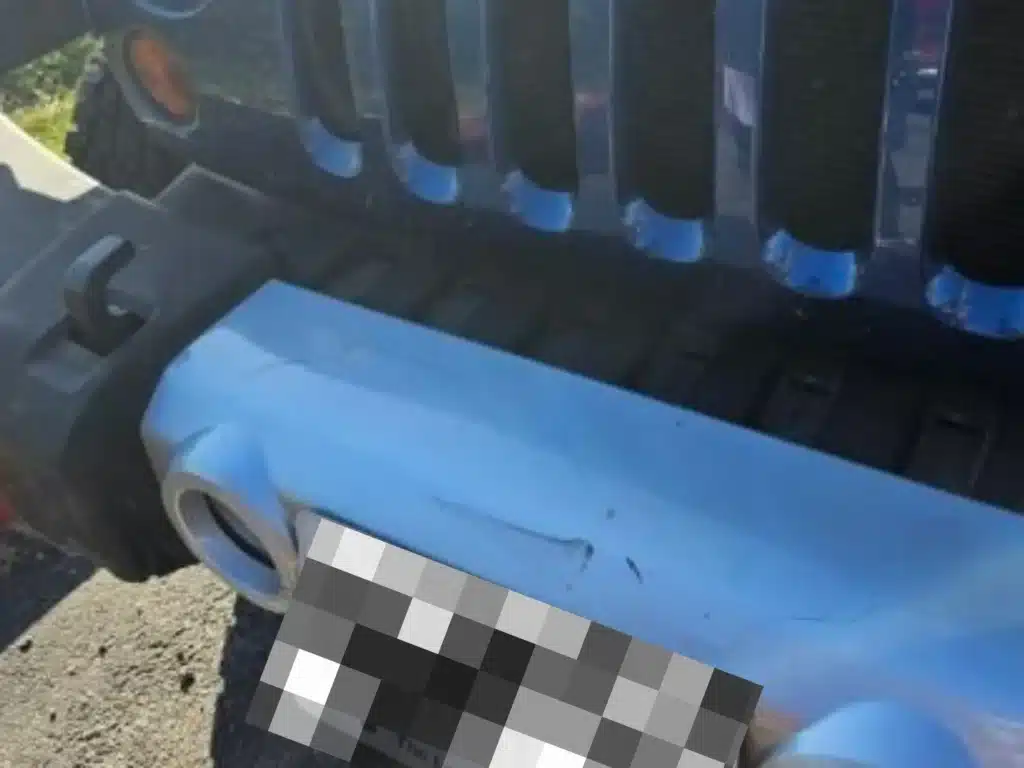
That is what happened in the FM 78 crash. The teenager driving the Jeep had no license, but the Jeep’s owner had a policy that covered anyone driving it with permission, and that policy paid our client’s injury claim. So do not assume there is no coverage just because the driver seems uninsured or unable to pay.
Your own policy may still help when the other driver’s insurance is missing or too small. Uninsured and underinsured motorist coverage includes a property damage part, often called UMPD, and depending on the policy, it can cover lost value too. Before you give up on that claim, check your declarations page, the summary page that lists the coverages you bought. When you hire us, we go through that page with you.
When Is a Diminished Value Claim Worth It?
A claim makes sense when the likely payment is worth more than the cost and effort of proving the loss. It is generally stronger when:
- The vehicle is newer, low in mileage or high in value
- The collision caused structural or frame damage
- Airbags deployed
- Repairs were extensive
- Repairs used aftermarket parts
- The crash will appear on the vehicle history report
The question can come up after the other driver’s insurer has already paid for the repair. A family who called us in June was in exactly that spot: the insurer had paid to fix their newly purchased vehicle, and they wanted to know whether it had also lost resale value. Our staff started by asking what the repairs cost and the vehicle’s year, make and model, because those facts help show whether an appraisal is worth paying for.
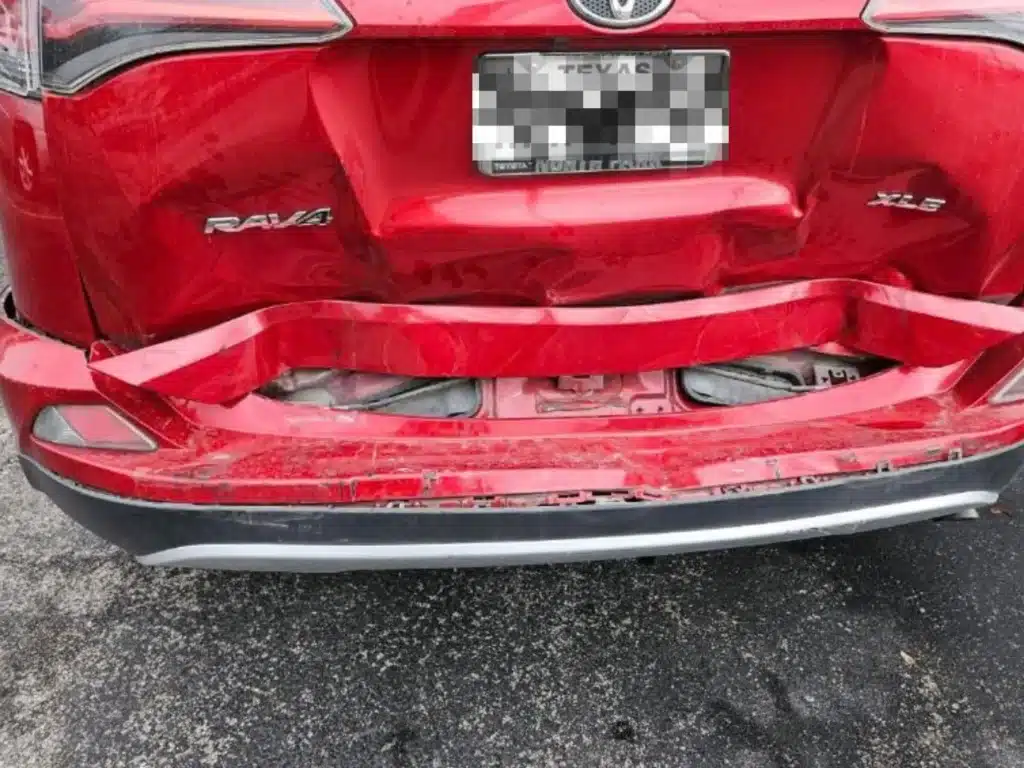
Not every claim is worth the cost. Take our client’s RAV4, shown above: it was seven years old, its airbags did not deploy and it did not need a tow. A car like that may lose less value than a newer one with structural damage. Still, the crash can show up in its history, so an appraisal is the way to put a number on the loss before deciding whether to claim it.
If the repairs would cost close to what the car was worth before the crash, the insurer may declare it a total loss instead. Then the question becomes whether the insurer valued the car fairly.
How Do You Prove Diminished Value?
To prove diminished value, you need two numbers: what your car was worth the moment before the crash, and what it is worth now, repaired but with an accident on its record. The difference between them is what you ask the insurer to pay. Helpful evidence includes:
- An independent diminished value appraisal
- Final repair invoices and estimates
- Photos taken before repairs
- The police crash report
- A vehicle history report
- Listings for comparable vehicles with clean histories
- Written trade in offers from dealers, if available
A repair invoice shows what was fixed, but not always how the crash happened or how hard the car was hit. The police crash report helps fill that gap. Texas officers use a state form called the CR-3, and for each vehicle they record a short damage code with three parts: a clock number for the direction the hit came from, letters for the part of the car that was damaged, and a number from 0 to 7 for how severe the damage was.
On the FM 78 report, the officer coded our client’s RAV4 as 6-BC-3. In plain words: the car was hit from straight behind (the 6 o’clock position), the damage was to its back, and the severity was 3, the highest rating in that crash. Our free crash report decoder explains every code on the form. We also kept photos of both vehicles; the Jeep’s creased front bumper, pictured earlier, is the other side of the same impact. That kind of record helps an appraiser explain why the car is worth less now.
If the insurer makes an offer, keep in mind that it is the insurer’s own estimate. It may come from a formula the company uses internally, and the letter may not explain how the number was reached. Do not assume the first offer covers your full loss. Compare it with your appraisal, the repair records and the accident history before you decide whether to accept it; if you send it to us, we will make that comparison as part of our free review.

Attorney perspective
Josh also works as a mediator in other cases, the neutral person who helps both sides try to reach a settlement. That lets him see insurance negotiations from both sides of the table. In his attorney profile, he writes:
“I know that a low offer does not end the discussion if the evidence tells a different story.”
“I understand why an insurance carrier may resist a number, what information may be missing, and what proof can move a stalled negotiation.”
Josh Alexander
Founder and Managing Attorney
How Do You Make the Claim, and by When?
Once the repairs are done, send the at fault driver’s insurer a written demand. A demand is simply a letter or email that states how much you are asking for, with the evidence listed above attached. On most auto policies, diminished value is paid out of the property damage limit, which is separate from the limit that pays for injuries.
Before you sign
A property damage settlement may come with a release, a document that ends all or part of your claim in exchange for payment. If the release covers diminished value, you may lose the chance to ask for more later. In a September call to our office, our staff gave a caller the same warning: signing a settlement agreement, or even cashing the check, could end the claim. Read the release before you accept any payment, and if you were also injured, have a lawyer review it as part of the whole case.
If the insurer refuses to pay, you generally must file a lawsuit before the second anniversary of the wreck (Tex. Civ. Prac. & Rem. Code § 16.003).
If you were partly to blame, your recovery shrinks in proportion to your own fault, and if you were more than half to blame, the other driver generally owes you nothing. Our guide to the Texas 51 percent bar explains how that works.

How we built this guide
Josh Alexander reviewed the legal information in this guide. Every example comes from our own case files or recorded calls to our office, with identifying details removed.
Was Your Vehicle Repaired After Someone Else Caused the Crash?
If you were hurt in the same crash, we can handle the vehicle claim along with your injury claim. Send us the repair invoice, any appraisal and the insurer’s letters, and we will tell you whether diminished value belongs in your claim and point out any paperwork you should not sign yet. A senior attorney leads every case, and a named case manager checks in with you every 14 days or sooner.
24/7 · Free consultation · No fee unless we win
Free Review of Your Vehicle Damage and Injury Claim
J. Alexander Law Firm serves injured clients throughout Texas: Dallas · Houston · San Antonio · Fort Worth · Arlington · Canton. Se habla español.