


$450,000 Midland Drunk Driver Rear End Settlement for a Driver Stopped at a Traffic Light
On This Page
A pickup driver accelerated into the back of our client’s SUV while she waited at a Midland traffic light. The investigating officer reported that the pickup driver was intoxicated and recorded an alcohol test result of 0.184.
Senior associate attorney Laura Rivas represented our client, and the case settled at mediation for $450,000.
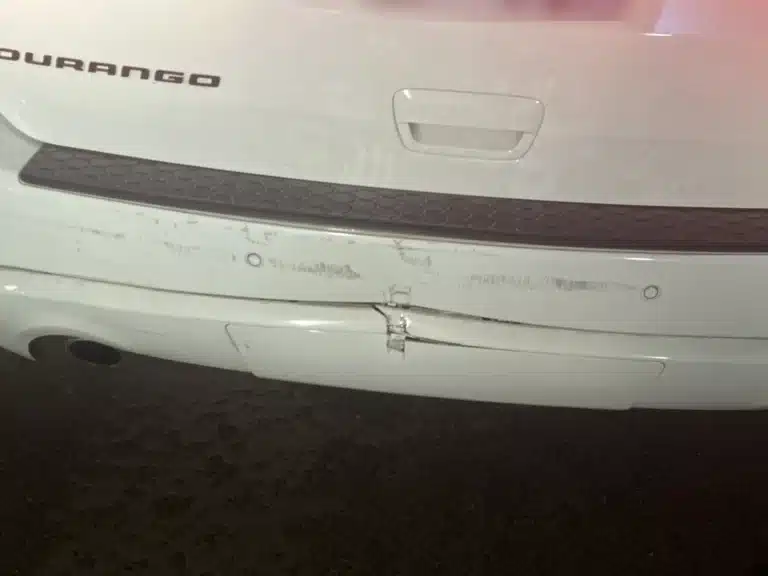
The injury claim required a detailed explanation. Both vehicles had limited visible damage, and the emergency provider the next morning recorded no apparent injury despite our client’s low back pain. Later records documented lumbar disc herniations, continued treatment and a recommendation for surgery at two levels.
The $450,000 was the gross settlement. Attorney’s fees, case expenses and amounts owed for medical care reduced what our client received.
Case Summary
| Detail | This case |
|---|---|
| Gross settlement | $450,000 |
| Resolution | Settlement reached at mediation |
| Attorney handling the case | Laura Rivas |
| Collision | Pickup struck the rear of our client’s stopped SUV |
| Alcohol result | Crash report recorded 0.184 for the pickup driver |
| Location | W. Thomason Drive at S. Midland Drive, Midland |
| Vehicle damage | Reported damage ratings of 1 for the pickup and 2 for the SUV. No airbag deployment |
| Conditions addressed in the claim | Lumbar disc herniations, a cervical disc protrusion, headaches and post traumatic stress symptoms |
| Treatment | Emergency care, about 30 chiropractic visits, pain management, a lumbar epidural injection, neurology and spine consultations |
| Surgical recommendation | Two level lumbar microdiscectomy recommended about ten months after the crash |
| Surgery status | No completed surgery documented in the records reviewed for this account |
| Our role | Represented the SUV’s driver |
A Pickup Accelerated Into Her SUV While Both Vehicles Were at a Light
Our client was stopped facing west on W. Thomason Drive at S. Midland Drive shortly before 10 p.m. The road was dry, and the intersection was lit. A child was secured in a child seat in the back of her SUV.
A pickup was stopped behind her. The officer’s narrative states that the pickup “ACCELERATED AND STRUCK UNIT 2 IN THE REAR. UNIT 1 WAS INTOXICATED.”
The report recorded an alcohol test result of 0.184 for the pickup driver. It listed a business as the pickup’s owner.
The officer recorded everyone as uninjured at the scene. The pickup was towed. Our client’s SUV was not.
The next morning, our client sought emergency care for low back pain.
Read the redacted Midland crash report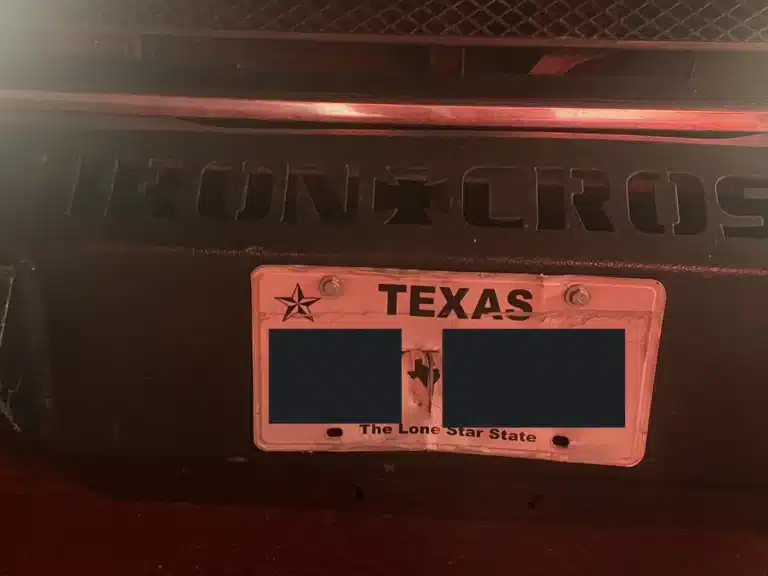
The Collision Report Did Not Resolve the Medical Questions
The report supported our account that the pickup driver accelerated into a stopped vehicle. The more complicated issues concerned the nature, cause and extent of our client’s injuries.
Several parts of the record needed to be considered together:
- Both vehicles received low damage ratings, and no airbags deployed.
- The emergency provider the next morning documented low back pain but found no apparent injury and did not order spine imaging.
- CT scans nine days after the crash showed degenerative changes without an acute abnormality.
- Three lumbar MRI reports described the disc findings differently.
- A surgeon later recommended an operation, but the reviewed records did not document that surgery taking place.
- Providers reached different conclusions about whether our client had a concussion related condition.
These details were part of the claim. They could not be replaced by the alcohol result or the fact that our client had been rear ended.
The Records and Our Work
1. The Crash Report Supported the Claim Against the Pickup Driver
Three parts of the report supported our client’s account:
- The officer described the pickup accelerating into her stopped SUV.
- The report recorded the pickup driver’s alcohol result.
- Contributing factors were assigned to the pickup driver, with none assigned to our client.
The report supported the liability claim. It did not establish the medical cause of every later symptom or determine the value of the case.
The listed business ownership was also a report entry, not, by itself, a finding that the business was legally responsible.
2. We Organized the Medical Records From the First Visit Through the Surgical Consultation
The medical packet contained 294 pages spanning approximately ten months.
The chronology showed why the early emergency findings and the later surgical recommendation both mattered.
| Time after the crash | What the records documented | Why it mattered |
|---|---|---|
| Day 1 | Low back pain, normal neurological findings and no spine imaging. The provider recorded no apparent injury. | Documented an early complaint, along with findings that did not identify a serious injury at that visit. |
| Day 9 | Neck and low back CT scans showed no acute abnormality and did show degenerative changes. | Added findings that needed to be considered alongside the later MRIs. |
| Day 27 | Lumbar MRI reported a 5 mm herniation at L4 to L5 and a 7 mm herniation at L5 to S1, with spinal canal narrowing. | Documented lumbar disc findings, without independently establishing when or how they developed. |
| Day 32 to about month 6½ | Approximately 30 chiropractic visits. | Documented the course of conservative treatment. |
| Day 60 | Cervical MRI reported a 2 mm protrusion at C5 to C6. | Added imaging relevant to the neck and arm complaints. |
| Day 142 | Lumbar epidural steroid injection. Our client later reported about 50% relief of her back pain. | Documented treatment and a partial response. |
| Days 148 to 159 | Two emergency visits for a positional headache after the injection, diagnosed as a post procedure complication. It had resolved by day 159. | Distinguished the treatment related headache from other headache complaints. |
| Day 206 | Pain management records described neck pain at 8 out of 10 and low back pain at 7 out of 10, with right sided radiation. A spine referral followed. | Documented continued symptoms after conservative care. |
| Day 268 | Lumbar MRI described a 0.9 cm extrusion at L5 to S1, an annular tear and contact with both S1 nerve roots. Brain MRI was normal. | Added later imaging findings, while leaving questions about timing and causation. |
| Day 310 | A spine surgeon found her to be a candidate for a right sided microdiscectomy at L4 to L5 and L5 to S1 and placed a surgical order. | Documented a recommendation for further treatment, not a completed operation. |
3. The MRI Findings Needed Context, Not a Claim of Proven Progression
The lumbar MRI reports did not describe the findings identically.
Across three studies, the lowest level disc finding was measured at 7 mm, then 5 mm, then described as a 0.9 cm extrusion. The reports also differed in where they described narrowing, while our client’s reported symptoms remained predominantly right sided.
Those measurements should not be presented as a simple progression without a supporting medical opinion.
The later radiologist stated that the annular tear might reflect an acute or subacute injury. That wording did not establish that the tear occurred in this crash, particularly because the study was performed months afterward.
Our account therefore distinguishes what the radiologist observed from what the records could establish about causation.
4. Other Records Also Contained Differences
The file included inconsistencies beyond the MRI measurements:
- Pain management and spine records said our client had not returned to her physically demanding job. Neurology histories reported a return to full duty.
- A spine note placed the injection about two months earlier, while billing records placed it near the fifth month after the crash.
- The demand package referred to a hospitalization, while the reviewed records documented emergency visits with same day discharge.
These differences limit what can be stated confidently. This account does not claim a confirmed period of lost work or an inpatient hospital admission based on those entries.
5. Providers Reached Different Conclusions About the Head Symptoms
Around the ninth month, the spine practice recorded that our client’s jaw had struck the steering wheel and diagnosed post concussion syndrome.
About two weeks later, a neurologist evaluating her by video reported no clinical evidence of a mild traumatic brain injury. That note also recorded diagnoses including closed head injury, whiplash, a chronic migraine pattern and acute post traumatic stress symptoms, including anxiety about driving.
Her brain MRI was normal.
The records therefore contained different clinical assessments. We have not combined them into a definitive brain injury diagnosis that the neurologist did not make.
Laura Rivas Represented Our Client in a $450,000 Settlement
| Resolution | Amount |
|---|---|
| Settlement reached at mediation | $450,000 gross |
Laura represented our client through mediation, where the parties agreed to settle for $450,000.
The settlement was an agreement between the parties, not a judge’s or jury’s decision about fault, medical causation or damages.
The case involved the crash report, serial imaging, treatment history and surgical recommendation. We do not attribute the settlement to any single record, argument or attorney action.
The recommended surgery had not been documented as completed in the records reviewed for this account. The settlement should not be described as compensation for an operation already performed.
Injured in a Crash Involving an Intoxicated Driver?
Tell us what happened, when you sought treatment and what the providers found. We can discuss whether we can help review the crash evidence, medical records and potential insurance coverage.
Contact Us About Your ClaimLearn about our representation in drunk driving injury claims
A Settlement Is Not a Court Finding
No judge or jury determined which injuries the crash caused or what our client’s losses were worth. The $450,000 was the amount agreed to at mediation.
Other limits matter:
- The alcohol result and the officer’s intoxication statement come from the crash report. This page does not report a criminal conviction.
- The report’s business ownership entry does not establish employer or business liability.
- A surgical recommendation is not a completed surgery.
- The MRI measurements do not, by themselves, prove that an injury worsened over time.
- The records contained different accounts of work status and head injury diagnoses.
- The settlement was gross, before attorney’s fees, case expenses and medical payments.
- Past results do not guarantee a similar outcome.
Where the Facts Come From
| Source | What it supports |
|---|---|
| Redacted Midland police crash report | The officer’s narrative, recorded alcohol result, contributing factors, vehicle ownership entry, damage ratings, scene injury entries and towing |
| Client medical records, 294 pages, not published | Emergency care, imaging reports, treatment, diagnoses, differing histories and the surgical recommendation |
| Firm’s case file, not published | Laura Rivas’s handling of the case and the $450,000 mediated settlement |
The crash report does not verify the medical treatment or settlement. Those portions of this account are reported by the firm from the medical records and its case file.

Case handled by: Laura Rivas, Senior Associate Attorney

Reviewed by: Josh Alexander, Founder and Managing Attorney