


$60,000 Settlement for a Garland Driver Whose Shoulder Fracture Required Surgery
On This Page
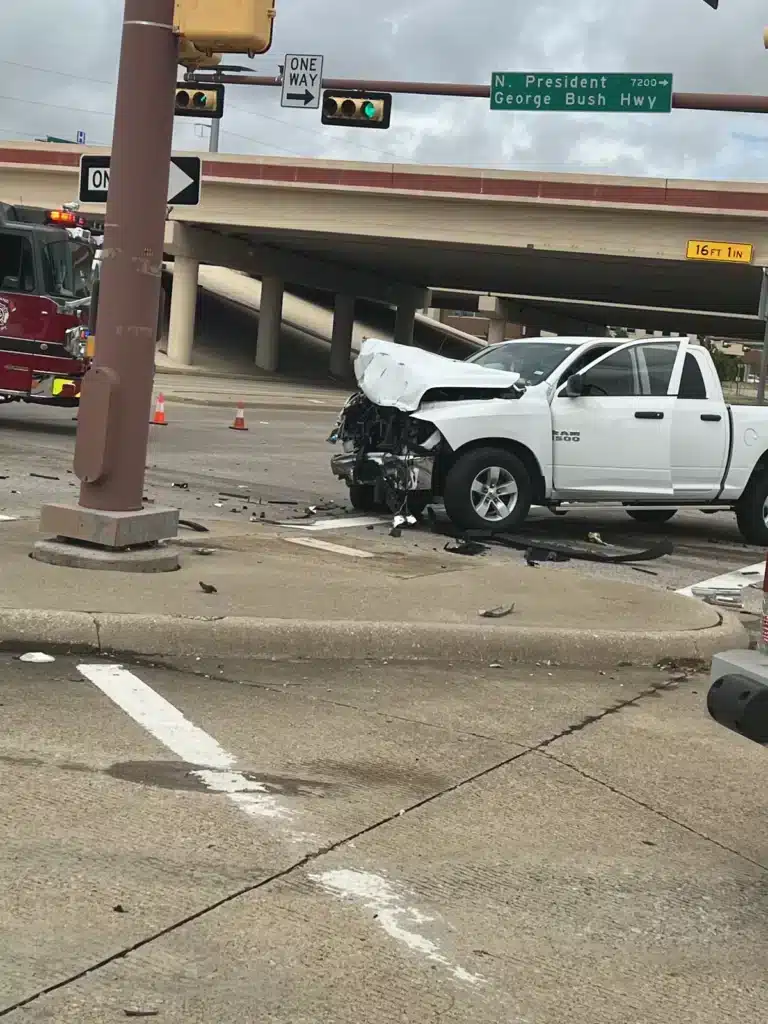
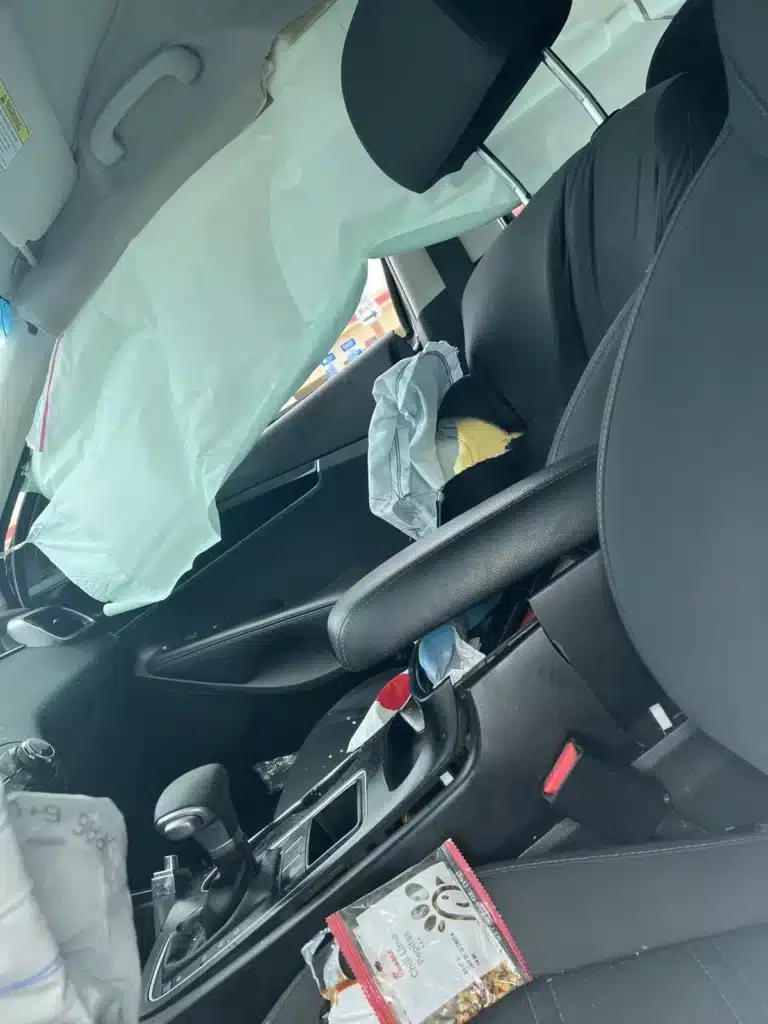
A pickup ran a red light and struck our client’s SUV, sending it spinning into two other vehicles. We recovered $30,000 from the pickup driver’s insurer and $30,000 from our client’s underinsured motorist coverage. Both policies paid their limits before a lawsuit was filed.
The $60,000 was the gross recovery before attorney’s fees, case expenses, and any applicable medical obligations. It was not the client’s take home amount.
Result Snapshot
| Detail | This case |
|---|---|
| Gross recovery | $60,000 |
| Pickup driver’s liability coverage | $30,000 policy limit payment |
| Client’s underinsured motorist coverage | $30,000 policy limit payment |
| Resolution | Settled before a lawsuit was filed |
| Collision | Red light crash involving four vehicles |
| Injury | Right upper arm fracture near the shoulder |
| Treatment | Surgery with a locking plate and screws, followed by therapy |
| Location | N. Shiloh Road at the George Bush Highway service road in Garland |
| Our role | Represented the injured SUV driver |
A Red Light Collision Sent Her SUV Into Two Other Vehicles
Our client was alone in her SUV, wearing her seat belt, when she entered the intersection of N. Shiloh Road and the George Bush Highway service road.
The investigating officer’s narrative states that her signal was green. The pickup entered from another direction against a red light and struck her SUV.
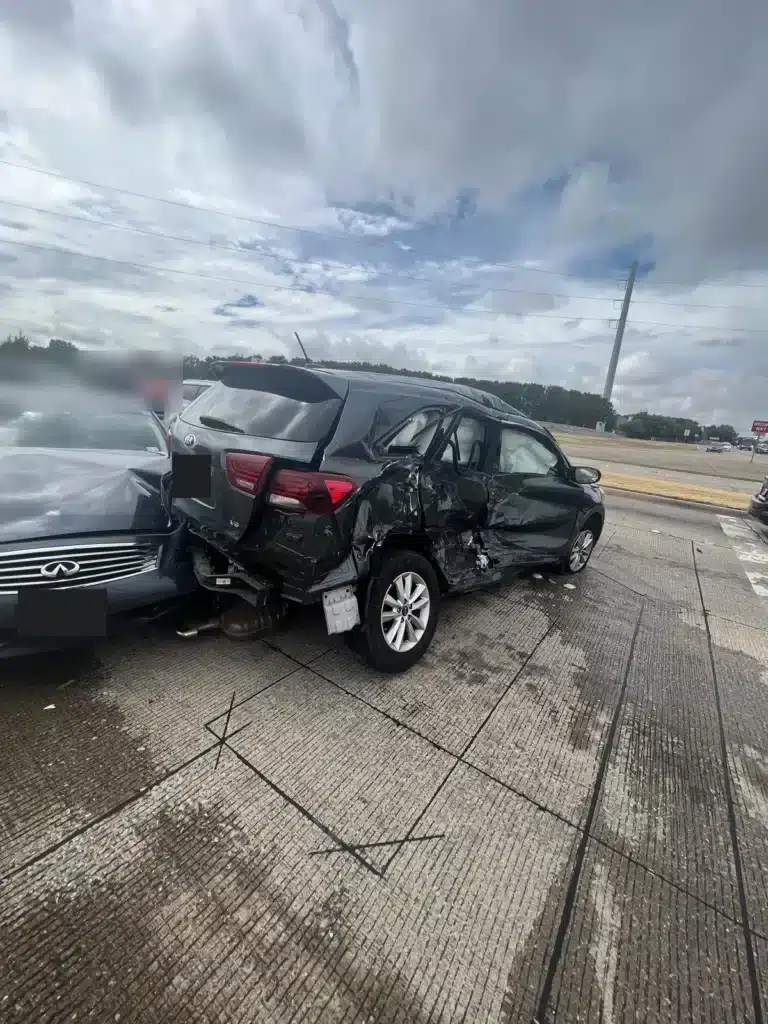
According to the report, the impact caused her SUV to rotate clockwise twice and move into opposing traffic stopped at its own red light. Her SUV then struck a minivan and a sedan. The initial collision also dislodged the SUV’s spare tire, which rolled into a nearby gas pump.
Three vehicles were impounded because of their damage. Our client was transported to the hospital.
Read the redacted Garland crash report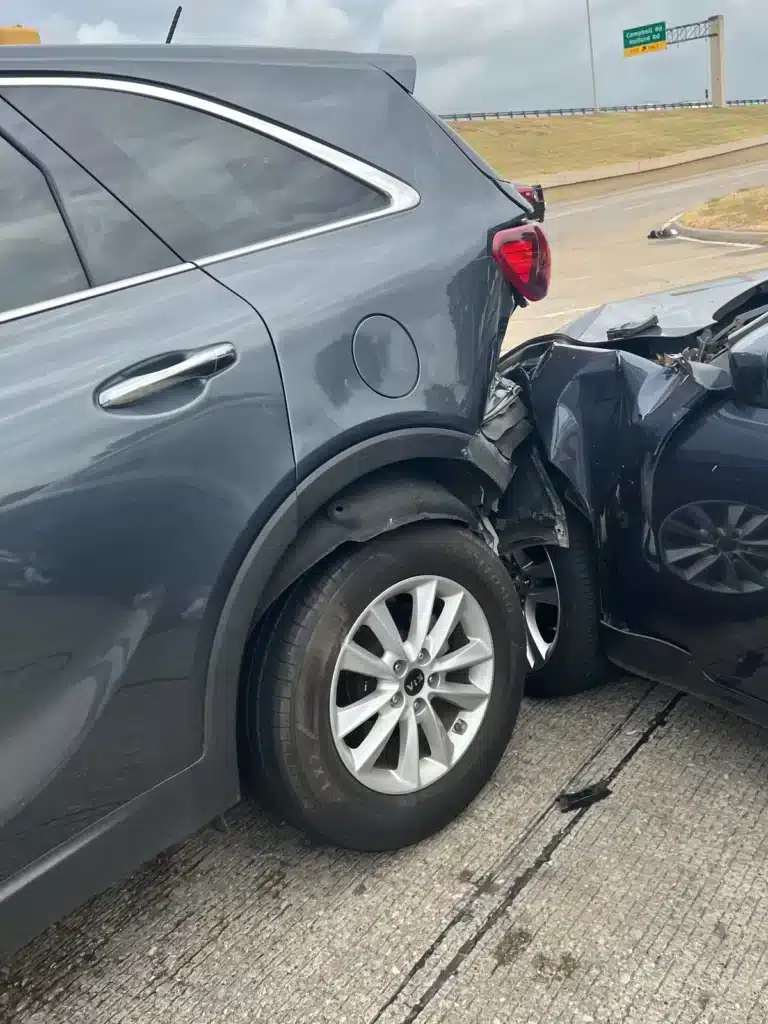
The Injury, the Crash Report, and the Available Insurance Told Different Parts of the Story
Three issues mattered to our handling of the claim:
- The report listed a suspected minor injury, but later medical records documented a fracture requiring surgery.
- The collision involved several impacts, making the sequence important to understanding what happened.
- The pickup driver’s bodily injury coverage provided only $30,000 for our client’s claim. A second recovery depended on her own underinsured motorist coverage.
Her health insurer had also paid medical bills at reduced rates. That meant the billed charges, the amounts paid, and the nature of the injury needed to be addressed separately, not treated as interchangeable measures of her loss.
The Evidence and Our Work
1. We Connected the Signal Evidence to the Sequence of Impacts
The crash report did more than identify a red light collision. It described which vehicle entered on green, which entered on red, and how the first impact led to the later collisions.
The officer assigned contributing factor code 16 to the pickup and did not assign that factor to our client. The narrative and contributing factor entry supported the same account of the initial collision.
The damage entries added another part of the sequence: an initial impact on the SUV’s passenger side and a later impact near its left rear.
We submitted the crash evidence with our client’s medical records to the pickup driver’s insurer. The claim presented the collision as a sequence of events rather than leaving the later vehicle contacts unexplained.
The officer’s report supported our presentation of fault. It was not a court finding, and the absence of a traffic citation did not decide the civil claim.
2. We Documented Why the Roadside Injury Code Did Not Describe the Final Diagnosis
The crash report recorded a suspected minor injury. The medical records described a substantially different condition.
Initial emergency room imaging showed a displaced fracture of the right upper arm near the shoulder. During surgery about two weeks later, the surgeon found a more complex fracture, with multiple fragments and a long extension down the bone.
The repair required a locking plate and screws. Therapy followed.
That distinction mattered: the roadside entry described an initial assessment, while the imaging and operative findings documented the injury and treatment in greater detail.
We included those medical records in the claims submitted to both insurers. The presentation addressed the fracture, surgery, hardware, and recovery, not just the injury label on the crash report or the medical bill totals.
3. We Pursued a Second Policy Rather Than Ending With the First $30,000
The pickup driver’s insurer paid its $30,000 bodily injury limit for our client’s claim.
Our client also carried underinsured motorist coverage. We submitted a separate claim under that policy, supported by her medical records. Her UIM insurer paid its $30,000 limit as well.
This was the central coverage issue in the case: the recovery did not come from one $60,000 policy. It came from two separate $30,000 payments.
The second payment came from coverage our client had purchased for herself, not additional liability coverage carried by the pickup driver.
Learn about claims when the other driver’s insurance is not enough
Both Policies Paid Their Limits Before a Lawsuit
| Payment source | Amount |
|---|---|
| Pickup driver’s liability insurer | $30,000 |
| Client’s underinsured motorist insurer | $30,000 |
| Total gross recovery | $60,000 |
Both claims resolved before a lawsuit was filed.
The $60,000 figure is the combined gross recovery. Attorney’s fees, case expenses, and any applicable medical obligations affect the amount a client receives.
We do not attribute the outcome to a single document or claim handling step. Our presentation included the collision evidence, the medical findings, and claims under both available policies.
Facing a Serious Injury and Limited Insurance?
If a driver ran a red light and left you with an injury requiring surgery, tell us what happened and what you know about the available insurance. We can discuss whether we can help review the crash, the injury records, and potential coverage.
Discuss My Crash and Coverage$60,000 Was the Recovery, Not a Court’s Valuation of the Injury
This case settled. No jury determined fault or placed a value on our client’s losses.
Both identified policies paid their limits, but that does not establish that $60,000 fully compensated her for the injury. It also does not establish what another shoulder fracture claim should settle for.
Other limits of this account matter:
- The police report records the investigating officer’s findings. It is not a judgment.
- The suspected minor injury entry does not replace the later medical diagnosis.
- The UIM payment reflects coverage our client carried under her own policy.
- The gross recovery is not the amount she took home.
- Another claim may involve different evidence, injuries, policy terms, and available coverage.
- Past results do not guarantee a similar outcome.
What Supports This Account
| Source | What it supports |
|---|---|
| Redacted Garland police crash report | The officer’s account of the signals, collision sequence, contributing factors, vehicle damage, and transport from the scene |
| Client medical records, not published | The diagnosis, imaging, operative findings, hardware, and subsequent treatment |
| Firm’s account of the claim resolution | The two $30,000 payments and resolution before a lawsuit |
The linked crash report does not independently verify the medical treatment or settlement payments. Those portions of this page are reported by the firm from its handling of the matter.

Reviewed by: Josh Alexander, Founder and Managing Attorney