


After a Texas car crash, if the other driver’s insurance is too small for your injury losses, that policy pays its limit and stops. The rest can come from your own underinsured motorist (UIM) coverage, even if your limits match theirs, from another person or company responsible for the crash, or from the driver. Get written permission from your own UIM insurer before you sign a release or cash a limits check. Signing usually ends your case against that driver, and the deadline to sue the driver is generally two years.

How this guide was checked
Josh Alexander is the author. Matthew Graham, who spent over ten years defending insurers, checked the law and the numbers. Every statute, court rule and Texas Supreme Court opinion cited here was read in its official text on October 1 and 2, 2026. Callers from our intake line are not named, and their words match the recordings. It covers injury claims by people hurt in a Texas car crash; vehicle damage and wrongful death claims raise issues it does not address. This is general information, not legal advice.
Which situation are you in? · Start here
| Your situation | The first question |
|---|---|
| No policy at all, or a driver who fled | Do you carry uninsured motorist (UM) coverage? Start with recovery options against a driver with no policy. |
| Their coverage is smaller than your losses | Are your losses larger than all the liability coverage available? See how UIM pays after their limits run out. |
| Their policy already paid others hurt in the crash | What is left, and are you underinsured for your own losses? See when several people share one policy. |
| Someone else may share the blame | Is there owner, employer, umbrella, commercial or rideshare coverage? See who else can pay. |
If the other insurer offers its limits, do this first
- Do not sign the release or deposit a settlement check until you understand what it resolves and, if you have UIM coverage, your insurer has answered your consent request.
- Get the offer, the declarations page and the proposed release in writing.
- Ask whether umbrella, employer, owner, rental or rideshare coverage applies.
- Open your UM/UIM claim now, or update it with the offer.
- Send your UIM insurer a written request for consent to settle.
- List every hospital lien, health plan, Medicare or Medicaid, and workers’ compensation claim on the money.
- Mark the date two years after the crash, the usual cutoff for suing the driver.
Do not know their limits yet? No Texas law makes the other insurer reveal them before a lawsuit, though many share the number once their customer agrees. Our guide to finding the other driver’s policy limits covers every route, from a written request to disclosure after suit.
The short answer
How Does Underinsured Motorist Coverage Pay When Their Limits Run Out?
Your UIM coverage may pay losses the other driver’s insurance does not cover, up to your UIM limit, and it can pay even when your limits equal theirs. It may apply after the other insurer tenders or pays its full available limit, subject to your policy terms, the other driver’s fault, your damages and your insurer’s consent to settle.
Underinsured motorist coverage pays what the law says the at fault driver owes you beyond what that driver’s insurer paid or could have paid, capped at your UIM limit. Texas Insurance Code 1952.106 says the payment is “reduced by the amount recovered or recoverable from the insurer of the underinsured motor vehicle.”
Matching limits do not make your UIM worthless. The Texas Supreme Court held in Stracener v. USAA (1989) that a driver is underinsured “whenever the available proceeds of his liability insurance are insufficient to compensate for the injured party’s actual damages.” The other carrier’s payment is subtracted from your losses, not from your UIM limit.
Your policy pays whichever is smaller: your losses minus what others already paid or owe (the standard Texas form says “paid or payable”), or your UIM limit. It also will not pay again for bills PIP, MedPay or workers’ compensation covered. Each insurer files its own wording, so check yours.
How UIM fills the gap · Illustrations only
| Your losses | Already paid | Your UIM limit | UIM pays |
|---|---|---|---|
| $100,000 | $30,000 by their insurer | $30,000 | $30,000, since the $70,000 gap exceeds the limit |
| $45,000 | $30,000 by their insurer | $30,000 | $15,000 |
| $45,000 | $30,000 by their insurer plus $2,500 of your PIP | $30,000 | $12,500 |
The same math appears in Brainard v. Trinity Universal (2006): a jury found $1,010,000 in damages, the other side’s $1,000,000 limit and $5,000 of PIP were credited, and the UIM insurer owed $5,000. Your own share of fault comes off first (Civil Practice and Remedies Code 33.012).
Each policy caps one person’s recovery for one crash at its stated limit (1952.104(1)); a second household policy pays only if its own terms allow.
Not sure you carry UIM? Most Texas policies include it unless a named insured turned it down in writing; our declarations page checklist shows where to look. In 8 calls, the caller’s own UIM came up as the answer to a shortfall from an insured driver: four callers had it, two did not, and two were not sure. A June staff member told a caller facing knee surgery: “Now that’s probably not enough to cover your medicals. So if you have underinsured motorists, that is another coverage that we can tap into to make sure that, you know, you’re fairly compensated.”
Case file 01
Closed file · Policy limits and UIM claim
Their Limit Paid in Full, Then Her Own UIM
$105,000
Limit plus UIM
- The crash
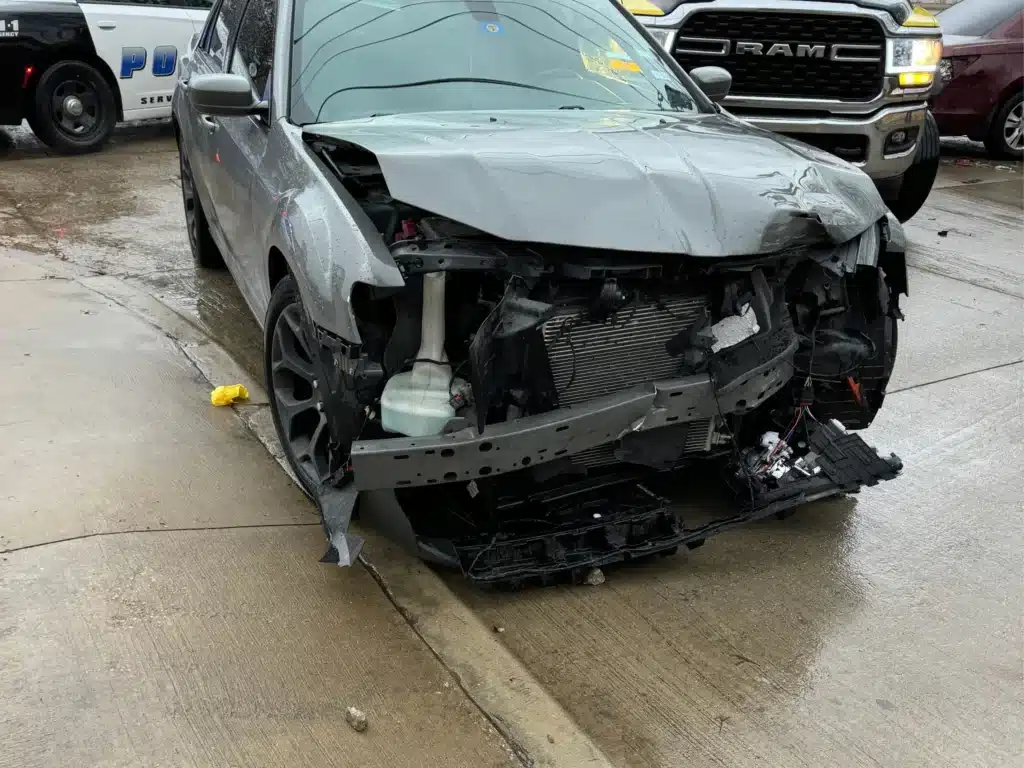
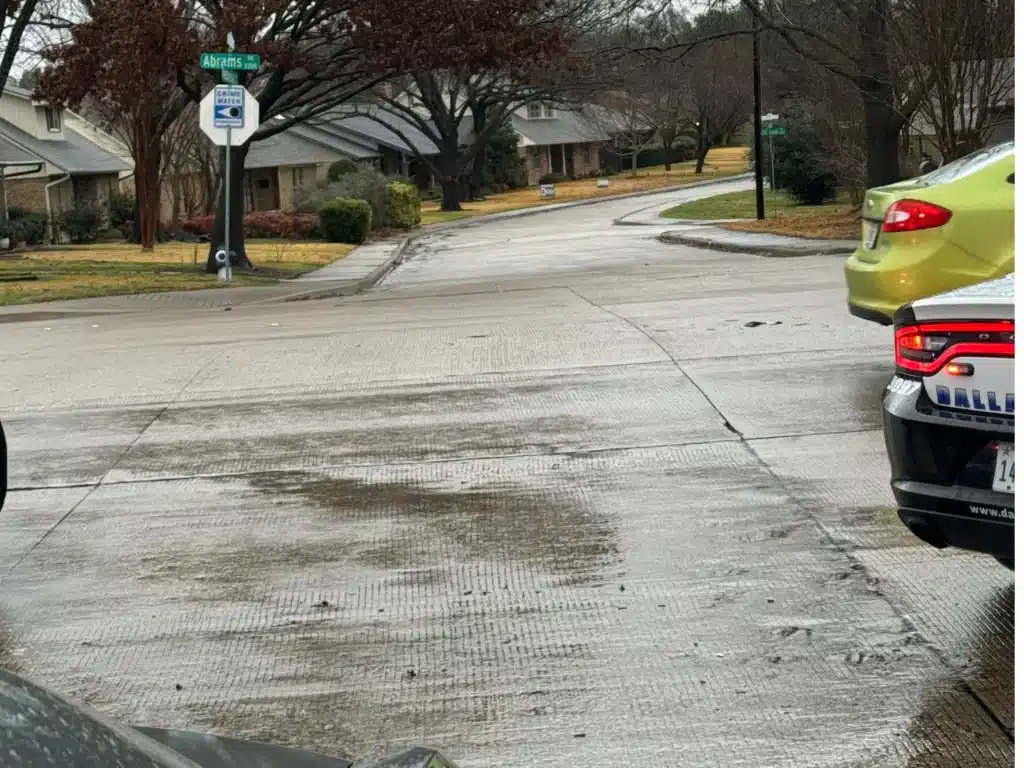
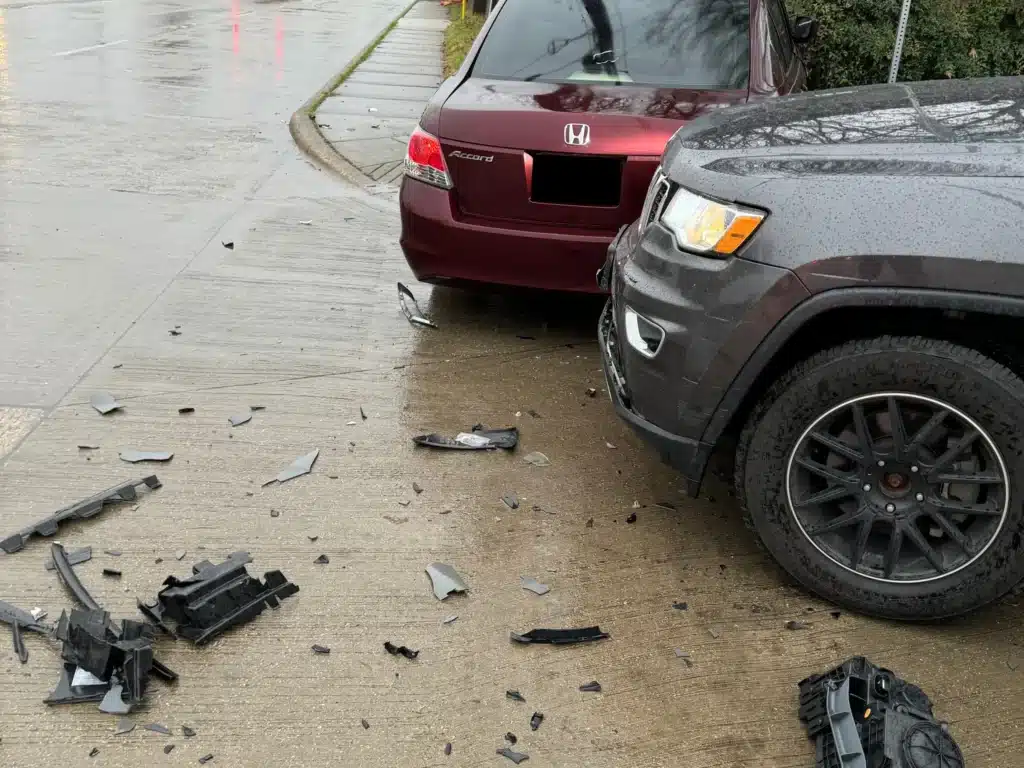
A Honda ran the stop sign from Heatherdale Drive into our client’s Chrysler 300 on Abrams Road, then lost control and struck a Jeep stopped at the corner. The report blamed the Honda driver alone.
- The issue
The first offer was a low verbal number that undervalued the imaging, chiropractic care and pain management after her emergency room visit.
- The result
We kept building the treatment record until the insurer tendered its full $100,000 bodily injury limit. Her losses ran past that, and her own underinsured motorist coverage added $5,000.
- Why it matters here
The UIM check was small beside the limit, and it was money the Honda driver’s policy could never have paid.
Past results do not guarantee a similar outcome. Her treatment record, the crash report and both policies shaped this one.
When Several People Are Hurt and Share One Policy
Everyone injured draws on the same per crash limit, and nobody collects more than the per person limit. Our breakdown of how the $30,000 and $60,000 limits divide runs the numbers, and our Stowers guide explains why an insurer may settle with one claimant first. For UIM, the point is this: what the policy paid others reduces what was left for you, so the driver can be underinsured for your claim even when your limits match.
In 9 of the 155 calls, two or more injured people stood to share a single policy. A back seat passenger who called in August found the money spent: “they’re trying to say that the policy only did 60,000. So they gave it 30 and 30 to those two.” Our staff member summed it up: “it’s kind of like first come, first serve.” Legally the test is whether each settlement is reasonable, not who filed first, but the effect is similar. A September caller in a four vehicle chain crash got the same warning from the other insurer: “but they’re telling me that they may not have sufficient coverage because it was like multiple vehicles involved.” Notify the liability carrier and your own insurer promptly. Early notice does not guarantee money, but it helps preserve the available coverage and your UIM options.
How Long Does UIM Take, and What If Your Insurer Will Not Pay?
A UIM claim follows the liability claim and usually moves through these stages:
A UIM claim, stage by stage · Typical order
| Stage | What you do | What your insurer looks at |
|---|---|---|
| Notice | Open a UM/UIM claim and give the crash and treatment basics. | Whether the policy was in force, the claim is covered, and notice came promptly |
| Liability claim | Pursue the at fault driver’s insurer first. | Whether that insurer’s limits were paid or offered, since the full limit is usually credited |
| Consent | Forward the settlement offer and proposed release for approval. | Its rights against the driver and the release terms |
| Damages | Submit records, bills, wage proof and crash evidence. | Fault, whether the crash caused each injury, reasonable medical costs, lasting impairment |
| Resolution | Negotiate, mediate, or sue. | Whether you are “legally entitled to recover” from the other driver (Insurance Code 1952.101), and how much |
Under Brainard, a UIM insurer owes nothing by contract “until the insured obtains a judgment establishing the liability and underinsured status of the other motorist,” and “neither a settlement nor an admission of liability from the tortfeasor establishes UIM coverage.” Many UIM claims still settle without a trial.
If yours does not, In re USAA (Tex. 2021) lists three routes: sue your own insurer directly; sue the other driver with your insurer’s written consent, which binds it to the result; or sue the driver without consent and prove the case again against your insurer. A court can sometimes order your insurer to pay your attorney’s fees, and a complaint that it acted in bad faith usually waits until the UIM claim is decided.
Do You Need Your Own Insurer’s Permission to Accept the Other Driver’s Limits?
For UIM, yes in practice, though the duty comes from your policy rather than a statute. The standard Texas form excludes anyone who “settles the claim without our written consent,” and it treats a judgment from a suit brought without consent as “not binding on us.”
The clause protects your insurer’s chance to collect from the at fault driver whatever it pays you. The Texas Supreme Court called it a safeguard for “the insurer’s contractual subrogation rights against the negligent motorist” (Guaranty County Mutual Insurance Co. v. Kline, 1992), and Insurance Code 1952.108 gives a paying insurer rights in your recovery. That is also why your own insurer may later go after the driver for what it paid you.
Skipping the step is not automatically fatal. In Hernandez v. Gulf Group Lloyds (1994), a family accepted the driver’s limits six weeks after the crash without asking, and the Court allowed a denial “only when the insurer is actually prejudiced,” meaning the settlement cost the insurer a real chance at recovery. Do not rely on that. Ask first.
What your consent request should include
- The written settlement offer from the other insurer
- Proof of the limits: the adjuster’s letter or a declarations page
- Written confirmation of the coverage identified so far, including whether the adjuster knows of umbrella, excess, owner, employer, rental or rideshare coverage
- The draft release, so your insurer sees who is being released
- A dated request for written permission to settle
- A copy of your note telling the other adjuster you will wait for that answer
The form gives your insurer no deadline to answer, so send the request to its claims department in writing, note the date, and follow up. PIP needs no permission.
Already signed a release? Tell your insurer now, send it a copy, and keep treating.
Should You Accept a Policy Limits Offer?
Accept a policy limits offer only after four things are in place: written proof of every policy that may pay, your UIM insurer’s written consent, a release limited to the negligent driver and that person’s insurer, and a plan for the hospital and health plan claims paid out of the check.
- Proof of every policyWritten confirmation of the limits and of any umbrella, owner, employer or commercial coverage.
- Your UIM insurer’s written permissionRequested and received before you sign, as covered above.
- A release naming only the right partiesThe at fault driver and that driver’s insurer, not “all persons,” which can wipe out claims against an owner, an employer or another driver. Settlements also reduce what other defendants owe (Civil Practice and Remedies Code 33.012(b)).
- A plan for the billsAny valid hospital lien or health plan reimbursement claim is paid from the check, so learn the amounts first.
Taking less than the full limit has a cost. An El Paso appeals court held that you may settle for less and still claim UIM, but “recovery may be had only for damages sustained in an amount in excess of the total amount of the tortfeasor’s liability coverage” (Olivas v. State Farm, 1993). Under that ruling, take $20,000 on a $30,000 policy and your UIM insurer still subtracts the full $30,000 from your losses, so the $10,000 you left behind is money you simply lose.
Our intake line heard four injury offers from at fault insurers: $1,500, $9,000, $15,000 and $20,000. Two of those callers had medical bills of $16,000 and $39,000 at the time. As one July caller put it: “So my total bills are showing 39,000 and [the other driver’s insurer] has offered me 20,000.”
Another caller had cashed a check on their own UM claim, then needed more care and learned the file was closed. A release on your own coverage is just as final, so wait until the full cost of treatment, future care included, is clear. Our settlement offer analyzer tests an offer before you sign.

From the author
“… I do not make decisions based on the first explanation, the first report, or the first insurance offer.”
In a limits case, that means confirming every policy and every lien before anyone signs.
Josh Alexander
Founder and Managing Attorney
Who Gets Paid From a Limits Check?
Not all of the check is yours to keep, and no claim against it is valid, or owed in full, just because someone sends a bill. A lien a hospital files under Property Code chapter 55, a health plan’s reimbursement claim (Civil Practice and Remedies Code chapter 140), Medicare, Medicaid, a self funded employer plan and workers’ compensation each run on different rules, and a provider treating under a letter of protection holds only a contract claim.
Ask each one for an itemized list and match every charge to crash care before the money is split. Our breakdown of a lien on a $50,000 settlement shows how the numbers come down.
Who Else Can Pay When Their Policy Falls Short?
Look for another responsible person or company with its own coverage, then turn to your own policy. Finding a policy is only a start: it must cover this crash, and someone it insures must be legally responsible.
- The car owner’s policy. It covers a person driving “with the express or implied permission of the named insured” (Transportation Code 601.076). That is coverage for the driver, not proof the owner is personally liable.
- A rental car or a relative’s car. The car’s own policy may cover a driver using it with permission, but the rental contract and the policy’s exclusions decide that, and federal law bars holding a rental company liable just for owning the car unless it was negligent itself (49 U.S.C. 30106).
- The employer. A company answers for an employee driving within the course and scope of the job (Painter v. Amerimex Drilling I, 2018). That link to the job has to be proved, and an ordinary commute usually falls outside it. Business auto, excess or umbrella coverage may sit above the driver’s own (see company vehicle crashes and our truck case value guide).
- A commercial truck. Carriers must keep minimum coverage on file with federal or Texas regulators, usually far above a car policy, and anyone can look that filing up.
- A rideshare driver. Whether the app was off, on and waiting, or on a ride when the crash happened decides which coverage applies; our guide to Texas rideshare insurance walks through each stage.
- Another at fault driver. Each pays a share, and in a typical crash case only a defendant whose responsibility tops 50 percent owes the whole judgment (Civil Practice and Remedies Code 33.013(b)(1)). See insurance in multi car crashes.
- A bar or restaurant. A licensed seller that served someone “obviously intoxicated to the extent that he presented a clear danger to himself and others” can be liable if that intoxication helped cause the crash (Alcoholic Beverage Code 2.02(b)). Both the overservice and its role in the crash must be proved.
- Your own coverage. PIP, MedPay, health insurance and collision can pay while the injury claim is pending; our 30/60/25 guide lists what each one covers.
In 16 injury calls, a second party or policy could pay: 7 commercial or government vehicles, 2 rentals, 2 possible rideshare policies, 3 cars or policies in a relative’s name, 1 employer’s workers’ compensation, and 1 dispute over which of two drivers was at fault.
About our call figures: All counts on this page come from 155 recorded crash calls our intake line took between June 13 and September 29, 2026. We read 68 of them in full and coded each by hand; each figure counts calls rather than people, and none of it describes Texas drivers as a whole.
Case file 02
Closed file · Company vehicle claim
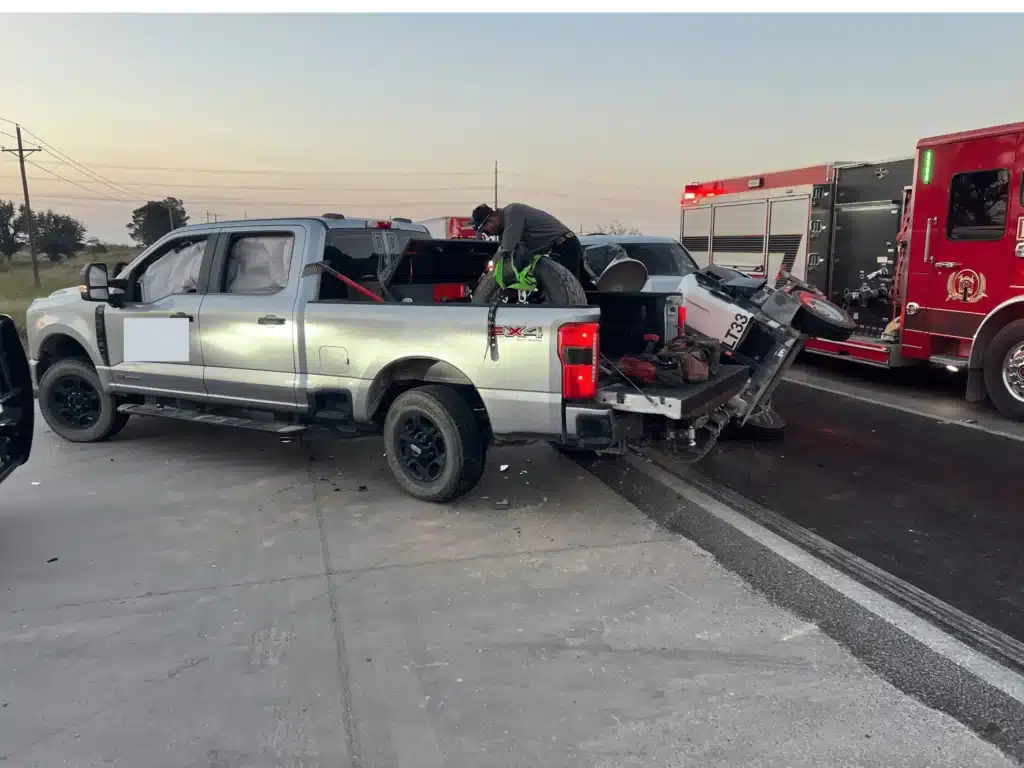
A Business Auto Policy Behind a Work Truck
$95,000
Settled before suit
- The crash
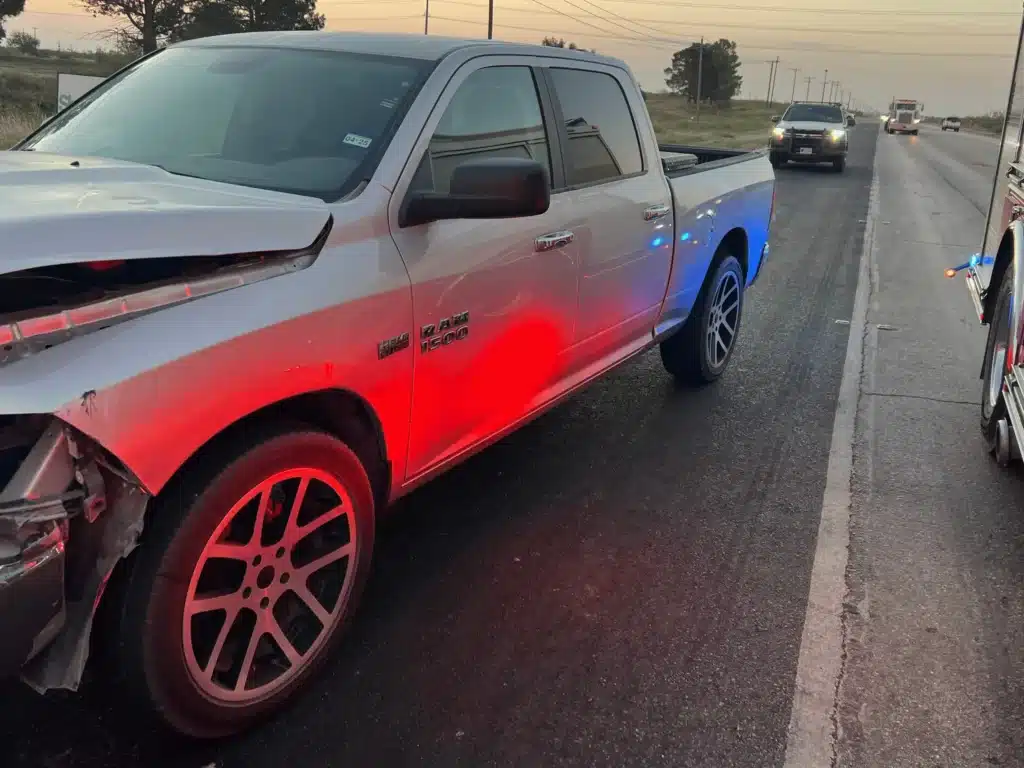
Before sunrise on FM 1788, a company pickup hauling a trailer swung left across our client’s path while stopped cars blocked its driver’s view. The trailer flipped onto his hood, and the officer found the truck driver failed to yield.
- The insurer’s position
The carrier would not pay the first limits demand. It challenged the head injury and the claimed wrist fracture, citing records that disagreed about loss of consciousness and scans that never confirmed a break.
- The result
We met each objection with the full medical file instead of sidestepping it, and the carrier paid $95,000 before any lawsuit.
- Why it matters here
The money came from the employer’s commercial coverage, not from the driver’s pocket or our client’s own policy.
Past results do not guarantee a similar outcome. His medical file, the officer’s finding and the commercial coverage shaped this one.

From the reviewing attorney
“I know the number they open with, the number they will actually pay, and the gap between the two.”
With a commercial or umbrella layer above the driver’s policy, closing that gap starts with proving the layer exists.
Matthew Graham
Managing Litigation Attorney
Can You Sue for More Than the Policy Limits in Texas?
Yes, against the driver. A judgment can exceed the coverage, and the driver owes the rest personally. Collecting it is harder: many individual drivers own little that Texas lets you take, which is why UIM and other payers come first, and a release given for the limits usually closes the claim against the driver anyway. The insurer pays past its limit mainly through a Stowers claim, which belongs to the driver it insures.
- You cannot garnish the driver’s current wages to collect a crash judgment; the Texas Constitution allows wage garnishment only for court ordered child support and spousal maintenance (article XVI, section 28).
- A homestead is protected from seizure (Property Code 41.001).
- Personal property up to $100,000 for a family or $50,000 for a single adult is protected, including a vehicle for each licensed family member (Property Code 42.001 and 42.002).
A recorded abstract of judgment becomes a lien on the driver’s unprotected real estate in that county (Property Code 52.001). If a crash judgment sits unpaid for 60 days, the clerk must send it to the Department of Public Safety at your written request, and DPS suspends the driver’s license and registrations until it is paid, or until the driver secures an installment order and files proof of insurance (Transportation Code 601.331 to 601.336). That is pressure, not a promise of payment.
A bankruptcy discharge usually wipes out the debt, and Transportation Code 601.337 says a discharge after the judgment “relieves the judgment debtor from the requirements of this chapter,” apart from insurance requirements that arise later. Bankruptcy does not erase a debt for injury or death caused by driving while intoxicated (11 U.S.C. 523(a)(9)). Fault matters here too: a claimant more than 50 percent responsible recovers nothing, and a smaller share shrinks the judgment, as our guide to comparative fault in Texas explains.
Which Deadlines Apply Here?
In most injury cases, the deadline to sue the at fault driver is two years (Civil Practice and Remedies Code 16.003). Negotiating with an insurer does not stop that clock.
A UIM claim against your own insurer is a contract claim with four years to sue (Franco v. Allstate, 1974, an uninsured motorist case; Civil Practice and Remedies Code 16.004(a)(3)). Texas appellate courts have generally measured that period from the day the insurer denies the claim (Madore v. Dairyland, 1985; Alvarez v. American General, 1988; In re Britt, 2016), but when it starts can turn on the facts. Do not wait to open the claim or to get advice on a filing deadline. Your policy also demands prompt notice of the accident, and our list of Texas car accident filing deadlines covers the rest.
Was the Other Driver’s Policy Too Small?
If the at fault insurer has offered its limits, or you expect it to, talk with us before you sign anything. We will look for every policy that could pay, your own UIM included, and handle the permission request with your insurer.
24/7 · Free consultation · No fee unless we win
A Free Review Before You Sign the Release
J. Alexander Law Firm serves injured clients throughout Texas: Dallas · Houston · San Antonio · Fort Worth · Arlington · Canton. Se habla español.