


$30,000 UM Policy Limits Settlement After a Three Car Chain Collision on I-35W in Fort Worth
On This Page
J. Alexander Law Firm recovered $30,000 for a man whose pickup was stopped in heavy traffic on I-35W in Fort Worth. A sedan failed to stop, hit the SUV behind him and pushed it into his truck. Police cited the sedan’s driver for failure to control speed. No coverage was available under the rear driver’s policy for our client’s claim, so his own uninsured motorist (UM) coverage paid its full $30,000 limit.
The $30,000 is the gross settlement. His medical providers were owed $62,708, more than twice the recovery. Those balances, attorney fees and case expenses had to be resolved before he received his share.
Case Snapshot
| Detail | This case |
|---|---|
| Location | Northbound I-35W at 1001 North Freeway, near East Rosedale Street, Fort Worth |
| Fault | Rear driver cited for failure to control speed |
| Injuries | Neck, back, shoulder and left elbow pain; right shoulder tendinosis and labral fraying |
| Medical bills | $62,708 billed; none paid |
| Result | $30,000, the full limit of our client’s UM coverage |
How the Crash Happened
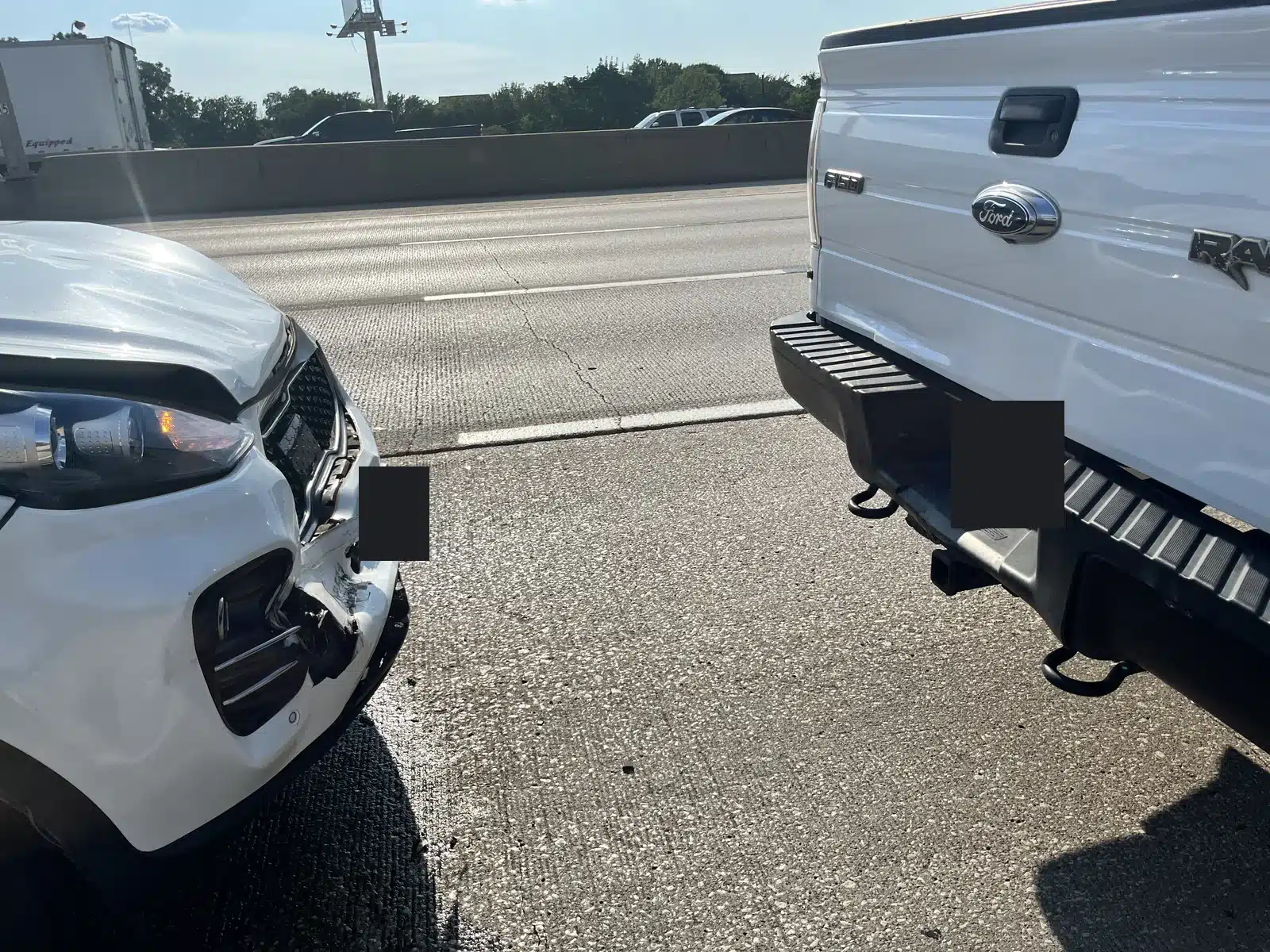
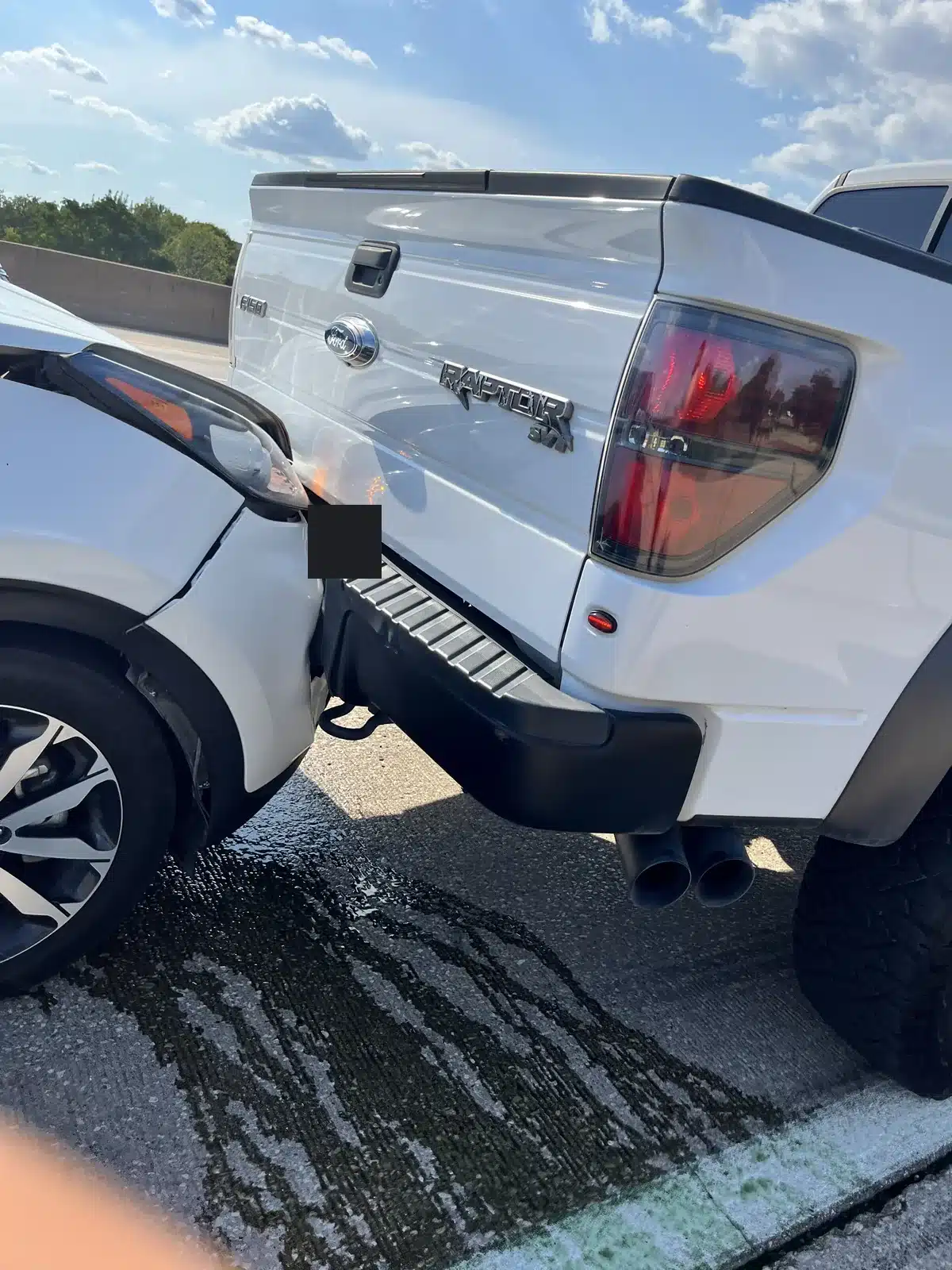
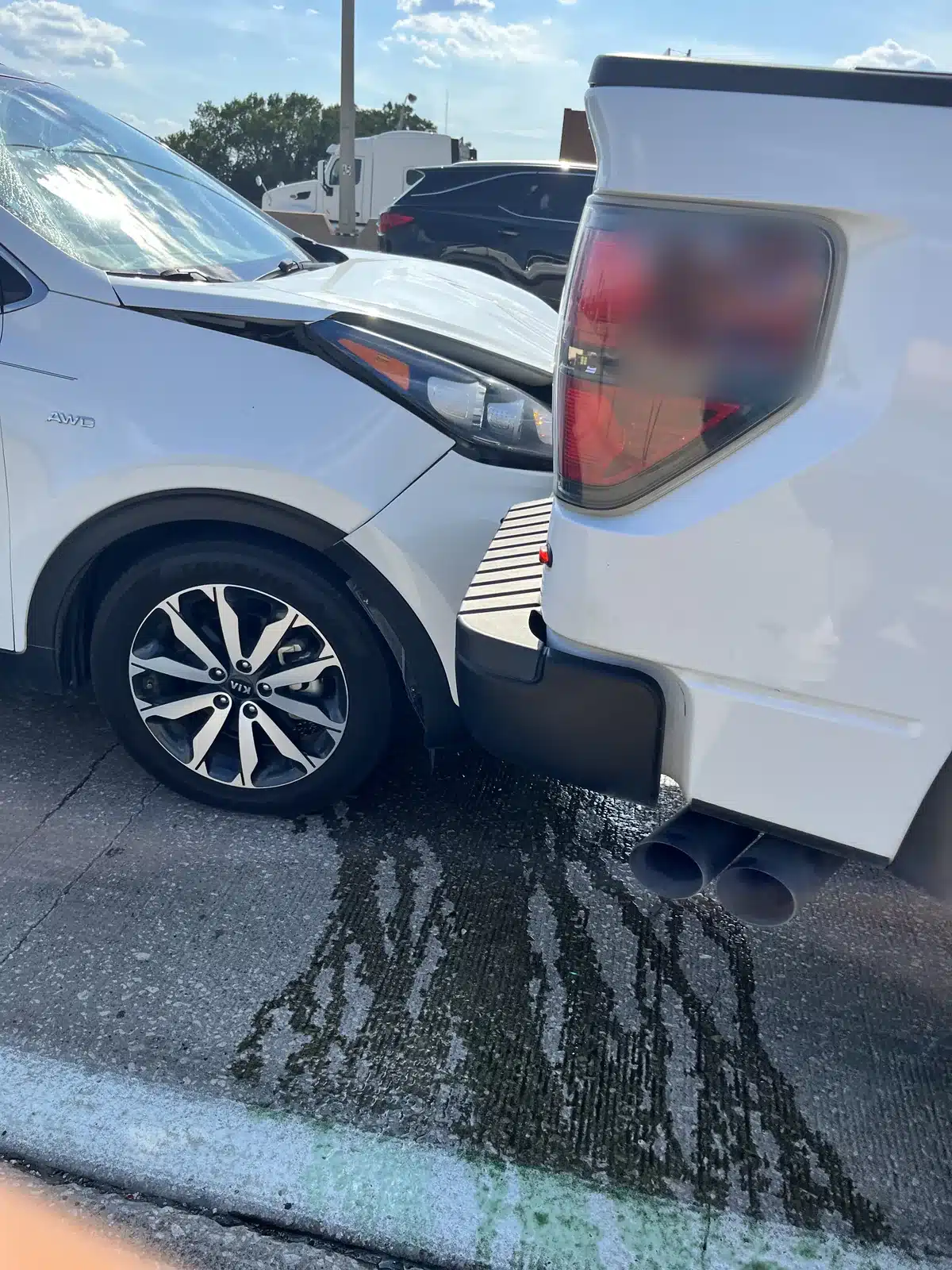
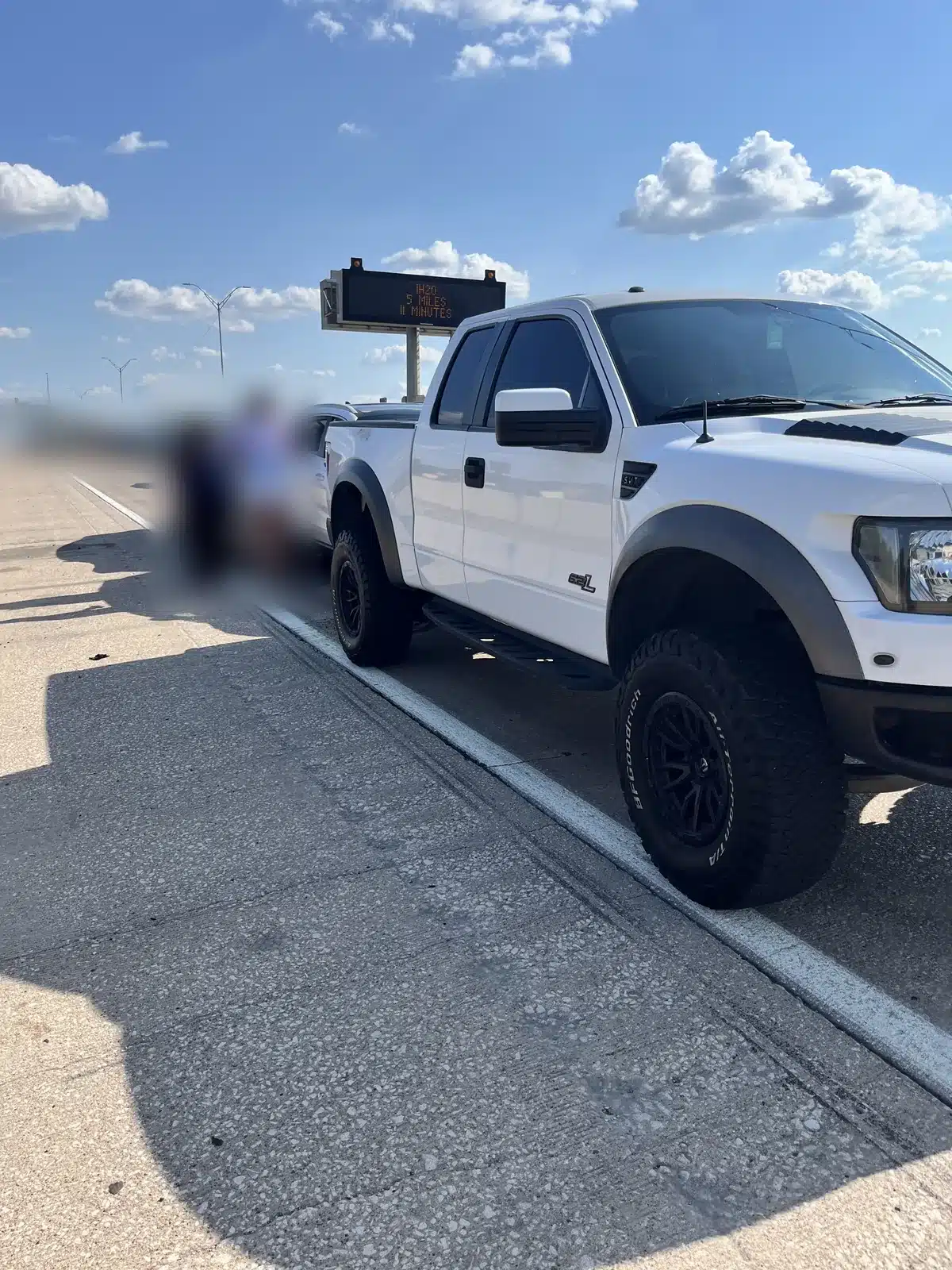
At 5:54 p.m. on August 11, 2025, our client was stopped in the right lane of northbound I-35W, first in a line of three vehicles. An SUV was stopped behind him. A sedan struck the SUV from behind, pushing it into the back of his pickup.
The Fort Worth police officer cited the sedan’s driver for failure to control speed and listed no contributing factors for either of the other drivers.
Photos show the SUV’s hood and front bumper crushed against the rear bumper of our client’s truck.
Read the Redacted Fort Worth Crash Report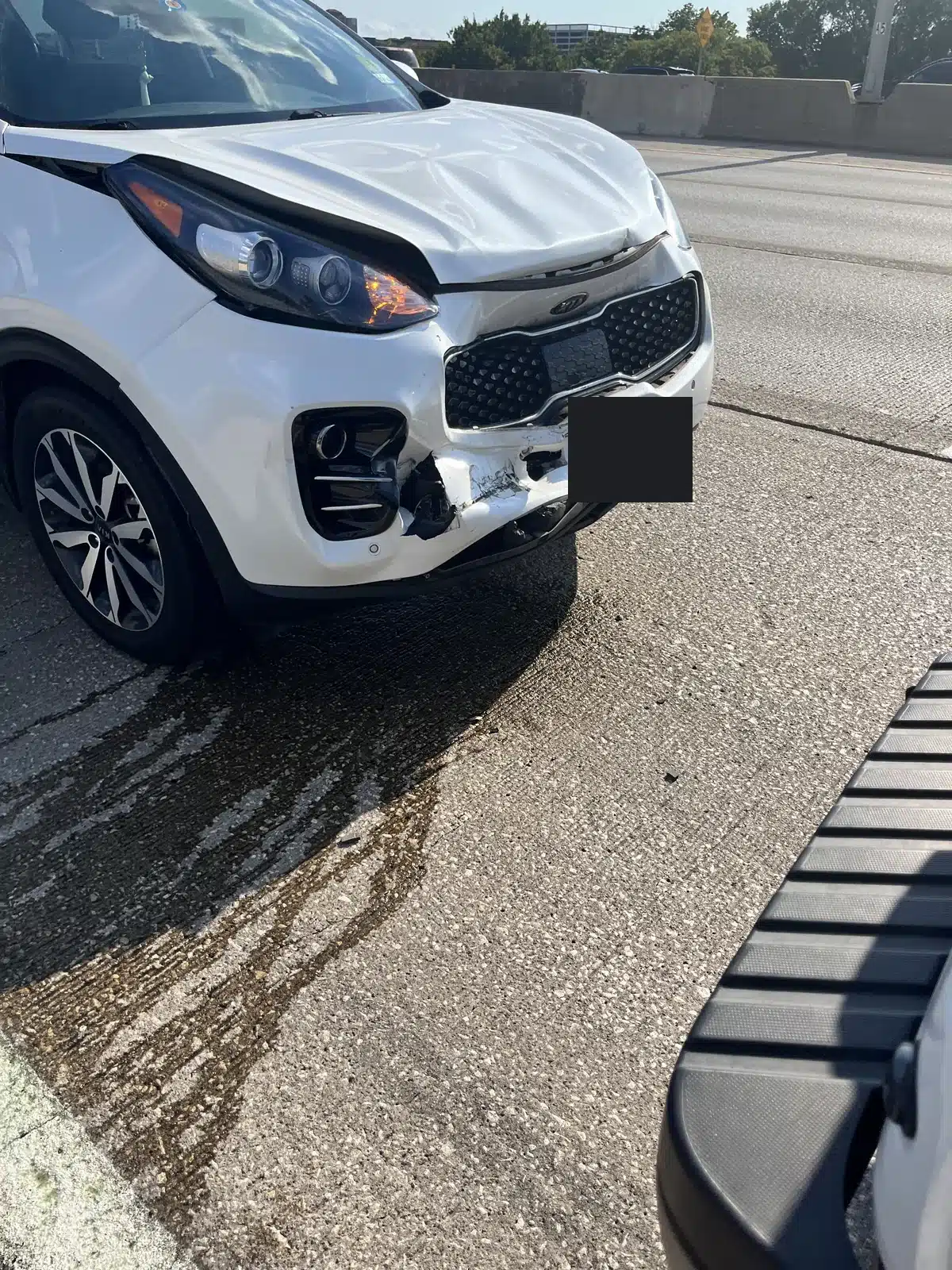
Our Client’s Experience
“I was completely stopped in traffic and still ended up hurt again. I kept working the whole time and fit therapy in around my job, five days that first week.”
He went to an ER on his own about two hours later with pain in both shoulders. Four days later, he reported neck pain extending into his shoulders, right arm weakness and trouble sleeping.
He never missed work. Instead, he fit 26 chiropractic visits around his job, including five in his first week of therapy, along with two injections in October.
Treatment
| Date | Care and findings |
|---|---|
| Aug. 11, 2025 | ER visit for pain in both shoulders; normal exam; no imaging |
| Aug. 15 | Pain management visit for neck, back, shoulder and elbow pain; chiropractic care ordered |
| Sept. 8 | MRIs showed disc and bone spur changes in the neck, right shoulder tendinosis and labral fraying, and left elbow tendinosis; no tears |
| Oct. 3 and 17 | Platelet rich plasma (PRP) injections in the left elbow and right shoulder; less than 20% relief in the elbow and more than 70% in the shoulder |
| Oct. 27 to 31 | Released from chiropractic care with mild to moderate pain that was improving |
How We Built the Claim
The claim file documents how Josh Alexander handled fault, coverage and the medical evidence.
Fault
The officer cited the rear driver, listed contributing factors only for her, and recorded that both the SUV and our client’s truck were stopped before the collision. That evidence supported holding her responsible for both impacts, including the one that pushed the SUV into our client’s truck.
Valuing the Claim
His medical bills totaled $62,708, all unpaid. They covered an ER visit, 26 chiropractic visits, X rays, three MRIs and two PRP injections.
Each provider supplied a sworn billing records affidavit supporting the charges. His chiropractor also estimated $2,500 to $3,500 in future care.
Coverage
The crash report lists an insurer for the rear driver, but no coverage was available under that policy for our client’s claim. We pursued his own UM coverage instead, negotiating with his insurer over the cause and extent of his injuries and the value of his claim.
Addressing the Claim’s Weak Spots
Prior injuries
This was his third crash in about 32 months, and he had received a right shoulder injection seven months earlier. Texas law allows recovery when a crash worsens an existing condition, so the question was what changed, not simply whether his shoulder had been injured before.
He reported that his earlier injuries had fully resolved, and his providers attributed his new symptoms to this crash within reasonable medical probability.
Mild pain at the ER
He rated his shoulder pain at 1 to 2 out of 10 that evening. Four days later, his pain management exam documented pain in six areas and arm weakness.
He continued regular care through his release, with five chiropractic visits in his first week of therapy and 26 in all.
No seat belt
Since the Texas Supreme Court’s 2015 decision in Nabors Well Services v. Romero, seat belt nonuse can be raised as a defense, but it must be linked to injuries it caused or worsened.
His records did not establish that connection.
Degenerative imaging
His MRIs showed no tears and mostly wear related findings. The strongest support for the claim came from his treating providers’ opinions about what caused his symptoms and his response to treatment: the shoulder injection reduced his pain by more than 70%.
Settling
We sought the full $30,000 available under his UM policy. Our demand included the 269 page records package and sworn billing affidavits documenting $62,708 in charges, more than twice the policy limit.
The insurer paid the full limit.
Stopped in Traffic and Hit From Behind?
When another vehicle is pushed into yours, the sequence of impacts helps establish who was responsible. If the at fault driver has no coverage available for your claim, your own UM coverage may apply.
Send us what happened and any letters from the insurers involved.
Get a Free Review of Your ClaimSources and Attorney Review
| Source | What it supports |
|---|---|
| Fort Worth Police crash report | Time, location, citation, contributing factors and sequence of impacts |
| Scene photographs | Damage to the SUV and pickup |
| Medical and billing records, including the 269 page package | Treatment, imaging, prior history and bills |
| Firm’s claim file and attorney review | UM claim and $30,000 policy limits settlement |
No court decided fault, causation or damages. Past results do not guarantee a similar outcome.

Reviewed by: Josh Alexander, Founder and Managing Attorney