


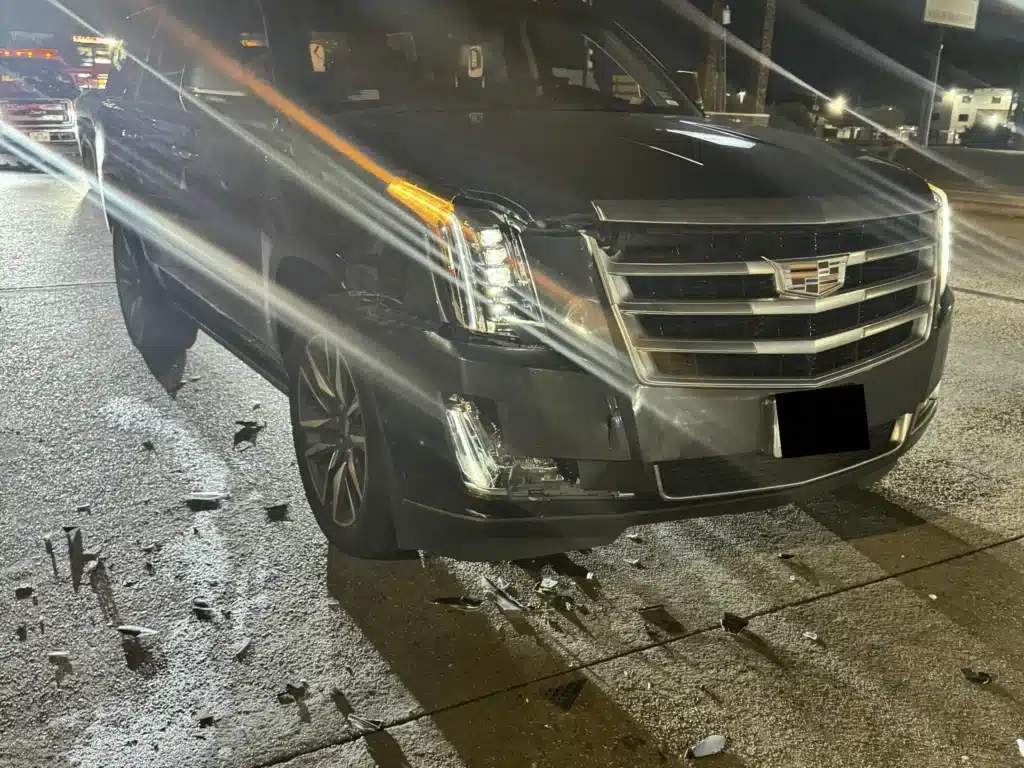
Texas drivers must show financial responsibility, usually by carrying at least 30/60/25 liability insurance. That means $30,000 for one person’s injuries, $60,000 total for all injuries in one crash, and $25,000 for damage to other people’s property.
Texas is an at-fault state. In most crashes, the driver who caused the collision is legally responsible for the losses they caused, subject to the available insurance, the facts of the crash, and each person’s share of fault.
Liability coverage pays people harmed by the insured driver. It does not pay for the insured driver’s own injuries or vehicle damage.
Texas auto liability policies must include personal injury protection, or PIP, and uninsured/underinsured motorist coverage, or UM/UIM, unless a named insured rejects those coverages in writing. A named insured is a person specifically listed on the policy or declarations page, usually as a policyholder or owner.
Insurance laws set minimum requirements, but policy language, exclusions, facts of the crash, available evidence, and applicable deadlines determine whether coverage applies.

How this guide was checked
Josh Alexander wrote this guide. Matthew Graham, a former insurance defense attorney, reviewed it. We reviewed every statute cited here in its official form on September 30, 2026. The intake callers quoted below are not identified, and each quote was matched to its recording. This is general information, not legal advice.
Three things to know first
1. Texas has required 30/60/25 liability coverage since January 1, 2011. A 2025 bill that would have increased the limits did not become law.
2. A policy limit is the most an insurer must pay, even when the claim is worth more. Any amount above that limit may become the at-fault driver’s personal responsibility.
3. When the other driver’s policy is not enough, review your own coverage. UIM may help with injury losses, PIP may help with medical bills and lost wages, MedPay may help with medical bills, and collision coverage may help pay for your vehicle. Your declarations page shows which coverages you have.
The short answer
What Is Texas Minimum Liability Insurance?
As of October 2026, Texas still requires 30/60/25 liability insurance. These limits are set by Texas Transportation Code Section 601.072 and took effect on January 1, 2011.
A proposed 2025 bill, House Bill 4178, would have increased the limits to 50/100/40 for policies issued or renewed on or after January 1, 2026. The bill was referred to the House Insurance Committee on March 31, 2025, but did not advance.
Texas minimum coverage at a glance · Official statute text read September 30, 2026
| Coverage | Minimum required | Who it pays |
|---|---|---|
| Bodily injury per person | $30,000 | Each person injured or killed by the insured driver |
| Bodily injury per crash | $60,000 | Everyone injured in one crash, with no person receiving more than $30,000 |
| Property damage per crash | $25,000 | Other people’s vehicles and property |
| PIP Ins. Code §§ 1952.152, .153 | $2,500 per person | Covered people under the policy, regardless of fault, unless rejected in writing |
| UM/UIM | 30/60/25 or more, up to your liability limits | You, when the at-fault driver has no insurance or not enough coverage, unless rejected in writing |
Each policy limit is a cap, not a guarantee. One person’s medical bills, lost income, pain and suffering, and other covered injury losses all come from the same $30,000 per-person limit. The Texas Department of Insurance warns that minimum limits “might be too low” if you cause a multivehicle crash or total another driver’s vehicle.
The $60,000 limit is the total available for all bodily injury claims in one crash. Property damage is covered under a separate $25,000 limit.
A policy can meet Texas minimum financial-responsibility requirements with 30/60/25 liability coverage. PIP and UM/UIM can be excluded only through valid written rejections by a named insured. A lender will often require more coverage if you finance or lease your vehicle.
Texas also allows certain alternatives to an insurance policy, including a surety bond, a cash or securities deposit, or self-insurance for owners of more than 25 vehicles. Most drivers, however, meet the requirement by purchasing an auto policy, as the Texas Department of Insurance explains in its consumer auto-insurance guide.
Different requirements may apply to rideshare drivers and commercial vehicles.
Texas last changed its insurance requirements in two stages. Senate Bill 502 increased the old 20/40/15 limits to 25/50/25 for policies issued or renewed on or after April 1, 2008. It then set the current 30/60/25 limits beginning January 1, 2011.
What the $30,000 and $25,000 Limits Actually Pay
The examples below assume the other driver was fully at fault unless otherwise stated.
How the injury caps play out · Illustrations only
| Crash situation | Losses | Most a 30/60 policy may pay |
|---|---|---|
| One injured person | $80,000 | $30,000, leaving $50,000 unpaid |
| Two injured people | $40,000 and $20,000 | $30,000 and $20,000, using $50,000 of the $60,000 limit |
| Three injured people | $50,000 each | $60,000 total for all three people; no one can receive more than $30,000 |
| You were 20% at fault | $80,000 | $64,000 may be legally owed, but the policy still stops at $30,000 |
There is no formula requiring an insurer to divide the $60,000 equally among multiple injured people. Each good-faith settlement reduces the available limits.
The Texas Supreme Court has recognized that an insurer may reasonably settle one person’s claim even when doing so leaves less coverage for other people. Someone who waits too long to make a claim may learn that most or all of the available insurance has already been paid.
Your share of fault can reduce what you are legally owed. If you are more than 50% responsible for the crash, you generally cannot recover from the other driver.
Fault does not change the other driver’s policy limits. In a minimum-limits case, the available insurance cap is often more important than the dispute over fault.
One staff member explained this to a client facing a surgery estimate: “More than likely, this vehicle is a minimum policy limit vehicle, meaning there’s only $30,000 to pay towards one person, $60,000 to pay max for everybody involved that may have received injuries.”
Case file 01
Closed File · Liability Claim
When the Policy Limit Becomes the Ceiling
$50,000
Policy limit paid
- The crash
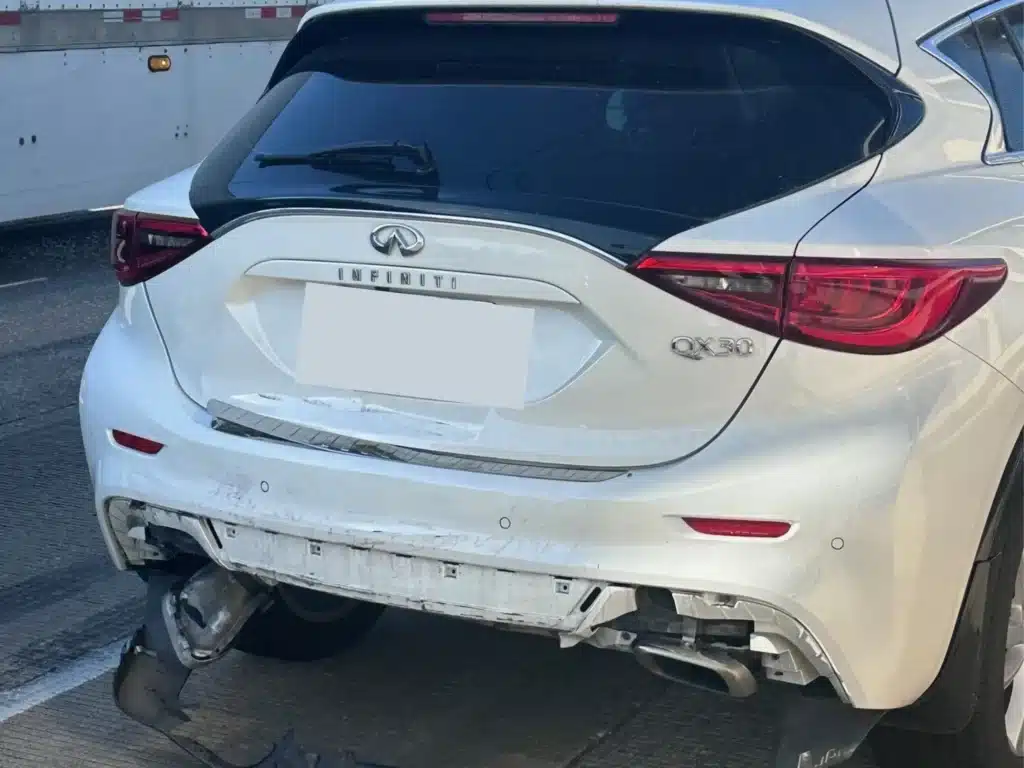
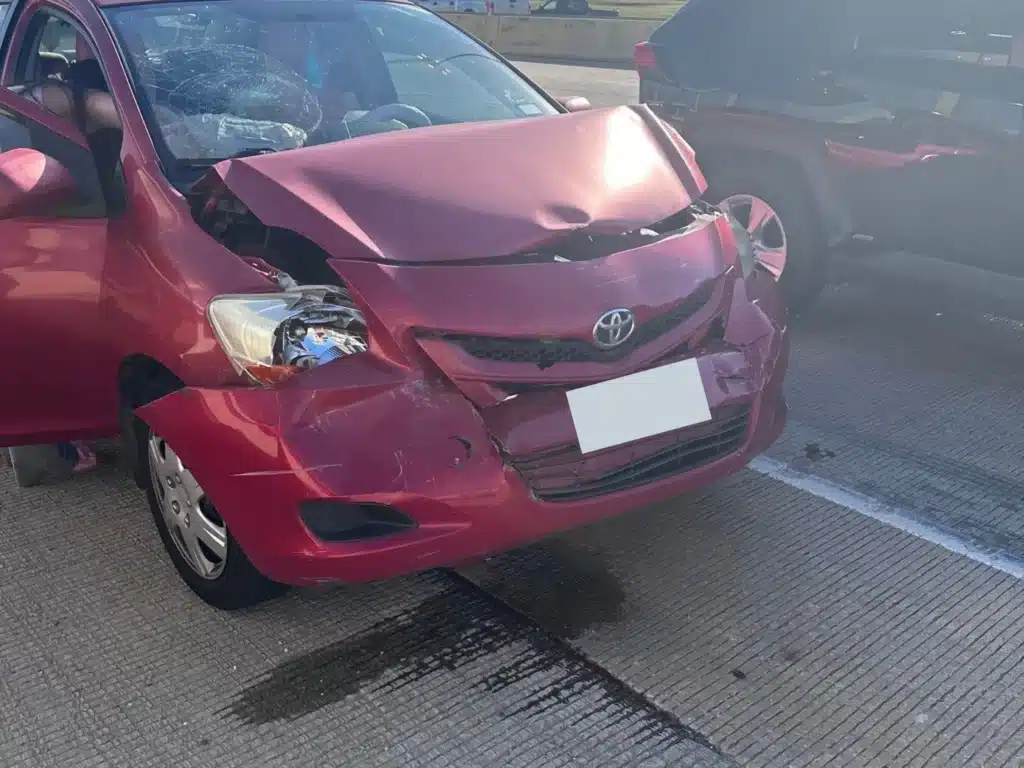
Our client’s SUV was stopped in northbound U.S. 75 traffic when the sedan behind her approached too quickly to stop and struck her vehicle. The crash report listed no contributing action by our client.
- The issue
She did not immediately see a pain-management doctor. Her low-back and tailbone pain worsened over the following days, and imaging and a spinal injection came later. Insurers often use delays in treatment to argue that an injury was minor or unrelated to the crash.
- The result
We documented the complete treatment timeline, and the insurer paid its full $50,000 bodily injury limit.
- Why it matters
The at-fault driver had more than the Texas minimum limits, but the policy limit still capped the available insurance recovery. Any additional recovery would have needed to come from another policy or directly from the driver.
Past results do not guarantee a similar outcome. The client’s injuries, treatment, evidence, and available insurance shaped this recovery.

A view from the other side of the table
“I spent more than a decade defending insurance carriers. I know exactly how they evaluate a file, where they will dig in, and how to make them blink. Now I use it for the people they used to fight.”
In a minimum-limits case, that experience means proving the claim is worth more than the available coverage and locating every other policy that may pay after the liability limits are used.
Matthew Graham
Managing Litigation Attorney
What Can Fill the Gap?
When the at-fault driver’s liability coverage is not enough, look for other available sources of payment:
- UIM coverage: May help when the at-fault driver’s available liability insurance does not fully cover your damages.
- PIP: May pay eligible medical expenses and part of lost income regardless of fault, often while the liability claim is still pending.
- MedPay: May pay eligible medical expenses regardless of fault, often before a liability or UIM claim is resolved.
- Health insurance: May pay covered treatment while the claim is pending, although the plan may seek repayment from a settlement.
- Collision coverage: May pay for your vehicle damage, less your deductible.
- Another liability policy: An owner’s, employer’s, commercial, rideshare, or umbrella policy may apply. If the at-fault driver was using someone else’s vehicle with permission, the owner’s policy may provide coverage; the policy language, exclusions, and facts of the use still matter. An umbrella or excess-liability policy may add coverage above the underlying auto policy, with its own conditions and exclusions.
- A personal claim against the driver: Possible in some cases, but recovery depends on the person’s assets. Texas generally protects wages from garnishment for this type of debt, along with a homestead and many types of personal property.
Your own UIM coverage may help, even when it has the same limits as the at-fault driver’s policy. Many people assume 30/60 UIM coverage cannot help when the other driver also has 30/60 liability coverage. That is not always correct.
Texas law treats a driver as underinsured when the available liability insurance is not enough to compensate the injured person’s actual damages.
For example, if your damages are $80,000 and the at-fault driver’s insurer pays its full $30,000 limit, you may still have $50,000 in unpaid damages. If you carry 30/60 UIM coverage, your policy may pay up to an additional $30,000, subject to the policy terms and the facts of the claim.
In one Dallas case, the other insurer paid its $100,000 liability limit and the client’s own UM/UIM coverage added $5,000, for a $105,000 total recovery. The amount available under UM/UIM depended on the client’s damages, policy limits, and the other insurance payment.
Get your insurer’s consent before settling. Standard Texas auto policies typically require written consent from your UIM insurer before you accept a settlement from the at-fault driver’s insurer.
Failing to get consent does not automatically eliminate coverage in every situation, but it can create a dispute over whether the settlement harmed your insurer’s rights. Asking first is the safest way to preserve a possible UIM claim.
What Does the $25,000 Property Damage Limit Pay?
The $25,000 property damage limit covers property belonging to other people that the insured driver damages in one crash. It may include vehicles, vehicle contents or other personal belongings, fences, signs, buildings, towing charges, storage charges, and reasonable rental-car or loss-of-use expenses while a damaged vehicle is repaired or replaced.
It does not pay for the at-fault driver’s own vehicle or belongings.
For example, assume your $45,000 truck is totaled and no other property is damaged. The other driver’s insurance may pay up to $25,000, leaving a $20,000 gap.
If you have collision coverage, your insurer may pay the vehicle’s full value, minus your deductible, and then seek repayment from the at-fault driver’s insurer.
Without collision coverage, you may collect the $25,000 liability limit. If you have UM/UIM property damage coverage and did not reject it, that coverage may help pay the remaining vehicle loss, usually subject to a $250 deductible and the policy’s limits, exclusions, and terms.
The at-fault driver may personally owe any remaining amount.
What Our Intake Line Hears About Coverage
From June 10 through September 2026, we reviewed 155 recorded crash-related intake calls. Insurance coverage came up in 60 calls, and in 43 of those our staff raised it first. Ten involved an uninsured driver, a possible uninsured driver, or a hit-and-run driver.
155
Recorded crash calls reviewed
10
Calls about a driver with no insurance or one who drove off
6 of 10
With no insurance left to pursue
Of those 10 calls, three callers had UM coverage that could potentially respond. Six had no insurance coverage left to pursue: four had no UM coverage, one household had previously rejected UM coverage in writing, and one caller had no auto insurance. In the remaining call, the other driver was only suspected of being uninsured, and coverage had not yet been confirmed.
Of the 60 callers who discussed insurance:
- 42 described the coverage they carried.
- 19 said they had basic liability coverage.
- Only two of those 19 callers also knew they had UM coverage.
- 17 described their policy as “full coverage.”
- Six said they had no insurance.
When asked directly about UM coverage:
- Eight said they had it.
- Seven said they did not.
- One said a rejection form had been signed.
- Two were unsure.
“Full coverage” has no fixed legal meaning. It does not tell us whether a caller had UM/UIM, PIP, MedPay, collision, or enough liability coverage. In most of the 17 calls where the term was used, the conversation did not establish whether UM coverage was included.
One intake specialist explained it this way: “Most people think, hey, you know, I have full coverage, so I’m fully covered. That’s not the case always.”
Another specialist told a caller injured by an uninsured driver: “Liability only covers if you cause an accident. It covers that other person for their damages and their injuries.”
Callers often describe the issue more simply. One person involved in a four-vehicle crash said: “My vehicle is kind of older, so I just have the minimum, whatever that is for Texas.”
Another caller said: “I know I don’t have full coverage, at least.”
How we counted: We searched the 155 crash-call transcripts for insurance and coverage terms, reviewed every match, and classified each one manually. We excluded three calls involving only health insurance, cargo coverage, or a deductible.
The numbers are small, so we report counts instead of percentages. They reflect calls to our firm and do not represent all Texas drivers. Individual results and experiences vary.
PIP and Uninsured Motorist Coverage in Texas
Is PIP Required in Texas?
No, not if a named insured rejects it in writing. But Texas insurers must include PIP with an auto liability policy unless a named insured signs a written rejection.
Texas Insurance Code §§ 1952.152 and 1952.153 require insurers to offer at least $2,500 in personal injury protection, or PIP. Higher limits are available.
PIP can cover more than medical bills. Depending on the policy and the facts, it may cover medical expenses, funeral expenses, 80% of lost income, and household services for a person who does not earn income. Covered expenses generally must be incurred within three years after the crash. See Texas Insurance Code §§ 1952.151 and 1952.155.
PIP can protect you, household members, passengers, and certain people using the vehicle with permission, regardless of who caused the crash. It is not liability coverage and does not pay the other driver’s losses.
Does Texas Require Uninsured Motorist Coverage?
No, not if a named insured rejects it in writing. But Texas insurers must include UM/UIM coverage with an auto liability policy unless a named insured rejects it in writing.
Texas Insurance Code § 1952.101 requires insurers to provide uninsured and underinsured motorist coverage in the policy or as a supplement to it unless a named insured rejects the coverage in writing. A written rejection can remain effective through renewals with the same insurer or an affiliated insurer. A new insurer must obtain a new rejection.
You may choose UM/UIM limits ranging from 30/60/25 up to your own liability limits. UM/UIM property damage coverage generally has a $250 deductible. See Insurance Code § 1952.105.
One caller in summer 2026 had been hit head-on by an uninsured driver. The caller had a copy of a UM rejection form signed on the household policy in 2017.
If the policy had stayed with the same insurer, the rejection likely still applied. That earlier decision could leave the household without a UM claim.
A hit-and-run crash may qualify for UM coverage when an unidentified vehicle physically contacts you or your property. See Insurance Code § 1952.104. Prompt notice, cooperation, evidence of the contact, and the policy’s other terms can also matter.
Case file 02
Closed File · Uninsured Motorist Claim
The Driver Left. Her Own Policy Paid.
$30,000
UM limit paid

- The crash
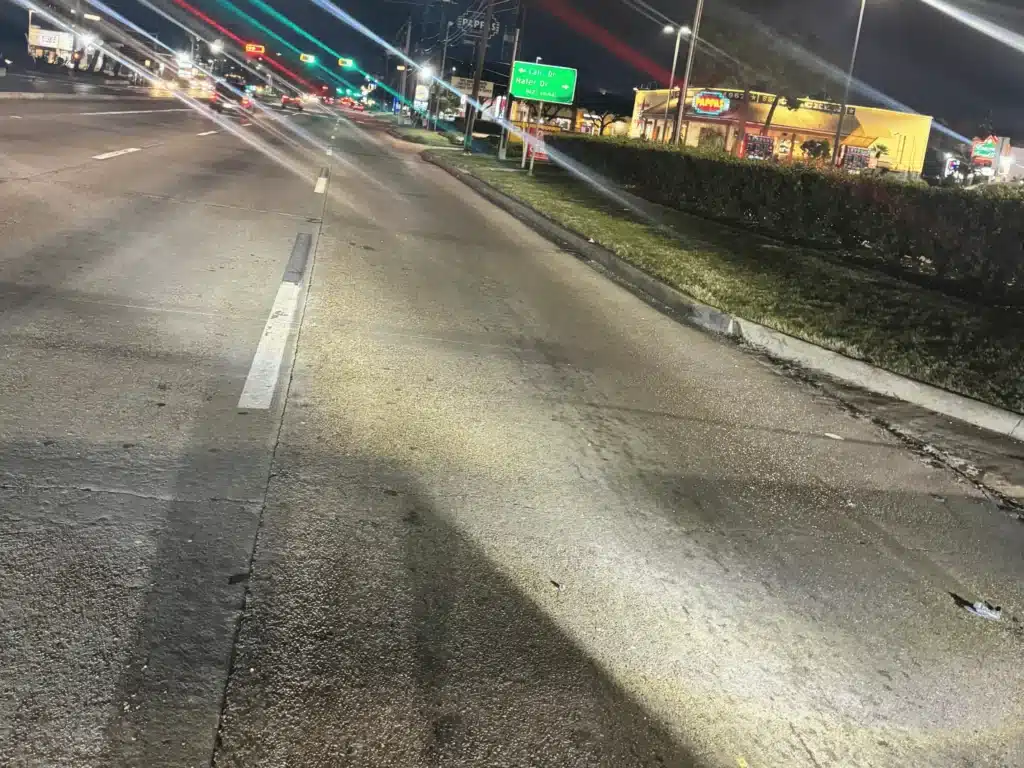
Shortly after midnight on FM 1960 West, a Jeep pulled from a fast-food parking lot and crossed into our client’s lane. The Jeep returned to the lot, and its driver left without exchanging information.
- The problem
Because the driver was never identified, there was no liability insurer to pursue.
- What paid
The police report, photographs from the scene, and damage to our client’s Escalade supported the claim. Her own uninsured motorist coverage paid its full $30,000 limit.
- Why it matters
She had UM coverage at the same $30,000 level as the Texas liability minimum. It still paid the full limit because the other driver left and no liability policy was available.
Past results do not guarantee a similar outcome. Coverage terms, available evidence, and the facts of the crash determine each claim.
What Happens to a Driver With No Insurance?
A first conviction for driving without insurance can result in a fine of $175 to $350, with no jail time. Later convictions can lead to a higher fine, license suspension, and vehicle impoundment.
None of those penalties pays the person injured in the crash.
Penalties for driving without insurance · Transportation Code Chapters 601 and 521; Penal Code §§ 12.21, 12.22
| Situation | What the law provides |
|---|---|
| First conviction | A fine from $175 to $350 and no jail time. The court may reduce the fine for someone unable to pay. |
| Second or later conviction | A fine from $350 to $1,000, license suspension unless proof of insurance is filed and maintained for two years, and a 180-day impoundment of a vehicle the driver owned at the time of the offense and conviction. |
| Uninsured driver with a suspended or invalid license | A Class B misdemeanor punishable by up to 180 days in jail and a fine up to $2,000. If the driver causes a crash involving serious bodily injury or death, the charge may become a Class A misdemeanor, carrying up to one year in jail and a $4,000 fine. |
| Insured driver without proof at the stop | The court must dismiss the charge when the driver shows that valid financial responsibility was in effect on the date of the stop. See Transportation Code § 601.193(b). |
The two-year proof filing is commonly called an SR-22. It is a certificate the insurer files with the state.
Anyone involved in a crash may ask the other driver for proof of insurance. Officers may check coverage through TexasSure, the state’s insurance-verification database. A no-insurance ticket must state that the system could not verify coverage.
Several inaccurate statements often appear online:
“You will pay a $250 surcharge every year for three years.” This is outdated. The Driver Responsibility Program was repealed effective September 1, 2019, and the Department of Public Safety waived remaining surcharges.
“Driving without insurance means up to a year in jail and a $4,000 fine.” That is only partly true. A basic no-insurance ticket is generally punishable by a fine, not jail. A one-year sentence and $4,000 fine apply only when an uninsured driver also has a suspended or invalid license and causes a crash resulting in serious bodily injury or death.
Separate rules can allow up to six months in jail for someone who was already required to maintain proof of financial responsibility.
“A second no-insurance conviction suspends your vehicle registration.” Current law addresses suspension of the driver’s license.
After a crash with an uninsured driver, possible sources of payment may include UM/UIM coverage, PIP, MedPay, health insurance, collision coverage for vehicle damage, or a personal claim against the at-fault driver.

From the author
We start by finding what coverage can actually pay.
That is the first step in most cases involving an uninsured driver: finding every available policy, confirming any rejection forms, and identifying the person, business, or insurer that may be responsible for payment.
Josh Alexander
Founder and Managing Attorney
Do Out-of-State Drivers Have to Meet Texas Minimums?
Yes. Texas financial-responsibility laws do not exempt visitors.
After a Texas crash involving injury, death, or apparent property damage of at least $500, the owner or driver of an out-of-state vehicle must show proof of financial responsibility to the investigating officer. See Transportation Code §§ 601.291 to 601.294.
If an out-of-state driver cannot provide proof of financial responsibility after a qualifying Texas crash, the driver must be taken before a magistrate. If the magistrate finds that a judgment against the driver is reasonably possible, the magistrate must order the driver to provide proof of financial responsibility. If the driver does not provide that proof as ordered, the magistrate must order the vehicle impounded. See Transportation Code §§ 601.291 to 601.294.
Some sources refer to a $1,000 amount, but that figure comes from a separate Texas rule involving the posting of security after a crash. It is not the same out-of-state-driver reporting rule.
An out-of-state driver usually does not need to buy a separate Texas policy before entering the state. Some policies increase limits to meet the minimum requirements where a crash occurs, but that result depends on the policy language and must be confirmed.
If an out-of-state driver’s coverage is not enough, your UM/UIM coverage may apply in the same way it would after a crash with a Texas driver, subject to the policy terms and the facts of the claim.
Frequently Asked Questions
What Is the New Insurance Law in Texas?
Texas did not change its minimum liability limits in 2026. The requirement remains 30/60/25, unchanged since January 1, 2011. House Bill 4178, the 2025 proposal to increase the limits to 50/100/40, did not become law.
Texas did make other insurance-law changes. House Bill 2067 took effect on January 1, 2026. Among other things, it requires insurers to give written reasons when they decline, cancel, or refuse to renew certain policies. That law did not increase the minimum auto liability limits.
Is 30/60/25 “Full Coverage” in Texas?
No. “Full coverage” is not a legal term. It usually means liability coverage plus collision and comprehensive coverage, which lenders often require for financed vehicles. A 30/60/25 liability policy alone covers third-party losses. It does not pay for the policyholder’s own injuries or vehicle damage.
Is 30/60/25 Enough Coverage?
It may be enough for a minor crash, but it is often not enough after a serious injury, multivehicle collision, or total loss. The $30,000 and $60,000 bodily injury limits are caps, not guarantees that all damages will be paid.
The Texas Department of Insurance warns that minimum limits “might be too low” if you cause a multivehicle crash or total another driver’s vehicle.
Does the At-Fault Driver’s 30/60/25 Pay for My Injuries?
It may pay for covered damages the at-fault driver legally owes, up to $30,000 for you and $60,000 total for everyone injured in the crash.
Your percentage of fault reduces the amount you may recover. If you are more than 50% at fault, you generally cannot recover from the other driver.
Is Texas an At-Fault State for Car Accidents?
Yes. Texas generally follows an at-fault system. The driver who caused the crash may be legally responsible for the losses they caused, but recovery can be reduced by your percentage of fault. Under Civil Practice and Remedies Code §§ 33.001 and 33.012, a person who is more than 50% responsible generally cannot recover from the other side.
Does Minimum Liability Pay for the Policyholder’s Own Injuries or Vehicle?
No. Liability insurance pays other people harmed by the insured driver. Your own losses may depend on PIP, MedPay, collision, health insurance, or UM/UIM coverage.
Do I Have to Carry Proof of Insurance?
Yes. An officer or another person involved in a crash may ask to see it.
Paper proof or a digital image from the insurer may qualify. If valid financial responsibility was in effect on the date of the stop and the driver provides the required proof, the court must dismiss the charge. See Transportation Code § 601.193(b).
Can I Find Out How Much Insurance the Other Driver Has?
Not as a legal right before a lawsuit is filed. Texas generally does not require an insurer to disclose its customer’s liability limits before suit. House Bill 3969, a 2025 proposal that would have required disclosure, did not become law.
You can still identify the other driver’s insurer and policy number. Start with the insurance card exchanged at the scene. You can also request the Texas Peace Officer’s Crash Report, commonly called a CR-3. The CR-3 generally identifies the other driver’s insurer and policy number when that information was available to the investigating officer.
After you open a claim, ask the adjuster whether the insurer will disclose the available limits. Some insurers do so with their policyholder’s consent. Once a lawsuit is filed, required initial disclosures include applicable insurance and indemnity agreements. See Texas Rule of Civil Procedure 194.2(b)(7).
How Much Coverage Should I Carry, and Is 50/100/50 Enough?
The right amount depends on your assets, vehicle value, household, passengers, lender requirements, and comfort with risk. This page cannot provide individual insurance advice.
Many drivers compare 50/100/50 coverage with 100/300/100 coverage. In the $80,000 injury-loss example above, a 50/100 policy would still leave $30,000 unpaid.
Because UM/UIM bodily injury limits cannot exceed your liability limits, higher liability limits may also allow you to purchase higher UM/UIM limits.
Can I Register My Vehicle in Texas With Out-of-State Insurance?
Only if the policy meets Texas requirements.
Texas vehicle registration requires proof of financial responsibility that complies with Texas law. For a liability policy, that usually means a policy issued by an insurance company authorized to write auto insurance in Texas.
Ask your insurer whether the policy qualifies before visiting the county tax office.
What to Do After a Crash Involving Minimum Insurance
Your next steps
- Get the other driver’s insurance card, driver’s license information, and contact details. Request the CR-3 crash report, which may identify the other driver’s insurer and policy number.
- Open a claim with the at-fault driver’s insurer. Ask the adjuster whether the insurer will disclose the available liability limits.
- Find your declarations page and confirm your PIP, MedPay, UM/UIM, collision, and deductible amounts.
- Notify your own insurer about a possible UM/UIM claim before accepting a settlement, cashing a policy-limits check, or signing a release.
- Keep records of treatment, medical bills, missed work, repair estimates, and all insurance communications.
- Ask whether another policy may apply, including an owner’s, employer’s, rideshare, commercial, or umbrella policy.
Hurt by a Driver With Too Little Insurance?
If the driver who hit you had only minimum insurance, no insurance, or left the scene, speak with someone before you accept a policy-limits check or sign a release.
We will review the other driver’s policy, your own policy, and every possible source of payment for your injuries.
24/7 · Free consultation · No fee unless we win
A Free Review of Every Policy That Could Pay
J. Alexander Law Firm serves injured clients throughout Texas: Dallas · Houston · San Antonio · Fort Worth · Arlington · Canton. Se habla español.