


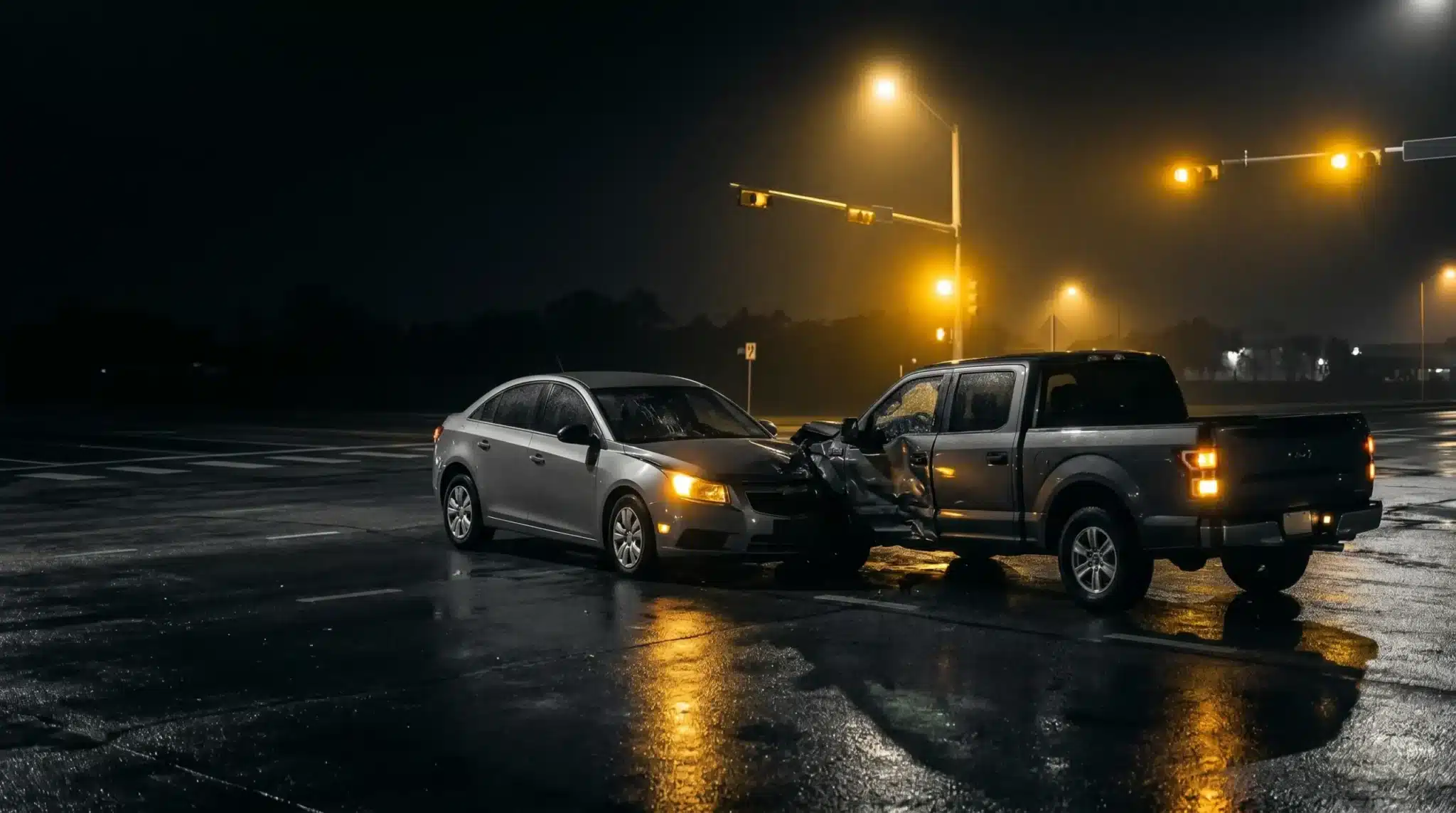
Texas Car Accident Attorneys
Video summary: Josh Alexander introduces the firm and how a Texas car accident claim is handled from the first call to the settlement. The same details are covered in text on this page. Call 469-807-7480 with questions.







How often car crashes happen in Texas.
Roughly nine in ten crashes come down to driver error, speeding, distraction, impairment, and fatigue, rather than the vehicle or the road.
Read below to find what we can recover for you, and how much your case is worth.
What you can recover after a Texas crash.
After your accident your money will come from a few different sources, here’s what we pursue, and what shapes the final number.
-
Medical care
Medical damages cover your emergency care, hospital bills, surgery, rehab, and the future treatment your injuries will still need, and we document every bill so nothing is left out of the demand.
-
Lost income
Lost income covers the wages you missed while hurt plus your reduced earning capacity if the injury limits the work you can do going forward.
-
Pain and suffering
We pursue non-economic damages for the physical pain, emotional distress, and loss of enjoyment the crash caused, not just your bills and lost pay.
-
Fault and coverage
Fault and coverage set the ceiling on your recovery, so we use the police report, photos, and witness statements to keep your share of blame low and identify every insurance policy that can pay.
When a crash is fatal, what a wrongful death claim recovers
When a crash takes a life, a surviving spouse, children, or parents can bring a Texas wrongful death claim, which recovers different damages from an injury case, and our wrongful death lawyers guide families through every step.
What can your case be worth?
Medical bills, lost income, and pain and suffering are added together, then adjusted for fault and available coverage, to reach your case value.
What you take home is that gross number minus the attorney fee, case costs, and any medical liens, and our guide to the average car accident lawsuit value in Texas walks the full math.
On a 60,000 dollar example with no fault against you, a contingency fee of roughly one third is about 20,000, case costs and medical liens come out of the remainder, and the rest is your check.
The crash types we handle across Texas.
Who hit you, and how, changes who can be held responsible and where the money comes from. These are the situations we see most across Texas.
-
Rear end
Rear ended in your car
The rear driver is usually at fault in a Texas rear end crash. Getting slammed from behind is rarely a minor bump, and the at fault driver’s insurer moves fast to limit what it pays.
What to do after a rear end crash -
Drowsy driver
The driver fell asleep at the wheel
A driver who dozed off is still responsible for the crash. Proving fatigue takes the right evidence, from phone records to hours behind the wheel.
When a driver falls asleep -
Drunk driving
Hit by a drunk driver
Beyond the impaired driver, a bar that overserved a visibly drunk patron may share liability under the Texas Dram Shop Act.
Hit by a drunk driver in Dallas -
Parking lot
Parking garage & lot crashes
Fault in a lot or garage usually turns on right of way and who was backing out. Low speed does not mean low stakes.
A real Dallas parking lot case -
Catastrophic
Catastrophic injury crashes
Life altering injuries are built differently, with future care, lost earning capacity, and larger policies all in play.
How catastrophic cases are built -
Sideswipe
Sideswiped in your lane
The driver who left their lane is usually at fault in a sideswipe. The drifting vehicle leaves paint transfer and damage that tell the story, if the evidence is preserved before it is gone.
What to do after a sideswipe
What you have to prove to win a Texas claim.
To win a Texas car accident claim you must prove four elements of negligence about the other driver: duty, breach, causation, and damages.
-
1
Duty
The other driver owed you a legal obligation to drive safely, which every driver on a Texas road does.
-
2
Breach
They failed that duty by doing something like speeding, running a light, or texting behind the wheel.
-
3
Causation
That failure is what actually caused your crash and your injuries, not something that came before or after.
-
4
Damages
You suffered real harm, such as medical bills, lost income, or pain and suffering.
The injuries insurers say your crash did not cause
The hardest injuries to prove after a crash are the ones that do not show on an X-ray: soft tissue neck and back strains, concussions and other traumatic brain injuries, and psychological harm.
Neck and back strains are the most disputed injuries in Texas crash claims because they do not show cleanly on an X-ray or MRI. The insurer argues the pain is exaggerated, came from age, or came from daily life rather than the collision. Consistent treatment starting right after the crash, with records tying each symptom to the collision, is what proves them.
Concussions and other traumatic brain injuries often come with normal scans, so the insurer argues nothing serious happened. Symptoms like headaches, brain fog, and memory problems need to be documented early and at every visit. An evaluation right after the crash and, when needed, an expert opinion are what connect the injury to the impact.
Anxiety, depression, and post traumatic stress are real crash injuries with no image at all, so insurers dismiss them as unrelated or preexisting. Treatment records from a counselor or physician that connect the symptoms to the collision are what make them compensable.
The evidence that defeats the causation attack is the police report, photos and camera footage, witness statements, and consistent medical treatment starting right after the crash, with records connecting each symptom to the collision. A gap between the crash and your first treatment is the single biggest thing that weakens causation, and it directly reduces the gross number your settlement is built on.
Your first steps after a Texas crash
Photographing the scene and getting the police report right after the crash preserves exactly the evidence that later defeats the insurer’s causation attack.
- Call 911. The crash report police create is key evidence later.
- Document the scene. Photograph the vehicles, the road, and your injuries, and get names and numbers from witnesses.
- See a doctor the same day. Early records tie every symptom to the crash.
- Talk to a lawyer before the insurer. Do not give a recorded statement or sign anything first.
The full step by step is in our guide to what to do after a car accident in Texas. If police never came or would not write a report, our guide to a crash with no police report shows what to document in its place.
A word from our founder
Proving duty, breach, causation, and damages is how your lawyer shifts fault onto the other driver, keeping you at or below the 50 percent recovery bar. If your crash caused nothing more than minor vehicle damage and no injury you can often file the property claim yourself, but the moment there is an injury, disputed fault, or a commercial, rideshare, or government vehicle involved, talk to a lawyer before you file or give any statement. Use our full decision guide to see which applies to your crash.
Offices across Texas.
From DFW to the Gulf Coast to South Texas, a senior car accident attorney is never far. Find the office nearest you.
-
Dallas County | HQ
Dallas
Our headquarters on North Central Expressway, serving Dallas County and the wider Metroplex.
Dallas car accident lawyers -
Tarrant County
Fort Worth
On North Main Street, handling crashes across Fort Worth and Tarrant County.
Fort Worth car accident lawyers -
Harris County
Houston
Downtown on Milam Street, representing drivers hurt across Houston and the Gulf Coast.
Houston car accident lawyers -
Bexar County
San Antonio
On Silicon Drive, serving San Antonio and communities across South Texas.
San Antonio car accident lawyers -
Van Zandt County
Canton
On Trade Days Boulevard near I-20, covering East Texas and the First Monday rush.
Canton car accident lawyers -
Tarrant County
Arlington
Near Six Flags on Road to Six Flags Street, serving Arlington and the mid cities.
The Texas rules that decide your case.
Three rules shape almost every Texas car accident claim before a single dollar moves. Miss one and the strongest case can be worth nothing.
-
1
The two year clock
Under Texas Civil Practice and Remedies Code Section 16.003, you generally have two years from the date of the crash to file suit. A wrongful death claim runs two years from the date of death, and if a government vehicle or entity is involved, much shorter notice deadlines can apply. You have two years to file, but camera footage and vehicle data can vanish in days, so acting fast protects both.
Why it matters: once the window closes, the right to recover is gone no matter how strong the case. -
2
The 51 percent fault bar
Texas uses modified comparative fault (Section 33.001). You can still recover if you were 50% or less at fault, with your award reduced by your share. At 51% or more you recover nothing, which is exactly why insurers work so hard to push blame onto you. Never admit fault or apologize at the scene, because the insurer treats an apology as an admission and uses it to raise your share.
Why it matters: every recorded statement is a chance for the insurer to move your fault percentage up. -
3
What a lawyer costs
We work on a contingency fee: nothing upfront, and fees are collected only if we recover for you. In most cases that arrangement also covers the investigation and expert costs along the way.
Why it matters: the insurer has lawyers on salary; contingency puts one on your side at no upfront cost. -
4
The 30/60/25 minimum
Texas only requires drivers to carry 30/60/25 in coverage, and many carry that or nothing at all. When the at fault driver’s policy is too small or missing, your own uninsured and underinsured motorist coverage often becomes the recovery.
Why it matters: when the other driver has no policy, your UM and UIM limits become the cap on what your case can be worth.
What injured Texans say about us.
Every review below is from a verified client, published on Google where anyone can read it. We do not pay for reviews and we do not filter them.
Very pleasant experience having this firm work with me on a car accident case. They were transparent and diligent and kept me fully updated and informed the entire time.
I gave my statement once and I feel like they just took it from there. A weight was lifted off my shoulders when I wasn’t the one having to talk to the insurance.
Their communication went above and beyond my expectations. They facilitated all my medical visits and my settlement was way more than my expectation.
They took the time to answer all my questions and made me feel confident in them. The whole staff was very friendly and professional.
The team was professional, knowledgeable, and always responsive. They made the legal process smooth and stress-free. Highly recommend!
La comunicación es muy buena, te ayudan a cualquier hora.
Reviews reflect individual client experiences. Past results do not guarantee a similar outcome.
Learn the law before you call.
Free guides and tools written by our attorneys. Each one answers a question injured Texans ask us every week, in plain language, at no cost.
-
Deadlines
The two year clock on Texas claims
The filing deadline, the exceptions for government vehicles and minors, and what happens the day the window closes.
See the deadlines and exceptions -
Insurance
The tactics adjusters use on you
The recorded statement, the quick lowball, the blame shift; how each tactic works and how to answer it.
See how to deal with insurers -
Legal fees
How contingency fees work
Zero dollars up front and no fee unless we win. Where every dollar of a settlement actually goes, line by line.
See where every dollar goes -
Whiplash
What a whiplash settlement looks like
The most disputed crash injury in Texas, and a real client case showing how a whiplash claim gets proved and paid.
See a real whiplash settlement -
Disc injury
Proving a herniated disc claim
Insurers call disc injuries preexisting. This guide shows the records and imaging that connect the disc to the crash.
See how a disc injury is proved -
Fractures
What a broken arm case is worth
A T-bone crash, a fractured arm, and the settlement that followed; what moves the number on a fracture claim.
See a broken arm settlement -
Chest injury
A chest injury claim, start to finish
A semi threw a client’s car 300 feet in stopped traffic. How her chest injury claim resolved in seven months.
See how the claim resolved -
Uninsured driver
Hit by an uninsured driver: who pays
Roughly one in seven Texas drivers has no coverage. Where the money comes from when the at fault driver carries nothing.
See who actually pays -
No police report
No police report: what to do
Police never came or declined to write one. What to document at the scene, the retired CR-2 blue form, and how to open your claim anyway.
See what to do with no report -
Driver left or lied
Driver left, lied, or had no insurance
Fled the scene, handed over a fake card, or carried nothing. The coverage on your own policy that steps in for each one.
See which coverage pays -
Free tool
Is the insurer’s offer fair?
Enter the offer and your damages, and our free analyzer shows how the number compares to what Texas law lets you claim.
Analyze your settlement offer -
Free tool
Decode your Texas crash report
The CR-3 police report decides fault arguments. Our free decoder explains every code and field on yours.
Decode your crash report -
Free tool
Check your symptoms after a crash
Pain that shows up days later still counts. Our free checker maps common post crash symptoms to the injuries behind them.
Check your crash symptoms -
Free tool
Crash injuries by impact speed
See how injury severity changes at 20, 40, and 60 miles per hour, and why a low speed label undersells real harm.
See injuries by impact speed
Hit while driving in Texas? Let’s fight.
Tell us what happened and we will tell you, honestly, where you stand under Texas law and what your case looks like. We represent injured drivers statewide, from Houston and Dallas to San Antonio, Austin, Fort Worth, and El Paso. The review is free, the clock is running, and you owe nothing unless we win.