


$30,000 Dallas Car Accident Settlement After Police Could Not Determine Fault
On This Page
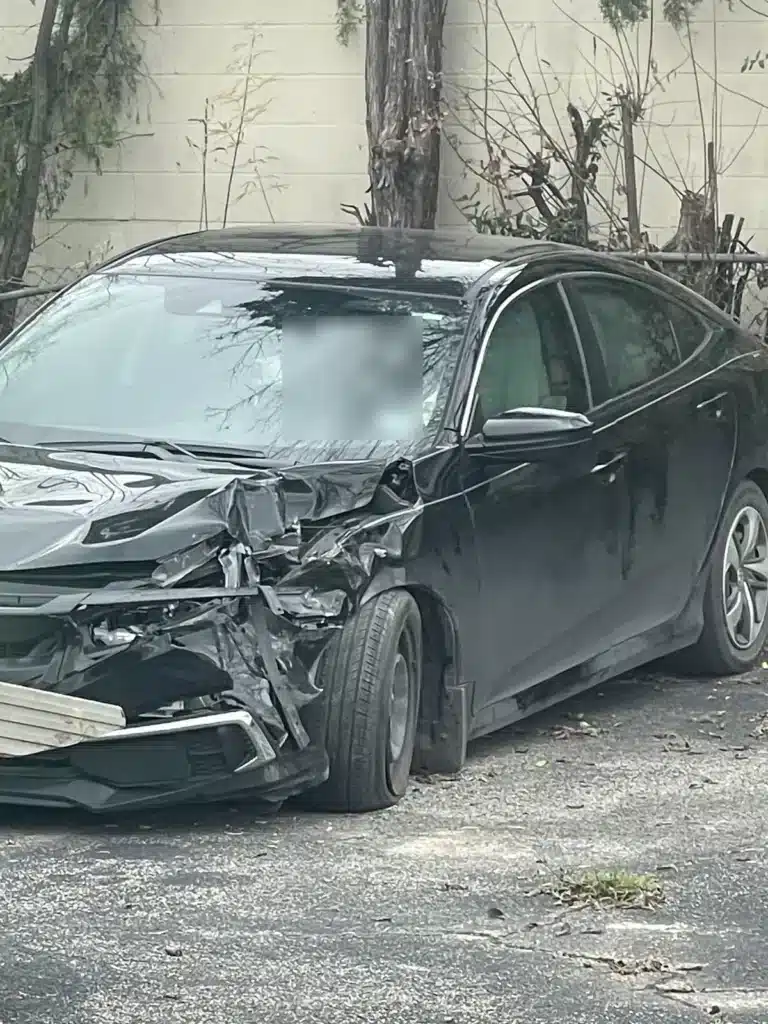
Our client was turning right from Conner Street onto Lake June Road when her sedan and a pickup collided. The drivers gave different accounts, and the investigating officer could not determine who caused the crash.
We presented her account, the crash report and her medical records to the pickup driver’s insurer. The insurer paid its full $30,000 bodily injury limit for her claim without a lawsuit.
The $30,000 was the gross settlement. Attorney’s fees, case expenses and amounts owed for medical care reduced what our client received.
The Claim in Brief
| Detail | This claim |
|---|---|
| Gross settlement | $30,000 |
| Payment source | Pickup driver’s liability insurer |
| Policy limit paid | $30,000 for our client’s injury claim |
| Resolution | Settled before a lawsuit was filed |
| Police finding on fault | The officer could not determine who caused the crash |
| Location | Lake June Road at Conner Street, Dallas |
| Conditions | Rain, wet pavement and darkness |
| Injuries addressed in the claim | Neck strain, small cervical disc herniations, concussion and post traumatic headaches |
| Treatment | Emergency care, pain management, 15 chiropractic visits and neurology by video |
| Client’s own auto policy | None |
| Our role | Represented the sedan’s driver |
The Drivers Gave Different Accounts at a Signal Controlled Intersection
Our client was driving north on Conner Street shortly after 6 p.m. She was turning right to travel east on Lake June Road. It was dark and raining, and the pavement was wet.
A pickup was traveling east on Lake June Road. Its right front corner and our client’s left front corner collided in the intersection.
The pickup driver told the officer that his light was yellow and that he continued through. Our client said she had the right of way. The officer recorded both accounts but could not determine who caused the collision.
Dallas Fire Rescue treated our client at the scene, and her sedan was towed. About two hours later, she went to an emergency center by private vehicle.
Read the redacted Dallas crash report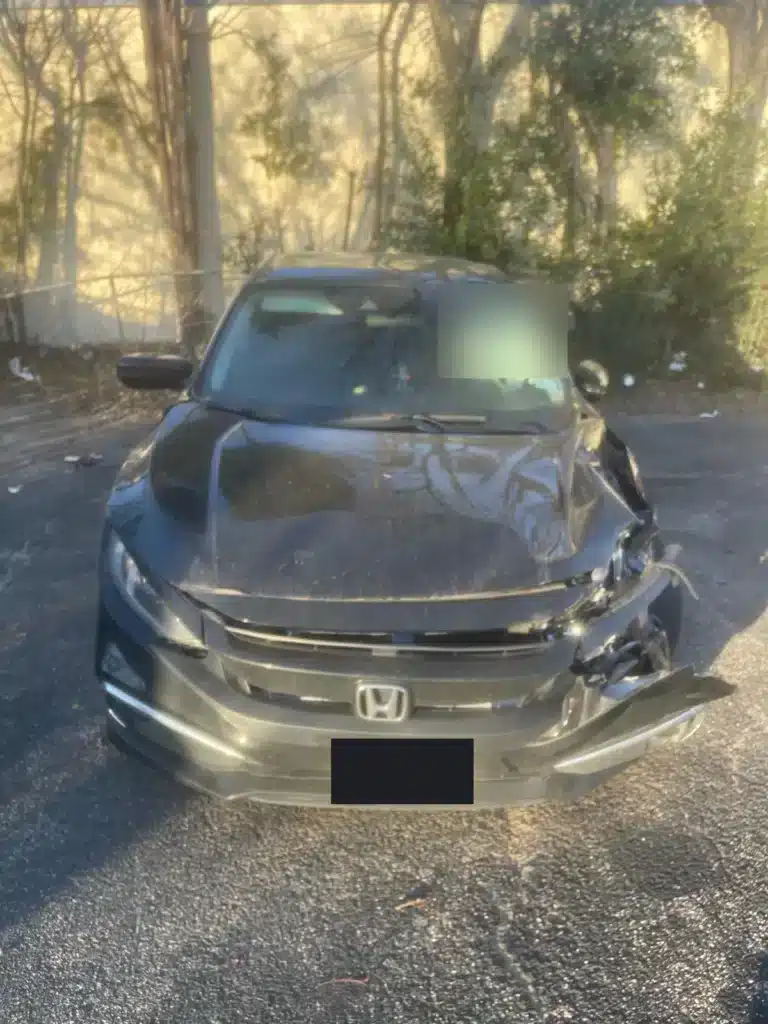
Neither Fault Nor the Injury Claim Could Be Explained by One Record
The police report did not resolve the disagreement between the drivers. The file also contained no video showing the signals, and the only other person listed on the report was a passenger in the pickup.
The medical evidence required a careful explanation:
- Neck and shoulder complaints were documented within hours of the crash.
- Headache, nausea and dizziness were documented three days later.
- A neurologist diagnosed a concussion during a video visit on day 54.
- Brain CT and MRI results were normal.
- The neck MRI showed small disc herniations without pressure on the spinal cord or nerves.
- Some records differed about airbag deployment, arm symptoms and other details.
Our client also had no auto policy of her own. The pickup driver’s $30,000 liability policy was the only coverage identified for this claim.
The Records and Our Work
1. We Presented Her Account Without Treating the Police Report as a Fault Finding
The officer’s diagram showed the vehicles’ positions in the intersection, and the damage entries identified the corners involved in the impact. Neither established which driver had the right of way.
The officer assigned contributing factor 98 to both vehicles and explained the conflicting accounts in the narrative. He did not select one account as the cause of the crash.
We submitted our client’s account, the crash report and her medical records in a demand for the pickup driver’s $30,000 policy limit.
That demand presented her claim despite the unresolved police finding. It did not turn the report into proof that the pickup driver was responsible.
2. We Organized the Medical Records Into a Treatment Timeline
The demand package contained 184 pages. Arranging the records by date helped distinguish symptoms documented soon after the crash from diagnoses made later.
| Time after the crash | What the records showed | Why it mattered to the claim |
|---|---|---|
| Same day | Emergency care for neck pain with muscle spasm, plus left shoulder and hip tenderness. The neck X ray did not fully show the lowest part of the cervical spine. | Established that neck and shoulder complaints were documented within hours. |
| Day 3 | Pain management records documented severe neck and mid back pain, headache, nausea and dizziness. The provider ordered a brain CT and referrals. | Showed that head symptoms were recorded well before the concussion diagnosis. |
| Day 10 | Brain CT was normal. Spine X rays showed loss of the normal neck curve, described as possibly related to muscle spasm. | Added imaging results without establishing a structural brain injury. |
| Days 20 to 83 | Fifteen chiropractic visits. | Documented the course of treatment through the third month. |
| Day 42 | Neck MRI showed a 2 mm herniation at C6 to C7 and a 1 mm herniation at C5 to C6, without nerve or spinal cord compression. Mid back MRI was normal. | Documented the disc findings and their limits. |
| Day 54 | A neurologist diagnosed concussion without loss of consciousness and post traumatic headache during a video visit. | Added a specialist’s assessment of the reported head symptoms. |
| Days 68 to 83 | Later notes described mild pain, little or no medication use, headaches two or three times a week and eventual release from chiropractic care. | Documented improvement rather than suggesting the symptoms remained unchanged. |
The day three note was important because headache, nausea and dizziness appeared in the record before the later concussion diagnosis. It did not, by itself, establish that diagnosis or resolve every question about the symptoms.
3. We Distinguished the Concussion Diagnosis From the Imaging Results
The neurologist diagnosed concussion and post traumatic headache on day 54, based on the history and video assessment. Our client reported that her head struck a side airbag.
The brain CT on day 10 and brain MRI on day 77 were normal. The claim therefore did not include imaging evidence of a structural brain injury.
Computerized cognitive testing followed on day 63. Its report described the results as decision support, not a standalone diagnosis.
We presented these records together rather than describing the scans or cognitive testing as proof they did not provide.
4. We Kept the Inconsistencies Visible
Some details did not match across the records:
- The crash report marked the airbag as not deployed. The medical history described deployed side airbags and a head strike against one.
- A chiropractic note recorded left hand tingling but described a sensory change in the right arm. By day 68, numbness was no longer reported.
- The emergency neck X ray was incomplete. The additional neck CT suggested by the radiologist was not performed.
Those differences remained part of the file. We did not replace them with a single, more certain account.
5. We Pursued the Only Coverage Identified for This Claim
The pickup driver’s bodily injury policy provided $30,000 for our client’s claim.
Our client had no auto policy of her own, so there was no UIM or personal injury protection coverage under a policy she carried to add to the recovery.
The officer cited her for driving without insurance. That citation concerned her insurance status. It was not the officer’s determination of who caused the collision.
We requested the pickup driver’s full $30,000 policy limit.
Learn about claims when the other driver’s insurance is limited
The Pickup Driver’s Insurer Paid Its $30,000 Limit
| Payment source | Amount |
|---|---|
| Pickup driver’s liability insurer | $30,000 |
| Total gross settlement | $30,000 |
The claim settled before a lawsuit was filed.
The insurer had the crash report, both drivers’ recorded accounts, our client’s medical records and our policy limit demand. We do not attribute the payment to one document or claim handling step.
The payment was a settlement, not a court finding that the pickup driver caused the crash.
Does Your Police Report Leave Fault Undetermined?
Tell us what happened and share any report, photographs, witness information or insurance correspondence you have. We can discuss whether we can help review the disputed accounts, injury records and available coverage.
Tell Us About Your CrashNo Court Decided Fault or the Value of Her Injuries
The $30,000 payment matched the policy limit identified for this claim. It does not establish the full value of our client’s losses or what another disputed fault case should recover.
Other limits matter:
- The officer’s inability to determine fault did not establish that either driver was blameless.
- The settlement did not resolve the conflicting accounts through a trial.
- The small disc findings and later concussion diagnosis were parts of this medical record, not a formula for another claim’s value.
- The records documented improvement. This account does not claim permanent symptoms.
- The $30,000 was gross, before fees, expenses and medical payments.
- Past results do not guarantee a similar outcome.
Where the Facts Come From
| Source | What it supports |
|---|---|
| Redacted Dallas police crash report | Both drivers’ accounts, the officer’s unresolved fault finding, collision diagram, contributing factors, damage entries, reported conditions, insurance citation and towing |
| Medical records included in the 184 page demand package, not published | Emergency care, symptoms, imaging, diagnoses, treatment dates and documented improvement |
| Firm’s claim file, not published | The policy limit demand, $30,000 payment and resolution before a lawsuit |
The crash report does not verify the medical treatment or settlement payment. Those portions of this account are reported by the firm from the medical records and its claim file.

Reviewed by: Josh Alexander, Founder and Managing Attorney