


Case Result
$30,000 Red Light Accident Settlement for a Driver Hit on His Side by an SUV, Late at Night in the Rain
Our firm represented a man hit on his driver’s side, late at night in the rain, by an SUV that ran a red light at Belt Line Road and Tarrant Road. The officer wrote that he had the green light, and the only contributing factor was on the other driver. His claim against the other driver’s policy settled for its whole $30,000 limit.
Did a driver run a red light into you? Tell us what happened.
On This Page
A Green Light on Tarrant Meets an SUV on Belt Line
The crash happened in Grand Prairie, where Belt Line Road (posted at 45 mph) crosses Tarrant Road (posted at 35 mph) at a signal. It was late at night, dark and wet with rain. An SUV came south on Belt Line while our client drove east on Tarrant, and the officer described the light in these words.
Unit 1 was traveling SB in the 700 block of N Belt Line Rd and coming up to a red light at the intersection of N Belt Line Rd and E Tarrant Rd. Unit 2 was traveling EB in the 700 block of E Tarrant Rd and had a green light. Unit 1 disregarded the red stop light and proceeded into the intersection. The front end of Unit 1 made contact with the driver’s side of Unit 2.
The front of the SUV struck the driver’s side of our client’s car, and a wrecker towed both vehicles. The Grand Prairie Police Department report is linked below. Personal details in it, from names and plates to ID numbers and insurers, are blacked out.
See the officer’s report and diagram, redacted (PDF)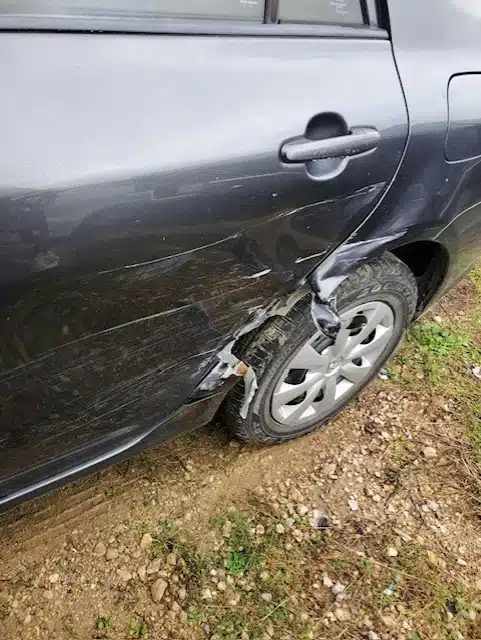
Four Things That Made Proof Harder
In a red light crash, each driver often says the light was green. Texas banned red light cameras statewide in 2019, as our red light camera study shows, so there is usually no footage to settle it. The officer’s account is often the only record of who had the green.
The report describes the other driver’s mistake in two ways. The code sheet defines code 25 as “Failed to Heed Warning Sign.” The officer’s narrative is more specific and says the driver “disregarded the red stop light.” Either way, the only factor sits on the other driver.
Both drivers were coded not injured, and no one left in an ambulance. An adjuster may treat that as a small injury before any doctor has seen him.
Our client first got care about a week after the crash, at an emergency room, for a headache. An insurer may say a week is long enough for something else to have caused it. The emergency room record ties the headache to the crash.
Six Records That Backed His Account
- The officer’s words on the green light
- The narrative says the green was his and the other driver disregarded the red. With no camera, this is the record of who had the right to go.
- Code 25, listed for the other driver only
- The report names a single contributing factor, and it is the other driver’s. Our crash report decoder lists what each code means.
- The Texas red signal rule
- Tex. Transp. Code § 544.007(d) states the duty plainly. “An operator of a vehicle facing only a steady red signal shall stop at a clearly marked stop line.” Also, “A vehicle that is not turning shall remain standing until an indication to proceed is shown.”
- The damage ratings and two tows
- The report rates the force on our client’s car as coming from 9 o’clock, into his side, at severity 3. Both vehicles were towed. This shows how hard the hit was.
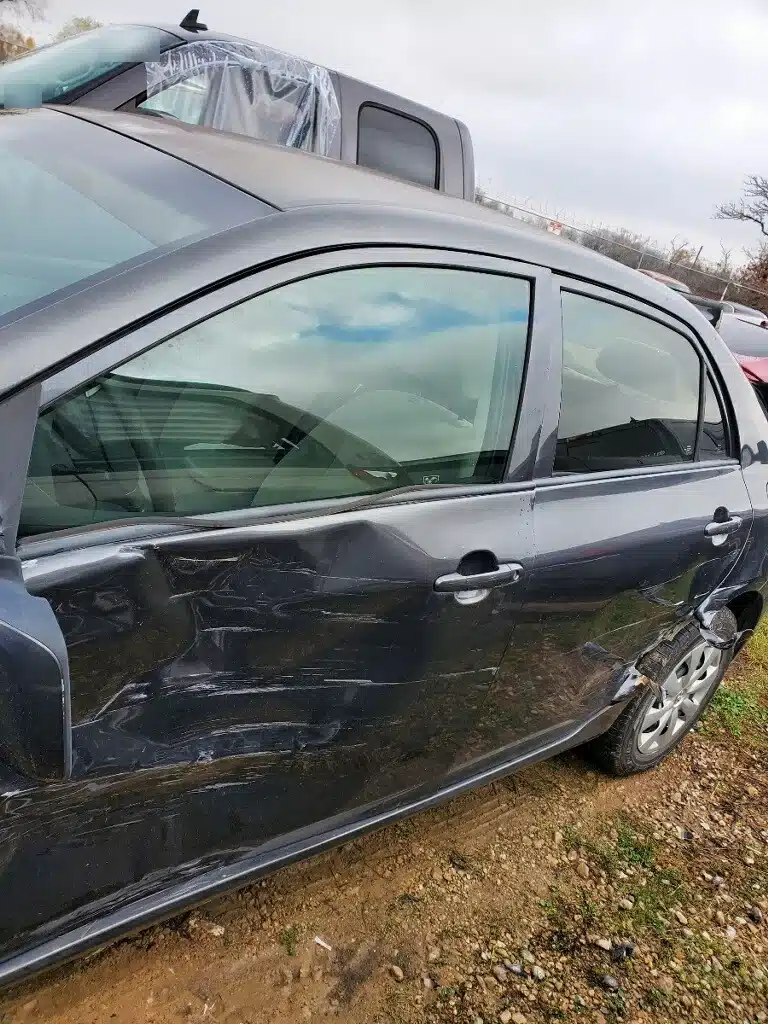
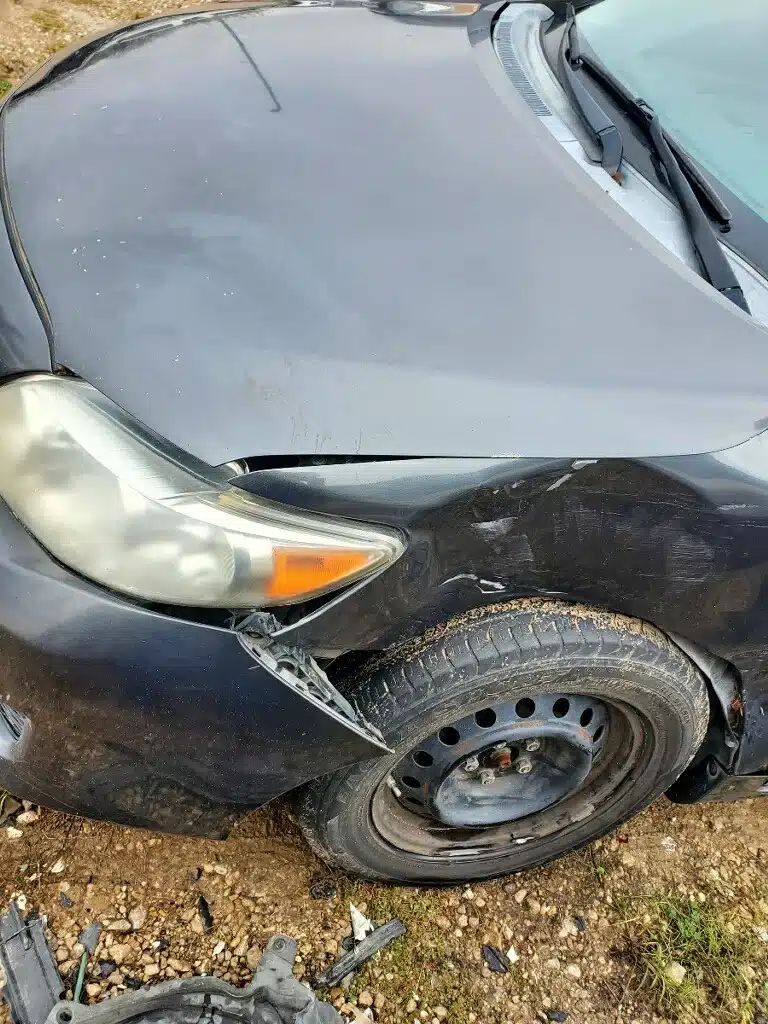
- The photos of his doors
- The photos show both doors on his side caved in and the rear wheel arch torn. They show where the SUV landed.
- The emergency room record and the care after it
- Seven days later, an emergency room recorded a headache that started with the crash. Low back pain then led to about four months of pain management and chiropractic care.
Context, not evidence: our $50,000 La Porte red light case is another red light result of ours, and side impact claims like this one are the subject of our T bone accident lawyers page.
Building His Claim Around the Light, the Code and the Week
This is how we build a red light claim like his from the report, the photos and the medical records.
Starting with the officer’s words on the light
We lead with the narrative, not the code. Here it says in plain words who had the green and who disregarded the red, which is the question every red light claim turns on.
Answering the not injured code and the week gap
On his bio, Josh Alexander writes, “I have learned that insurers and corporate defendants often make early evaluations before the whole case is developed.” A not injured code and a first visit a week later invite that early call. The answer to both is the emergency room record, which ties his headache to the crash.
If the insurer blames him for part of it
If an insurer tries to place part of the blame on him, Texas divides fault by percentage, and any share comes off a recovery. No factor on the report is his. Our comparative negligence guide explains the rule.
Putting the injury record in order
His care ran about four months, with pain management and chiropractic care for his lower back. Injections into the small joints of his lower back brought strong relief for a couple of weeks.
Treating the car and the tow yard as their own claim
The damage to his car and the tow are a claim separate from his injuries, and the damage ratings and photos document them.
$30,000, the Other Driver’s Full Policy Limit
$30,000
The other driver’s full $30,000 policy limit
The SUV driver’s insurer paid every dollar of the bodily injury coverage on that policy, $30,000. That is the least a Texas driver may carry for one injured person, as our minimum insurance guide explains.
The limit is the most a policy will pay. Once all $30,000 was paid, nothing more could come from that policy, which is why we ask about the other driver’s coverage at the start of every claim.
What to Take From This and What Not To
- That amount is before fees and costs, so his own share was smaller.
- An officer’s codes record his view of the crash. They do not settle fault by themselves.
- A code of not injured is a roadside entry, not a medical finding.
- The crash details come from a certified police report. The firm reports the result.
- Nothing here predicts what another claim will bring, since every crash and injury differs.
The Records Behind This Page
Attorney Review

Reviewed by: Josh Alexander, Founder and Managing Attorney
Published and reviewed on
Results for Other Texas Drivers
- $15,000,000I-45 truck crash wrongful deathSettled in litigation
- $5,000,000Northlake forklift wrongful deathSettled in litigation
- $850,000Pasadena red light crashSettled in litigation
- $600,000Rockwall County five vehicle crashSettled in litigation
- $600,000Mesquite 18 wheeler crashTruck accident settlement
- $325,000Hood County commercial truck crashSettled in litigation
- $175,000Round Rock construction vehicle crashSettled before suit
- $150,000Odessa company pickup, two clientsCommercial policy, before suit
- $130,000Redwater head on, two limitsBoth limits, before suit
- $125,000Brownsville armored truck rear endSettled before suit
- $105,000Texas highway unsafe lane changeSettled before suit
- $105,000Three vehicle crash in DallasPolicy limits recovery
- $100,000Rear end, no police reportSettled before suit
- $95,000Midland company truck left turnSettled before suit
- $89,000San Antonio 3 car chain reactionSettled before suit
- $85,000Farmers Branch left turn, UIMSettled in litigation
- $82,500Plano company truck left turnSettled in litigation
- $80,000Jersey Village U turnSettled in litigation
- $60,000San Antonio rear end, UIMTwo policy limits, pre litigation
- $60,000Fort Worth trailer hitch rear endTwo limits, before suit
- $60,000DeSoto stop sign, broken wristTwo limits, before suit
- $60,000Hit walking her dog, UIM on footTwo limits, before suit
- $50,000Allen rear end crashPolicy limits settlement
- $50,000La Porte red light T boneFull policy limit, before suit
- $32,500Uninsured driver, UM and PIPUM limit plus PIP, before suit
- $30,000San Antonio rotator cuff tearPolicy limit, before suit
- $30,000Houston hit and run recoveryUM policy limits
- $30,000Richardson apartment exit crashPolicy limits, pre litigation
- $30,000Uvalde chain reaction, hit twicePolicy limit, before suit
- $30,000El Paso right turn, no UIMPolicy limit, before suit
10Contact
Did Someone Run a Red Light
Did Someone Run a Red Light
and Hit Your Car?
Call us with the crash report in hand, or just your account of the light.
No fee unless we recover · Se habla español · Proudly Serving All of Texas