


$60,000 Stop Sign Crash Settlement for a Fort Worth Driver With Neck, Back and Headache Claims
On This Page
A driver pulled from W. Terrell Avenue onto Hemphill Street and struck our client’s passenger side. We recovered the other driver’s $30,000 liability limit and our client’s $30,000 underinsured motorist limit. Both claims settled without a lawsuit.
The injury claim required more than proof of the collision. The records included a same day emergency visit, a 26 day gap before further treatment, and a history of migraines. We presented the treatment chronology and the neurologist’s findings with the claims.
The $60,000 was the gross settlement. Attorney’s fees, case expenses and payments owed to medical providers reduced the amount our client received.
The Claim in Brief
| Detail | This claim |
|---|---|
| Gross settlement | $60,000 |
| Other driver’s liability coverage | $30,000 policy limit payment |
| Client’s underinsured motorist coverage | $30,000 policy limit payment |
| Resolution | Settled before a lawsuit was filed |
| Collision | Passenger side impact at a stop controlled T intersection |
| Injuries addressed in the claim | Neck strain, mid and low back complaints, and post traumatic headaches |
| Treatment | Emergency care, chiropractic care, lumbar facet injections and an occipital nerve block |
| Location | Hemphill Street at W. Terrell Avenue, Fort Worth |
| Our role | Represented the driver whose sedan was struck |
The Other Driver Said She Did Not See Our Client Before Pulling Out
Our client was driving south on Hemphill Street shortly after 1 p.m., wearing her seat belt. W. Terrell Avenue meets Hemphill at a T intersection, with a stop sign facing traffic coming from Terrell.
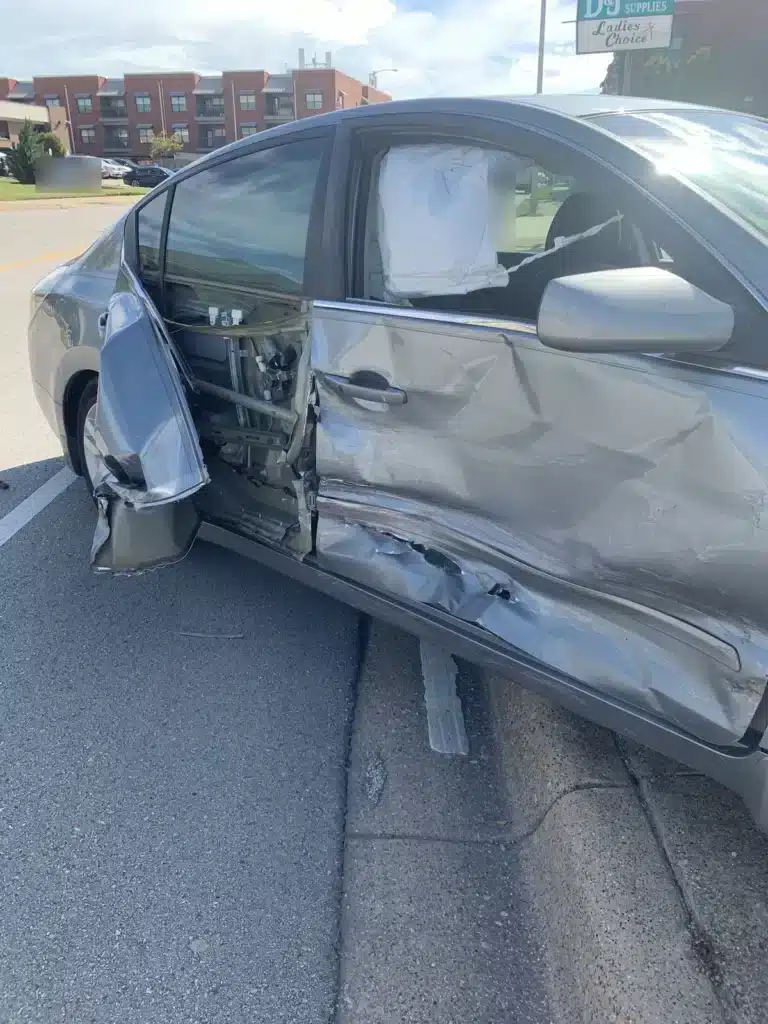
The other driver was facing east on Terrell and waiting to turn south onto Hemphill. According to the officer’s narrative, she said she did not see our client before pulling into the intersection. The front of her car struck the passenger side of our client’s sedan.
Our client’s side airbags deployed. Both vehicles were towed.
The officer recorded neither driver as injured at the scene. About half an hour later, our client arrived at an emergency room by car with neck pain and a headache. The emergency record also documented a head strike.
Read the redacted Fort Worth crash report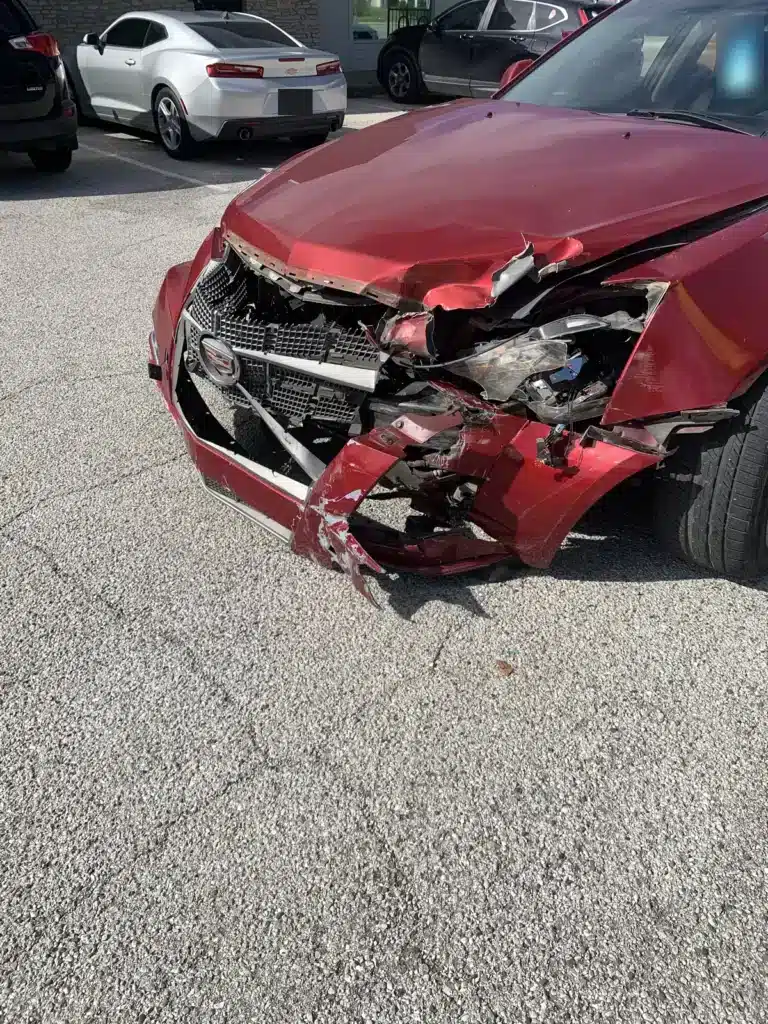
The Collision Evidence Did Not Answer Every Medical Question
The other driver’s statement supported our client’s account of how the collision happened. The harder questions concerned the injuries and their connection to the crash.
Four parts of the record needed to be addressed:
- The officer recorded no injury at the scene, while the emergency room documented head and neck complaints shortly afterward.
- Further treatment began 26 days later. That was also when back complaints first appeared in the records we reviewed.
- Our client had a history of migraines predating the collision.
- Imaging did not show a fracture, disc herniation or another acute structural injury. It showed mild degenerative changes.
The available coverage was another issue. The other driver’s bodily injury limit for our client’s claim was $30,000. We also pursued a claim under the $30,000 UIM coverage our client carried herself.
The Records and Our Work
1. We Used the Other Driver’s Statement to Explain the Collision
The officer’s narrative recorded the other driver’s statement that she did not see our client before entering Hemphill Street.
That statement mattered because it addressed the central event: a vehicle entering from the stop controlled street into our client’s path.
The report also assigned contributing factor 16 to the other driver. Its damage entries described an impact to our client’s right side and damage to the other vehicle’s front. Photographs showed the passenger door damage and deployed airbags.
We submitted the report and our client’s medical records with the liability claim.
Those materials supported our account of the collision. The report was not a court ruling, and the vehicle damage did not, by itself, establish the nature or extent of our client’s injuries.
2. We Built a Treatment Chronology Without Hiding the 26 Day Gap
We organized 192 pages of medical records into a chronology beginning with the crash.
That chronology showed both the supporting evidence and the limits of the record.
| Time after the crash | What the records documented | Why it mattered |
|---|---|---|
| Same day | Emergency visit for neck pain and a headache. A head strike was recorded. Head and neck CT scans showed no acute injury. | Established that head and neck complaints were documented shortly after the collision. |
| Day 26 | Chiropractic records documented neck, mid back and low back pain that our client reported as constant since the crash. | Recorded her account of continuing symptoms, while also marking the first documented back complaints in the reviewed records. |
| Day 33 | Pain management examination documented tenderness over the lower lumbar facet joints. | Added examination findings to the back pain history. |
| Day 40 | Lumbar MRI showed mild facet changes without a disc herniation. | Did not supply imaging evidence of an acute disc injury. |
| Day 64 | Lumbar facet injections were performed at the two lowest levels. | Documented the treatment provided for her low back complaints. |
| Day 138 | Low back pain was described as mild. | Showed improvement later in the treatment course. |
We did not treat the absence of visits during those 26 days as proof that symptoms had disappeared. We also did not present the later report of continuous pain as contemporaneous documentation for every day of the gap.
The chronology allowed us to present what was recorded, when it was recorded, and where questions remained.
3. We Addressed the Migraine History With the Neurologist’s Findings
Our client’s emergency room medication list already included a migraine prescription. The headache claim therefore required an account of her preexisting condition, not an assertion that every headache began with the collision.
On day 99, the neurologist diagnosed post traumatic cervicogenic headache with occipital neuralgia. The note also stated that there was “certainly an element of exacerbation of her underlying migraines.”
That gave us a provider’s assessment addressing both a post traumatic headache diagnosis and worsening of an existing condition. We included the note in our presentation of the claim.
The later course mattered, too. Following an occipital nerve block, the neurologist recorded on day 139 that the headaches had resolved completely.
The Records Also Contained Differences
The accounts of the head strike and possible loss of consciousness were not identical:
- The emergency record described contact with the headrest and uncertainty about a blackout.
- The neurology history described contact with the window and a possible three second blackout.
- A pain management note recorded no loss of consciousness.
We did not combine those accounts into a single, more definite version. The emergency record documented a head strike shortly after the crash, but the records differed on the contact point and whether she lost consciousness.

4. We Presented a Separate Claim Under Her UIM Coverage
The other driver’s insurer paid its $30,000 liability limit for our client’s claim.
Our client also had a $30,000 underinsured motorist policy limit. We submitted a separate claim to her insurer with the medical chronology and the neurologist’s findings. That insurer paid its full $30,000 limit as well.
The second payment came from coverage our client had purchased. It was not an additional payment under the other driver’s liability policy.
Learn about claims when the other driver’s insurance is not enough
Two Policy Limit Payments, With No Lawsuit Filed
| Payment source | Amount |
|---|---|
| Other driver’s liability insurer | $30,000 |
| Client’s underinsured motorist insurer | $30,000 |
| Total gross settlement | $60,000 |
Both claims settled before a lawsuit was filed.
We do not attribute either payment to one diagnosis, one record or one step in our handling. The claim included the collision evidence, the treatment chronology, the preexisting migraine history and the later medical findings.
Hit by a Driver Pulling Out From a Stop Sign?
A crash report, a treatment gap or a preexisting condition may raise different questions in different claims. Tell us what happened, when you first sought care and what insurance information you have. We can discuss whether we can help review the records and available coverage.
Tell Us About Your CrashThe Payments Were Settlements, Not Court Findings
No judge or jury determined fault, medical causation or the value of our client’s losses.
The two policy limit payments establish the recovery reported here. They do not establish that $60,000 fully compensated her or that another neck, back or headache claim should produce the same result.
Other limits matter:
- The treatment gap remained part of the record. This settlement does not show that similar gaps are unimportant in other claims.
- The neurologist’s note addressed post traumatic headaches and aggravation of existing migraines. It did not say the crash originally caused her migraine condition.
- The scene injury code and the later medical records served different purposes. Neither should be presented as though it were the other.
- Vehicle damage documented the collision, not a medical diagnosis.
- The UIM payment depended on coverage our client carried.
- The $60,000 gross settlement was not her net recovery.
- Past results do not guarantee a similar outcome.
Where the Facts Come From
| Source | What it supports |
|---|---|
| Redacted Fort Worth police crash report | The other driver’s statement, intersection layout, contributing factor, damage entries, airbag entries, scene injury codes and vehicle towing |
| Client medical records, 192 pages, not published | Emergency care, treatment dates, imaging, diagnoses, the neurologist’s findings and documented improvement |
| Firm’s claim and settlement file, not published | The claims submitted, both $30,000 payments and resolution before a lawsuit |
The public crash report does not verify the medical treatment or settlement payments. Those portions of this account are reported by the firm from the medical records and its own file.

Reviewed by: Josh Alexander, Founder and Managing Attorney