


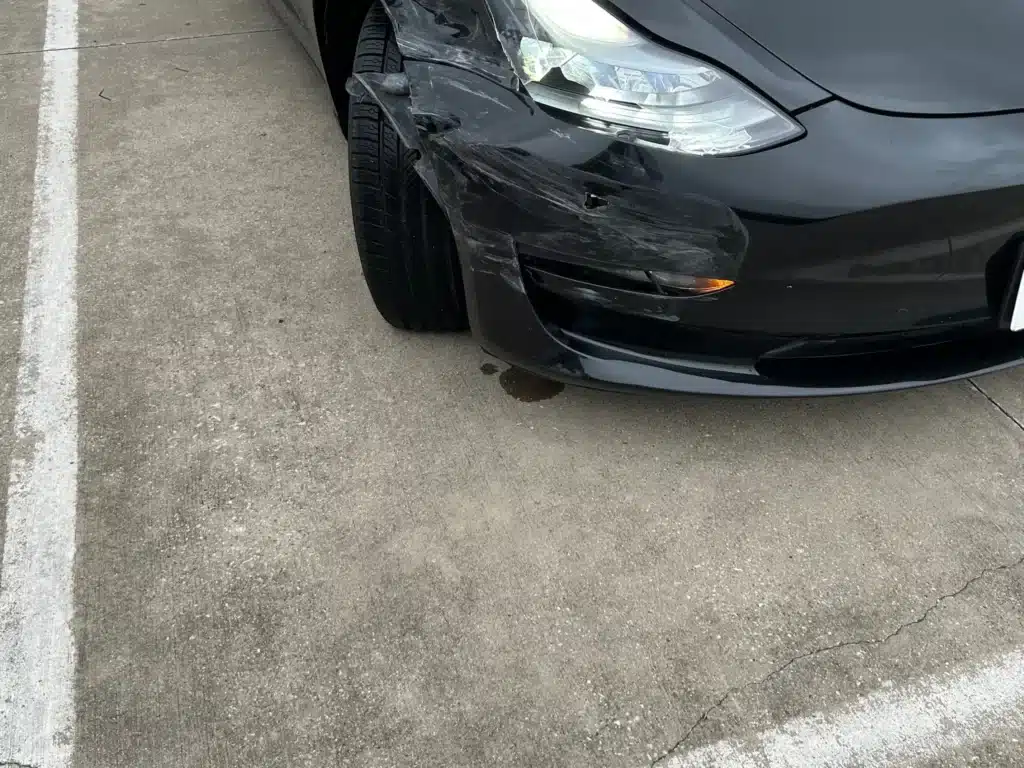
Uninsured motorist property damage coverage, or UMPD, is the part of a Texas policy’s uninsured and underinsured motorist coverage that pays for property. It pays for damage to your car when the person who caused the crash was uninsured, carried too little, or hit you and fled, after a $250 deductible and up to the property damage limit you chose. Under the standard Texas policy it also counts the loss of use of your car and your things inside it. Insurers have to include it, and it drops off a policy only through a written rejection.

How this guide was checked
Our founder, Josh Alexander, wrote this guide and reviewed every rule in it against chapter 1952 of the Texas Insurance Code, the policy form Texas insurers use as their standard, and consumer guidance from TDI. One of our case results and three recorded calls supply the examples, and nobody is named. Treat it as general information rather than advice on your own claim.
The short answer
When Does UMPD Pay for Your Car?
When the vehicle that caused the crash had no liability policy, had too little coverage, could not be identified after hitting you or your car, or was insured by a company that denies coverage or becomes insolvent.
Texas law makes the coverage protect people who have a legal claim against an uninsured or underinsured driver, for injuries “or property damage” (Tex. Ins. Code § 1952.101(a)). The standard Texas auto policy fills in the cases: a vehicle with no liability bond or policy, a hit and run vehicle whose owner or driver cannot be identified, and a vehicle whose insurer denies coverage or becomes insolvent.
A driver who flees is covered only if the other car actually touched you. For an unknown driver, the statute requires that “actual physical contact must have occurred” with you or your property (§ 1952.104(3)); our hit and run page covers how that contact gets proved. A driver who flees can also turn out to be insured. One caller who was backed into at a stop sign had the fleeing driver on video; the driver was found, that insurer accepted fault, and the car claim ran against it rather than against the caller’s own policy.
Commercial vehicles turn up uninsured more often than people expect. One caller hit by a tow truck learned from the police report that the company behind it had no insurance, and her own uninsured motorist claim became the route forward.
What Does UMPD Cover, and What Does It Cost You?
In the standard Texas policy, property damage under this coverage means “injury to, destruction of or loss of use of” your covered auto, and it also reaches property belonging to you, your family or your passengers while it is inside the car. In practice that covers:
- The repair, or the car’s value if it is a total loss
- Loss of use, such as a rental while the car is out; see how long a rental should last
- Things inside the car that were damaged, such as a tablet or a car seat
- Lost market value after repairs, which TDI says this coverage may owe; see diminished value claims
Your cost is a $250 deductible, set by statute, and TDI notes that it is usually lower than a collision deductible. You choose the property damage limit, which can be no higher than your own liability limit for property damage and no lower than the state minimum (§ 1952.105(b), (c)).
UMPD or Collision: Which Should You Use?
Texas lets you choose. If you carry both, you may recover under the coverage you pick (§ 1952.107(a)). If neither one is enough alone, you can use both: you name one as primary and pay its deductible, and on the second you pay only the amount by which its deductible is higher (§ 1952.107(b), (c)).
UMPD and collision side by side · Insurance Code ch. 1952; TDI
| Question | UMPD | Collision |
|---|---|---|
| Deductible | $250, set by statute | Whatever your policy sets |
| Needs another driver at fault | Yes | No |
| Hit and run | Only if the other car made contact | Yes |
| The most it pays | The UMPD limit you chose | Up to the car’s actual cash value, by your policy’s terms |
Not every policy carries both. In one call, a driver caught in a crash where one car struck several others listed liability, uninsured motorist and medical coverage, with no collision; with a single at fault policy facing several claims, the underinsured part of that coverage was the one thing on the caller’s own policy that might pay for the car.
Collision fits when fault is unclear or no other car made contact. UMPD usually costs less out of pocket when an uninsured or fleeing driver plainly caused the crash. TDI’s hit and run guidance puts both coverages forward as the way to get a car repaired after a driver flees.
Do You Have UMPD, and What If It Was Rejected?
Probably, because a Texas auto liability policy carries it unless an insured named on the policy signed a written rejection; our 30/60/25 guide covers how that rejection works and how long it lasts. To know for sure, find the dollar amount listed for uninsured or underinsured property damage on your declarations page. A blank there, or no such line at all, usually means the property damage part is not on the policy.
Matthew Graham, our managing litigation attorney, said on camera in 2026 that collision, comprehensive, and uninsured and underinsured motorist coverage are “virtually essential in DFW with all the uninsured motorists driving in this area.” If the UMPD line on your declarations page is blank, ask your agent about adding it while there is still time, before a crash.

From a 2026 video interview recorded by our firm
“If that person doesn’t have insurance and you don’t have first party insurance yourself, then there isn’t anything that anyone can do. That’s why we want to make sure that, across the board, everyone has adequate insurance, not just liability limits, but first party insurance that covers you when someone else causes an accident.”
Sameer Assanie
Associate Attorney
How Do You File a UMPD Claim?
Report the crash to the police and to your insurer promptly, and get the crash report; for a driver who fled, it is the record that another vehicle was involved. If you and your insurer disagree about whether the other vehicle was really uninsured, the standard policy places “the burden of proof as to that issue” on the insurer. Because this is a claim against your own company, the prompt payment deadlines in our guide to stalled property damage claims apply.
From our case results
Order matters when the at fault policy is too small. In the Farmers Branch case pictured above, the at fault driver’s insurer paid out all $50,000 of its limit first, and only then did our client’s own policy add $35,000 through its underinsured motorist coverage. That claim was for her injuries; for a car, the statute runs the same way, cutting the underinsured payment by whatever the at fault insurer pays or owes (§ 1952.106).
If you were hurt as well, the injury side runs through the same coverage; our page on injury claims against uninsured drivers covers it. The full car claim, from estimates to towing, is in our property damage claim guide.
Did an Uninsured Driver Damage Your Car?
If an uninsured driver hurt you and damaged your car, send us your declarations page and the crash report, and we will show you which coverages apply.
24/7 · Free consultation · No fee unless we win
A Free Review of Your Uninsured Motorist Claim
J. Alexander Law serves injured clients throughout Texas: Dallas · Houston · San Antonio · Fort Worth · Arlington · Canton. Se habla español.