


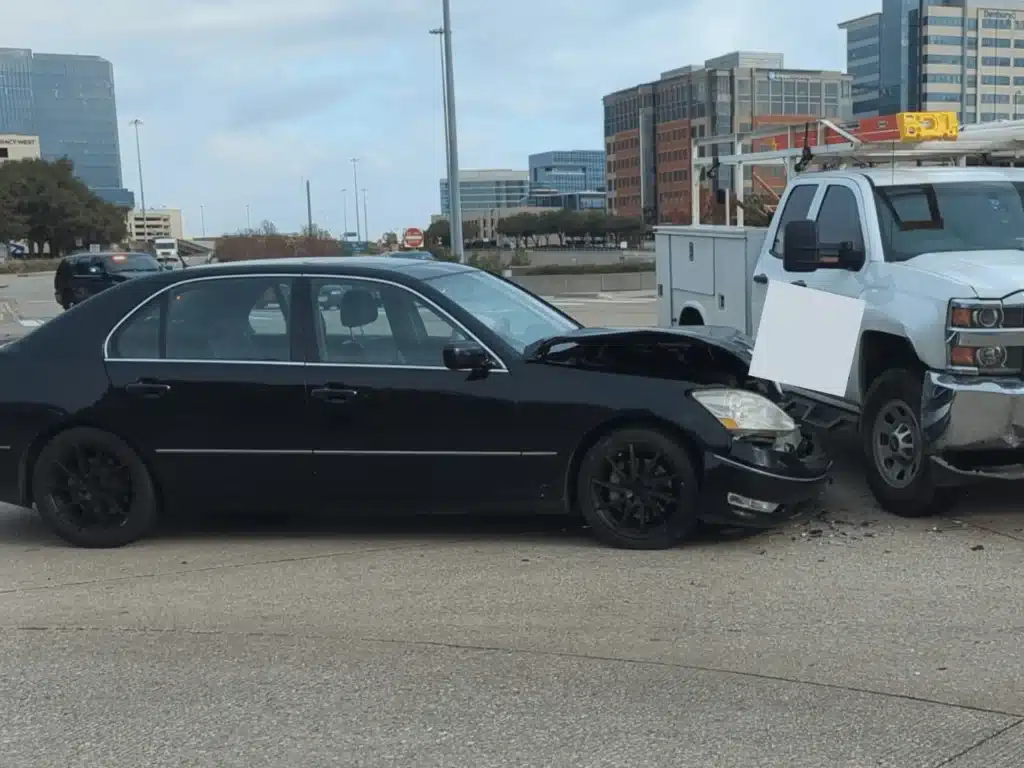
A Stowers demand is a written offer to settle your injury claim against the driver at fault for an amount within that driver’s policy limits, in exchange for fully releasing the driver. If the claim is covered and a reasonably careful insurer would take the offer, an insurer that turns it down can later owe the entire judgment, including the part above its limits. The rule comes from a 1929 Texas case, G.A. Stowers Furniture Co. v. American Indemnity Co.

How this guide was checked
Josh Alexander wrote this page. Matthew Graham, who represented insurance companies at trial for more than ten years, reviewed it. Every case, statute and rule we cite is listed at the end, and quotes from our recorded calls are word for word, with no names. This is general information, not legal advice.
The short answer
How Does a Stowers Demand Work After a Crash?
It puts the risk of a verdict above the policy limits on the insurer. If the insurer turns down a proper demand within its limits and a jury later awards more, the insurer can owe the whole judgment. The claim against the insurer for that extra amount usually belongs to the at fault driver, the insurer’s own customer, not to the person who was hurt.
A Stowers demand does not guarantee extra payment
- The insurer does not have to accept every policy limits demand.
- Rejecting a demand does not automatically create a claim for money above the policy limits.
- You cannot sue the other driver’s insurer directly at the start of the case.
- You still must prove fault, damages, and coverage.
- Texas law does not set a fixed number of days for the insurer to respond.
- No Texas case applies Stowers to a claim under your own UM or UIM coverage.
The rule asks the insurer to weigh the offer the way a careful person would handle their own business, and from its driver’s side, because the driver is the one left owing anything above the limits (Stowers, 15 S.W.2d at 547). The Texas Supreme Court now calls it “the duty to accept reasonable settlement demands within policy limits” (American Physicians Insurance Exchange v. Garcia, 1994). If the insurer fails that duty and its driver ends up owing more than the limits, through a judgment or a qualifying settlement, the insurer can owe the amount above its policy limits. After a judgment, that means “the entire amount of the judgment” (Phillips v. Bramlett, 2009).
Worked example
A $30,000 Policy and a $150,000 Verdict
- $30,000The at fault driver’s policy limit
- $30,000Your lawyer’s offer to settle, with a full release of the driver
- RefusedThe insurer turns the offer down
- $150,000What a jury later awards
Who owes the $150,000 verdict?
If the demand fell short of the Texas test
Insurer pays $30,000Driver owes $120,000
If the demand met the Texas test
Insurer can owe $150,000
Turning down a proper demand can cost the insurer all $150,000, not just its $30,000 limit.
On our side, a demand usually goes out near the end of the claim, once treatment has run its course and the bills and records are in. One of our intake staff explained the timing to a caller this September: “So whenever you’re done, we send your demand package.” Paperwork can hold it back. “We received the billing, but we need the records,” a staff member told a client in August, listing what was keeping that file from going into demand.
Here is the usual order of a limits case, and why each stage matters to Stowers:
- Treatment and investigation We gather the records, bills, lost pay and proof of fault, the file an insurer needs to judge its driver’s exposure above the limits.
- Coverage check We identify the available limits, anyone else who may share the blame, any other coverage and every lien. That way the demand goes to the right insurer and can offer a complete release of the insured driver.
- The written demand A clear offer to settle within the limits, on terms a careful insurer could take as written.
- The insurer’s answer It accepts, refuses, counters, asks for more or stays silent, and it must get a reasonable chance to evaluate the offer.
- A judgment or settlement above the limits No Stowers claim can be brought unless the driver becomes liable above the policy limits.
- After judgment The claim belongs to the insured driver. The driver may sign it over to you (assignment), or a court may order it handed over (turnover).
The rule does not make the insurer pay first. An insurer need not make an offer on its own, or accept a demand above its limits (Garcia). And no Stowers claim exists until the driver is “liable in excess of policy limits,” whether through a judgment or a settlement (In re Farmers Texas County Mutual, 2021). It helps to know the limits before deciding what to demand; see how to learn the other driver’s policy limits.
What Makes a Stowers Demand Valid in Texas?
A demand counts only if three things are true. The driver’s policy covers the claim. The amount fits within the limits. And a careful insurer, weighing how likely a bigger verdict is and how large it could be, would take the deal. Garcia calls these the “three prerequisites” for the Stowers duty; the table below adds the rules on releases and clear terms.
Josh Alexander, who also works as a mediator, watches both sides do that weighing: “At its best, mediation is the point where each side has to confront the evidence, the risks, the witnesses, the medical proof, the policy limits, the costs of continued litigation, and the possibility of what a jury may do.” A Stowers demand asks the insurer to run that math before trial, while the offer is still open.
A demand meant to trigger the duty generally must also offer to release the driver fully for a set amount of money, and that amount can simply be “the policy limits” (Garcia). Its terms “must be clear and undisputed” (Rocor International v. National Union, 2002).
The full release is the point. An insurer generally cannot be faulted for refusing a deal that would leave its own driver exposed to another claim. If a hospital lien, a condition or unclear release language would leave the driver owing more, the insurer can argue the offer was not a complete resolution for its insured, and the cases below show courts agreeing.
Clients feel this from their side too. A caller asking about our fee this September wanted to know what would be left “after yours and after the hospital bills.” The answer turns on the same hospital liens that must be handled for the release to be complete.
The Texas test for a Stowers demand · Texas Supreme Court
| Requirement | What it means |
|---|---|
| The claim is covered | The driver’s policy must cover the claim being settled (Garcia, 876 S.W.2d at 849) |
| The amount is within the limits | A higher demand triggers nothing, even a reasonable one (Garcia, at 849) |
| A prudent insurer would accept it | Judged by the driver’s realistic exposure to a verdict above the limits (Garcia, at 849) |
| It releases the driver fully | A stated sum, or “the policy limits,” for a complete release (Garcia, at 848 to 849) |
| Its terms are clear | Unclear or disputed terms do not count, and neither did an offer the Court found was not unconditional (Rocor, 77 S.W.3d at 262 to 263; Maldonado, 963 S.W.2d at 41) |
Demands That Fail the Test
In plain terms, a demand has to be one the insurer could simply accept and pay. These fall short:
- Above the limits. “A demand above policy limits, even though reasonable, does not trigger the Stowers duty to settle” (Garcia).
- Conditional. An offer with strings attached does not count. In State Farm Lloyds v. Maldonado (1998) the demand “was not an unconditional offer to settle within policy limits,” and a Houston appeals court rejected another that said “if there is other insurance, this offer shall be null and void” (Insurance Corp. of America v. Webster, 1995).
- A request to tender the limits. Asking an insurer to “tender limits,” meaning just pay them, does not trigger the duty, because it offers no full release of the driver (Birmingham Fire Insurance v. American National, 1997).
- Hospital liens left open. In Trinity Universal v. Bleeker (1998) the lawyer asked for the limits but never dealt with the hospital liens. Under Property Code 55.007 a release does not clear a hospital lien unless the hospital is paid or signs the release, so the release it implied “was not a full one” and no duty arose.
- Unclear terms. “An insurer should not be held liable for failing to accept an offer when the offer’s terms and scope are unclear or are the subject of dispute” (Rocor).
We found no Texas case that requires a demand to attach medical records or that throws out a demand for carrying a deadline. But an insurer can judge an offer only from what it has, so a careful demand gives the adjuster the records and bills that show what the claim is worth.
That file starts long before the letter. Josh Alexander tells clients: “Open a folder today and put everything in it: the tow bill, each receipt, each missed shift, the pharmacy printout. Months from now, when we sit down to draft your demand, that folder is what we build it from.” If the file does not show the loss, the insurer has less reason to pay for it.
How Long Does the Insurer Have, and How Do Insurers Respond?
No Texas statute or case sets a number of days. The Supreme Court asks whether the insurer had “a reasonable opportunity” to settle within its limits (Garcia) and “a reasonable amount of time to respond” (Maldonado). The 15 day deadlines in the Insurance Code’s prompt payment rules do not apply; they cover “a first-party claim,” meaning a claim you make on your own policy (Insurance Code 542.051). The demand sets its own deadline, and the question later is whether it was reasonable.
An insurer can accept and pay, refuse, ask for more records, or counter with less. Insurers also test injury claims hard, which is why the medical file behind a demand matters as much as the dollar figure.
Recorded calls from June through September show how far apart those answers can be. In September a staff member gave a client this update: “The initial offer on your case was very low. They only offered 5,318. I sent the counter demand for $25,000.” And sometimes the answer comes fast, as a member of our intake team told a caller in June: “sometimes the adjusters just go ahead and exhaust limits and there’s not a lot of back and forth, and then sometimes they don’t.”
Josh Alexander puts the insurer’s side of it this way: “I have learned that insurers and corporate defendants often make early evaluations before the whole case is developed. They may focus on a single report, a limited medical record, a statement taken in the days after the crash, or an interpretation of the client’s prior health history.” A demand that arrives with the complete file gives that early evaluation less room to harden.
Case file 01
Closed file · Rejected limits demand
A Limits Demand Refused, Then Settled in Litigation
$82,500
Settled in suit
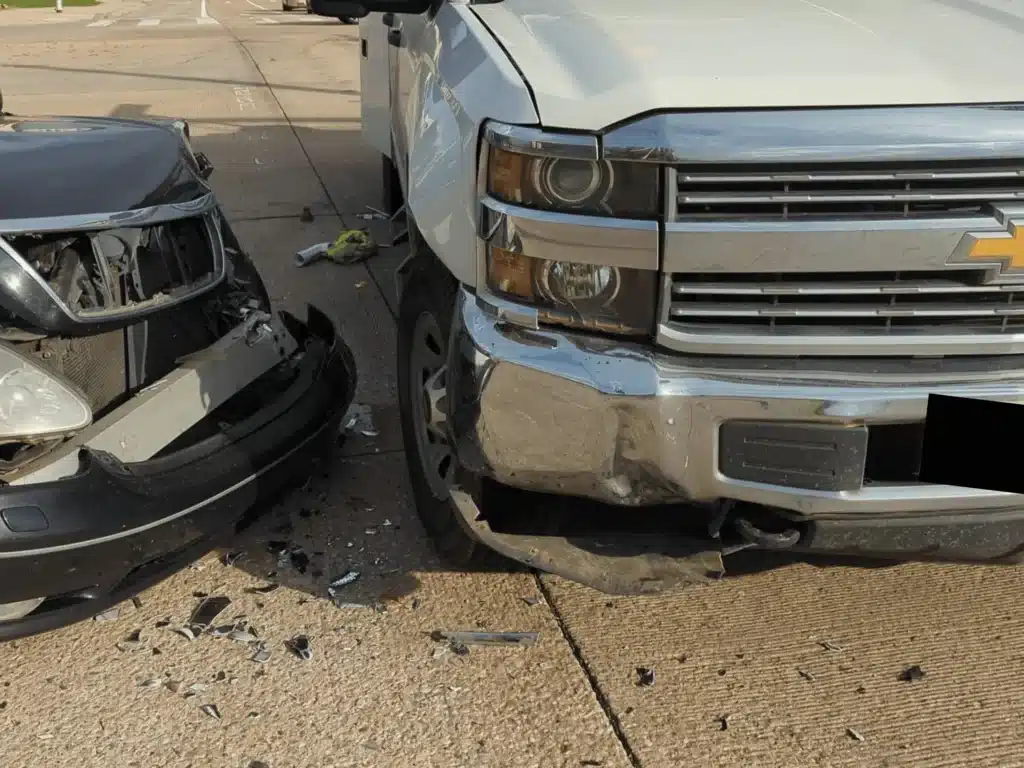
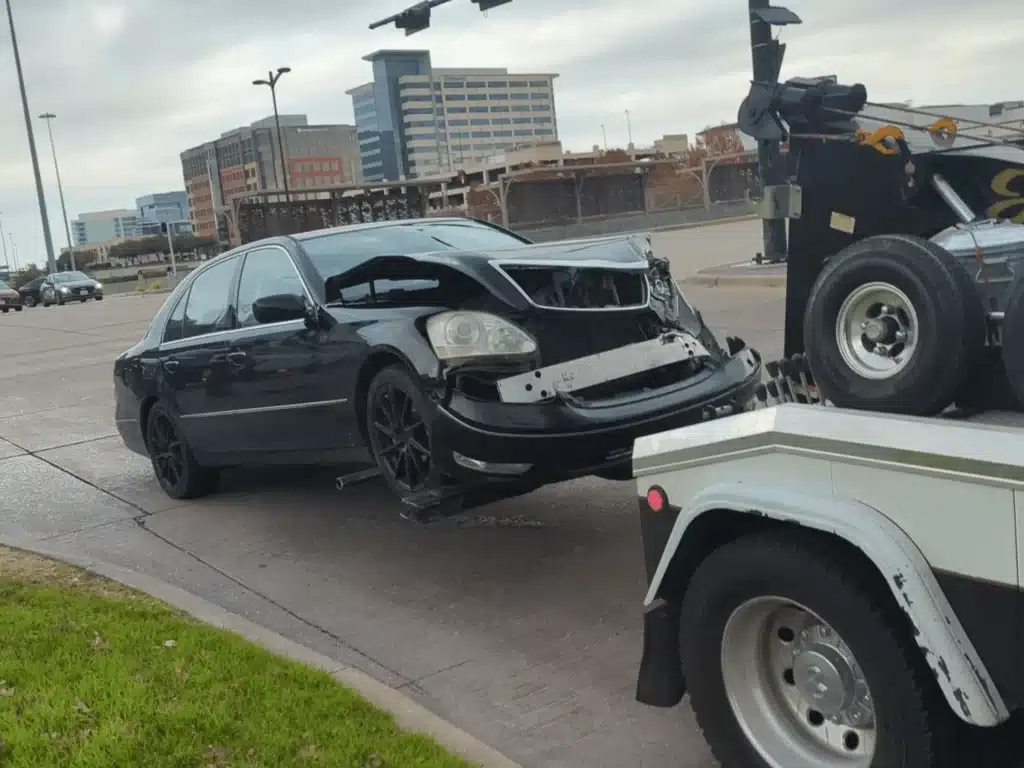
- The crash
Our client had a solid green and was heading east when a company pickup in the left turn lane cut across his path under a flashing yellow arrow. The police report documented the pickup driver’s failure to yield.
- The demand
“The commercial insurer rejected the policy limits demand before litigation and made a lower counteroffer conditioned on a full, unconditional, and confidential release.”
- What it wanted
Before paying more, the insurer asked for the actual imaging and neurological testing, records from before the crash, more medical review, and an answer on whether treatment was still going on.
- The result
Suit was filed, and Sameer Assanie built the case on the crash report, the signal sequence, a city traffic camera, a witness with no stake in the case and the full medical record. It resolved in June 2026 for $82,500.
- Why it matters here
A rejected limits demand is not automatically a Stowers case. The case page does not state the policy limits, so this result is not presented as a Stowers outcome.
Past results do not guarantee a similar outcome. Here the crash proof, the medical history and what the insurer asked for drove the number.

Attorney’s note
“It also showed that a documented failure to yield did not end the dispute. The insurer examined medical history, imaging, treatment dates, symptoms, and recovery.”
Sameer has also won judgments at trial, his bio notes, “including results over policy limits.” A verdict above the limits is one element of a Stowers claim; the refused demand must also have met the Texas test.
Sameer Assanie
Associate Attorney
What If Several People Were Hurt and the Limits Are Small?
When one crash hurts several people and the policy is small, the insurer may settle with one of them, even if that leaves less, or nothing, for the rest. The Supreme Court allowed this in Texas Farmers v. Soriano (1994), holding that “an insurer may enter into a reasonable settlement with one of the several claimants even though such settlement exhausts or diminishes the proceeds available to satisfy other claims.”
In that case, a $20,000 policy faced claims from two families, each of which had lost someone. The insurer first offered one family all $20,000, and they turned it down. It later settled the other family’s death claim for $5,000, and the first family went on to win $172,187. The Court found no evidence of negligence. That family had made no demand for the full limits before the $5,000 settlement, and the settlement itself was reasonable.
We hear this risk on our own calls. In August a staff member warned a caller whose crash had hurt someone else too: “there’s this, this other lady who kind of has the bigger claim because she got hit first. So, you know, there could be a coverage issue just depending on what this person’s policy is.”
The Court did not require the insurer to split the money fairly or pay the worst injury first, and it has left open whether only some of several claimants can make a Stowers demand at all (Trinity Universal v. Bleeker). Bottom line: another claimant can reduce the available limits before your claim is resolved, so get a proper demand to the insurer before that happens. Being first neither settles who gets paid nor creates a Stowers duty on its own; the demand still has to meet the test, and each settlement the insurer makes is judged for reasonableness. Our hub page explains how one policy is shared among everyone hurt.
Who Can Collect When an Insurer Ignores a Stowers Demand?
The duty runs to the insured driver, and so does the claim. The Court describes it as a duty “to settle third-party claims against its insureds,” meaning claims like yours against the insurer’s own customers. It also says “a Stowers claim sounds in tort,” which makes it a claim for a wrong done to the driver (In re Farmers). You also cannot sue the driver’s insurer directly until the driver’s own liability has been “finally determined by agreement or judgment” (In re Essex Insurance, 2014).
When the coverage runs out, clients ask whether they can just sue the driver for the rest. They can, but collecting is another matter. As one of our staff explained this September: “they’re like, well, can we sue the driver directly? We kind of just say, you know, if people can’t maintain insurance or, you know, assets, they probably don’t have any to even like, go after.” That is why the Stowers claim matters. It reaches the insurer, which can pay, rather than a driver who may have little to collect.
An injured person usually gets the claim by assignment, meaning the driver signs it over after a judgment. Signing it over before trial is invalid in the situations State Farm v. Gandy (1996) describes, and a judgment “rendered without a fully adversarial trial” does not bind the insurer. In 2024 the Court said the question is whether the driver “bore an actual risk of liability” when the judgment or settlement was made, or had another real reason to keep the number honest (In re Illinois National Insurance).
The other route is a turnover order: after a final judgment, a court can hand the driver’s claim to the person who won the judgment (Goggans v. Ford, Dallas 2016), though courts have refused when the driver was satisfied with the insurer’s choice or did not want to pursue it (Charles v. Tamez, 1994).
Either way, the person bringing the claim stands in the driver’s shoes and must prove every element, coverage included (Seger v. Yorkshire Insurance, 2016). That is a lawyer’s job, usually after a trial.
How Stowers Differs From Bad Faith and Offers of Settlement
- Bad faith. “A Stowers claim is not a bad faith claim” (Maryland Insurance v. Head Industrial Coatings, 1996), and breaching it is not a deceptive trade practice (Garcia). Unfair claim settlement claims under Insurance Code chapter 541 belong to the insurer’s own customer; see dealing with insurance companies.
- The offer of settlement rule. This is a different tool. It works only inside a filed lawsuit, after a defendant files a declaration invoking it, and it can shift some of the other side’s legal costs, not the judgment. A claimant who turns down an offer and wins less than 80 percent of it can be charged those costs (Civil Practice and Remedies Code 42.004; Texas Rule of Civil Procedure 167). More in suing after a car accident.
- Your own UM or UIM claim. Stowers is a third party rule. A UIM claim is made to your own insurer; as one of our staff put it to a client settling one this September, “It’s just your insurance.” Your policy and the Insurance Code govern that claim; see how a UIM claim moves.
Frequently Asked Questions
Is a Stowers Demand Only in Texas?
The name is. It refers to a 1929 Texas decision, and Texas courts have shaped the duty it names ever since. Everything on this page describes Texas law.
Does Stowers Apply to My Own UM or UIM Claim?
No Texas case applies it there. The Supreme Court describes Stowers as a duty to settle third party claims against an insured, while your UM or UIM claim is a contract claim against your own insurer.
Can I Send a Stowers Demand Without a Lawyer?
Nothing requires a lawyer. But any one of the failures listed above can keep the duty from ever arising, and the insurer must still get a reasonable time to evaluate the demand before the deadline it states.
What Happens If the Insurer Accepts?
The insurer pays the agreed amount and the driver receives the release, which usually ends your claim against that driver. If your losses run past the limits, work through the checks for accepting a policy limits offer first, including your own insurer’s consent.
Thinking About a Policy Limits Demand?
A demand that misses one element gives the insurer an easy no. We build demands around the Texas test, account for every lien before we send them, and track the deadline once they go out.
24/7 · Free consultation · No fee unless we win
A Free Review Before the Demand Goes Out
J. Alexander Law Firm serves injured clients throughout Texas: Dallas · Houston · San Antonio · Fort Worth · Arlington · Canton. Se habla español.