


Plano Commercial Truck Accident Settlement
$82,500 Settlement After Company Truck Failed to Yield in Plano
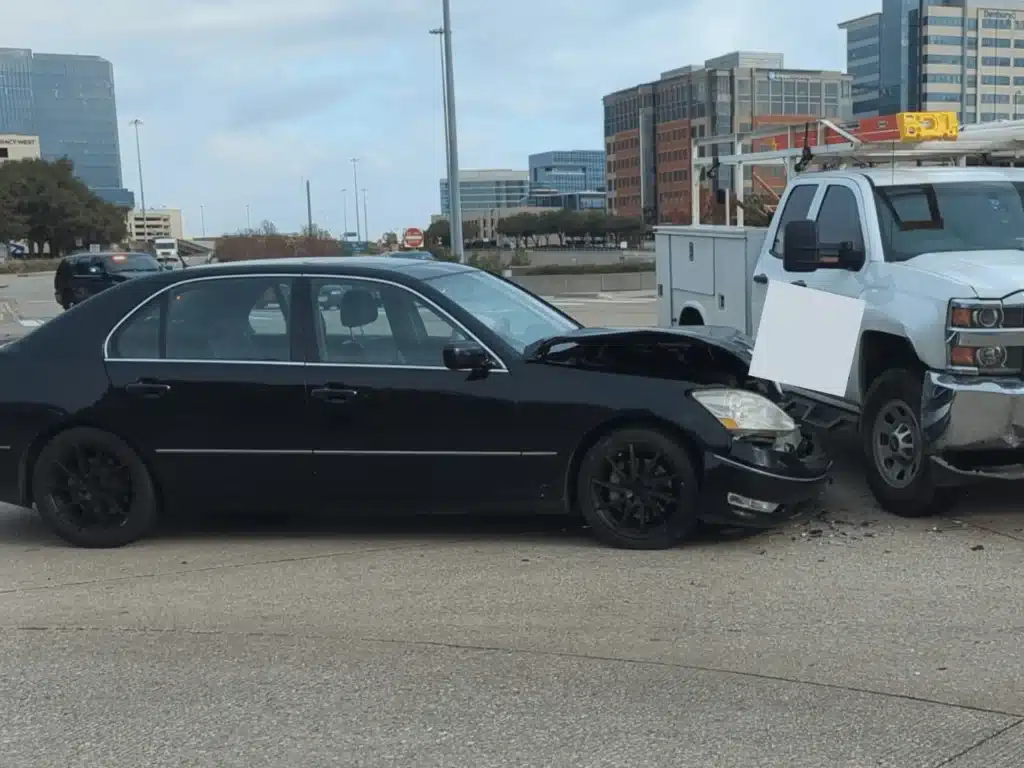
A company pickup truck turned left across Legacy Drive and struck our client’s Lexus as he traveled eastbound through the intersection on a solid green light.
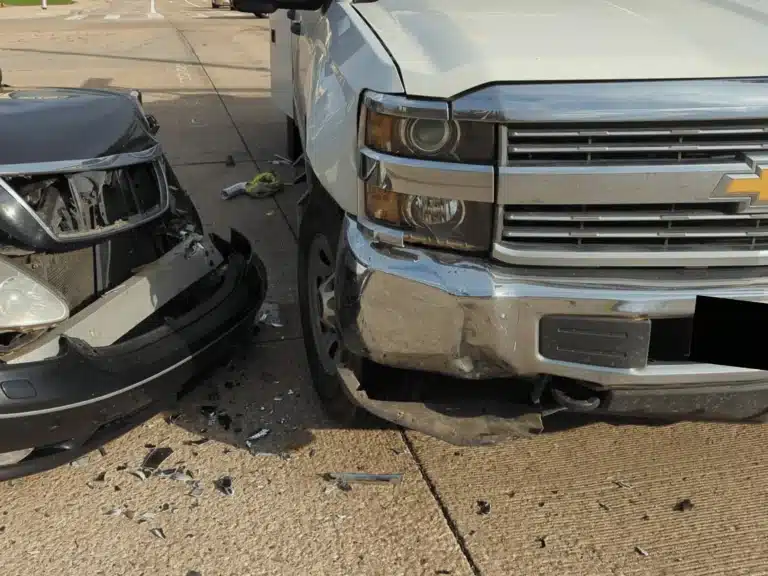
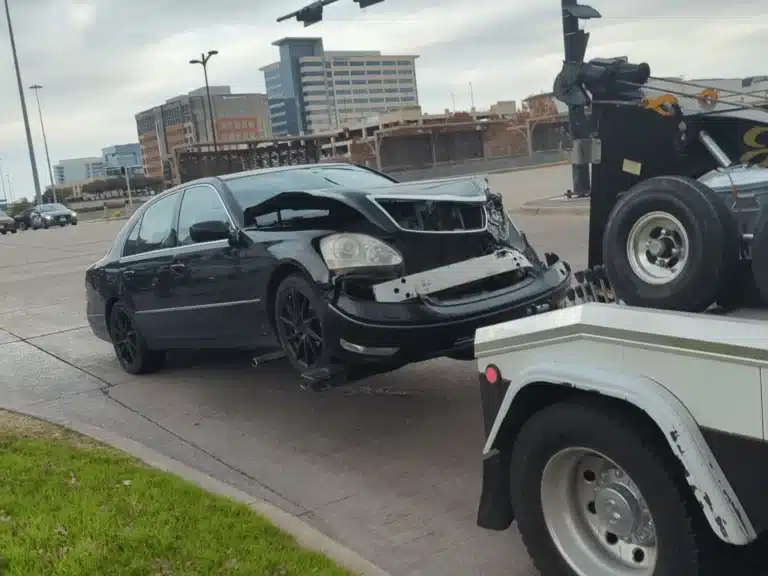
The truck driver was westbound in a left turn lane and faced a flashing yellow arrow. As the truck turned toward southbound Dallas Parkway, its front right area struck the front left area of the Lexus. The police report identified a failure to yield, and the case included a City of Plano traffic camera and an independent witness.
Attorney Sameer Assanie resolved the case for $82,500 in litigation.
Case Overview
| Case detail | Information |
|---|---|
| Crash location | Legacy Drive at Dallas Parkway, Plano, Texas |
| Client vehicle | Lexus LS 430 |
| Other vehicle | Chevrolet 3500 HD pickup |
| Company connected to truck | Swan Plumbing Heating Air |
| Key evidence | Police report, City camera footage, independent witness, vehicle damage |
| Medical care | Emergency care, pain management, physical therapy, MRI studies, neurology |
| Result | $82,500 settlement in litigation |
What Happened
The crash occurred on the morning of December 23, 2024, at Legacy Drive and Dallas Parkway in Plano.
- Our client was driving a Lexus LS 430 eastbound on Legacy Drive in the right lane. He was proceeding through the intersection under a solid green light.
- The other vehicle was a Chevrolet 3500 HD pickup connected to Swan Plumbing Heating Air. It was traveling westbound on Legacy Drive in the left turn lane.
- The truck driver had a flashing yellow left turn arrow and began turning left toward southbound Dallas Parkway. The truck crossed into the Lexus’s eastbound path.
- The truck’s front right area struck the Lexus’s front left area.
Why Fault Was Documented
The crash record documented more than the drivers’ accounts. It identified the direction of travel, lane positions, traffic signals, vehicle movements, and impact locations.
| Vehicle | Direction and lane | Signal | Movement |
|---|---|---|---|
| Client’s Lexus | Eastbound on Legacy Drive, right lane | Solid green light | Proceeding through intersection |
| Company pickup truck | Westbound on Legacy Drive, left turn lane | Flashing yellow arrow | Turning left toward southbound Dallas Parkway |
The police report identified the truck driver’s failure to yield while turning left as the contributing factor in the collision.
An independent witness was also traveling eastbound on Legacy Drive in the center lane. The investigating officer reported that City of Plano camera footage captured the collision.
The physical damage was consistent with the reported sequence: the front right area of the pickup struck the front left area of the Lexus.
A driver turning left across oncoming traffic must yield under Section 545.152 of the Texas Transportation Code, and our Texas Left Turn Crash Index counted 3,562 left turn crashes in Plano during 2025, 14.0% of the city’s reported crashes. TxDOT data cannot show whether a turning driver faced a flashing yellow arrow, a gap the City of Plano camera footage filled here.
The Company Vehicle Claim
The Chevrolet pickup was connected to Swan Plumbing Heating Air and covered by commercial insurance.
That added issues beyond the driver’s conduct in the intersection. The claim involved the company connection to the vehicle, the commercial insurance coverage, the available crash evidence, and the medical documentation necessary to evaluate the client’s injuries.
Before litigation, the commercial insurer did not accept the policy limits demand. It requested the original imaging studies, records from before the collision, clarification about the treatment timeline, and further medical review.
Emergency Care
The client went to the emergency department approximately three and a half hours after the crash.
He reported a mild headache, neck pain, upper back pain, right hip pain, and nausea. He was restrained, the airbags deployed, and he did not lose consciousness. He was unsure whether he hit his head.
The emergency department obtained CT imaging of the head and neck, along with chest and pelvis X rays. The studies did not identify an acute fracture.
Thoracic imaging noted mild wedge shaped appearance at two upper thoracic vertebrae and suggested further imaging could be considered to rule out a fracture. The radiologist also noted that one finding could be developmental. No later provider diagnosed a thoracic fracture.
The client was discharged with medication for neck and back strain.
Symptoms After the Crash
The emergency room visit was only the first part of the medical record.
Four days later, the client reported headaches with nausea and fogginess; pain in the neck, chest, mid back, and low back; and bruising to the right shin.
At that appointment, strength and reflexes were normal. The provider referred him for physical therapy and neurological evaluation and ordered cervical and lumbar MRI studies.
At the next pain management visit, the client reported that his neck and back symptoms had moderately improved. He also reported right knee pain that began after the initial pain management appointment.
By the later follow up, the headaches had become intermittent, the neck and back symptoms were continuing to improve, and the knee pain was related to activity. The neurological examination was normal, and the client chose continued conservative care with follow up as needed.
Treatment and Diagnostic Testing
The client received pain management care and completed approximately 24 physical therapy visits for neck, back, and right knee symptoms.
Treatment included:
- Therapeutic exercise
- Electrical stimulation
- Traction
- Manual therapy
- A home exercise program after discharge
The physical therapy evaluation recorded reduced strength in the muscle groups tested and symptoms described as radiculopathy.
Other records documented normal strength and reflexes. Later nerve conduction testing did not show objective evidence of radiculopathy. The differences among the records mattered because symptoms, examinations, and testing can change over time and may not produce identical findings at every appointment.
Spine and knee imaging
The cervical MRI identified very small disc herniations at multiple levels in the neck, with mild narrowing at some nerve opening areas.
The lumbar MRI documented a ligament sprain in the lower back, disc herniations at L4-5 and L5-S1, ligament thickening, and facet joint arthritis.
The knee MRI did not identify a fracture, meniscal tear, or ligament injury. It identified a high riding kneecap and findings associated with kneecap maltracking.
Neurological Evaluation
The client underwent neurological evaluation because of headaches, dizziness, poor sleep, irritability, and memory difficulty during headaches.
The neurologist documented a normal neurological examination and a memory screening score of 25 out of 30. The neurological record included diagnoses of:
- Concussion without loss of consciousness
- Post traumatic headache
- Mild cognitive impairment
- Cervical and lumbar radiculopathy
The client was prescribed amitriptyline but did not ultimately take it.
The diagnostic workup included:
| Test | Result |
|---|---|
| Brain MRI | Normal |
| Standard EEG | Normal |
| Quantitative EEG | One delayed brain wave response interpreted as abnormal information processing; other measures normal |
| Transcranial Doppler | Open arteries; reduced blood vessel reactivity in one right side artery |
| EMG and nerve conduction testing | Normal; no evidence of radiculopathy |
Recovery
The later medical records documented substantial improvement.
At the final neurology follow up, the client reported that headaches, memory concerns, dizziness, and sleep difficulties had resolved. His neck and back pain had improved.
At the end of physical therapy, he could perform work duties and had resumed hobbies. He was discharged to a home exercise program, with the ability to return if needed.
Later records noted residual irritability and some stiffness.
Why the Insurer Did Not Resolve the Case Early
The commercial insurer rejected the policy limits demand before litigation and made a lower counteroffer conditioned on a full, unconditional, and confidential release.
The insurer requested:
- 01The actual CT, X ray, MRI, and neurological testing materials, not only written reports
- 02Medical records from before the crash to evaluate possible preexisting conditions
- 03Further medical review regarding whether treatment was reasonable, necessary, and related to the collision
- 04Clarification about whether treatment remained ongoing
The treatment timeline issue came from a later administrative date in a vendor summary. The records themselves reflected that pain management care ended with follow up as needed and physical therapy ended with discharge to a home exercise program.
The insurer also had issues to examine in the records. The neurology intake noted a prior migraine history, while pain management and physical therapy records reported no significant prior history or prior pain problem.
The knee complaint was first recorded after the first pain management appointment, and the knee MRI did not show an acute tear or fracture. Later nerve testing did not confirm radiculopathy, despite earlier symptoms and diagnoses.
These details did not make the claim disappear. They required a careful, accurate presentation of the crash, medical treatment, testing, recovery, and medical history.
Litigation Result
The insurer’s early position did not resolve the case.
In litigation, Attorney Sameer Assanie relied on the police report, signal information, City camera footage, independent witness, vehicle damage, commercial insurance information, medical records, imaging, and diagnostic testing.
In June 2026, the case resolved for:
$82,500
settlement
What This Case Shows
A left turn crash can involve two separate questions.
First: How did the crash happen? Here, the available evidence showed that the client was traveling eastbound through the intersection on a solid green light while the company truck turned left on a flashing yellow arrow and crossed into his path.
Second: What was the effect of the crash? That question required review of the emergency visit, later symptoms, physical therapy, imaging, neurology care, improvement over time, and the issues raised by the insurer.
The main lesson is that fault evidence and injury evidence both matter. A police report, video, and witness may establish how the collision occurred, but medical records and a clear recovery timeline are necessary to evaluate the rest of the claim.
Identifying information has been withheld to protect client privacy. Past results do not guarantee a similar outcome. Every case depends on its own facts, injuries, evidence, insurance coverage, and applicable law.
Attorney Review

Handled by: Sameer Assanie, Associate Attorney
Resolved the case in litigation, June 2026

Reviewed by: Josh Alexander, Founder and Managing Attorney
Published:
Last reviewed:
More Texas Crash Case Results
- $850,000Pasadena red light crashSettled in litigation
- $600,000Rockwall County five vehicle crashSettled in litigation
- $600,000Mesquite 18 wheeler crashTruck accident settlement
- $325,000Hood County commercial truck crashSettled in litigation
- $175,000Round Rock construction vehicle crashSettled before suit
- $105,000Texas highway unsafe lane changeSettled before suit
- $105,000Three vehicle crash in DallasPolicy limits recovery
- $100,000Rear end, no police reportSettled before suit
- $95,000Midland company truck left turnSettled before suit
- $50,000Allen rear end crashPolicy limits settlement
- $30,000Houston hit and run recoveryUM policy limits
15Contact
Hit by a
Hit by a
Company Vehicle?
If a work truck turned across your path in Plano or anywhere in Texas, J. Alexander Law can review the crash report, the footage and the commercial coverage behind the vehicle.
No fee unless we recover · Se habla español · Proudly Serving All of Texas