


No Texas statute requires the at fault driver or their insurer to reveal the policy limits before a lawsuit. You can still find them. Ask the adjuster in writing for the declarations page. Some insurers release it after their customer consents. Read the insurance card, which may print the limits. When a commercial truck caused the crash, look up the coverage its insurer filed with federal or state regulators. Once a lawsuit is on file, the other side must hand over its insurance agreements within 30 days after its first answer or appearance.

How this guide was checked
Josh Alexander wrote it, and Matthew Graham, who defended insurers for over ten years, checked it. We read every statute, court rule and agency page below in its official form on October 2, 2026, and matched each caller quote to its recording without naming the caller. The case files come from our own published results, with clients unnamed. This is general information, not legal advice.
Where the limits can turn up · Official sources read October 2, 2026
| Source | What it shows | The limits? |
|---|---|---|
| Insurance card at the scene | Insurer, policy number, policy period, insured people and vehicles | Sometimes; the card may print the limits or only certify the state minimum |
| Crash report (CR-3) | Insurer name, policy number and insurer phone, when the driver showed proof | No |
| The adjuster or a declarations page | The liability limits of the policy | Yes, if the insurer releases them |
| FMCSA Licensing and Insurance | Insurer, policy number and the liability amount on file for interstate for hire carriers | Only the amount filed, which may be less than all the coverage |
| TxDMV Truck Stop | Insurer, policy number and the amount on file for Texas registered motor carriers | The filed amount only; other policies can sit above it |
| Texas rideshare law | The minimum coverage for each stage of a trip | The legal floor |
| Initial disclosures after suit | The insurance agreements themselves | Yes |
The short answer
Does the Other Driver’s Insurer Have to Tell You the Limits?
Not before a lawsuit. Texas has no rule forcing a liability insurer to disclose its customer’s limits to you, though it may do so with the customer’s consent. A 2025 proposal requiring a sworn answer within 30 days died without a hearing.
House Bill 3969 would have required an insurer, within 30 days of a claimant’s written request, to provide “a sworn statement of an officer or claims manager of the insurer” naming each insured, “the limits of liability coverage” and any coverage defense, for every policy “including excess or umbrella coverage.” It died in the House Insurance Committee without a hearing after its referral on March 27, 2025.
Without that bill, no Texas rule fills the gap, so whether you learn the limits before a lawsuit is up to the insurer and its customer.
Adjusters sometimes cite privacy. Texas applies the federal Gramm Leach Bliley privacy rules to insurers (Insurance Code 601.002), but those rules let an insurer disclose “with the consent or at the direction of the consumer” (15 U.S.C. 6802(e)(2); 28 Texas Administrative Code 22.19). Consent makes the disclosure lawful. It does not make it mandatory.
14
Of our 155 crash calls, where the other driver’s limits came up
9 of 14
Where no one on the call knew the limits yet
10 of 14
Where our staff raised the limits first
In one more call, the insurer had already refused to share the number. A June caller voiced a belief we hear often: “I think for the law, the law, they’re not allowed to disclose that.” The answer from our staff: “Yeah, unfortunately they won’t give it to you.” Both halves are common. No Texas statute forbids an insurer from sharing its limits, and none compels it before suit.
How these numbers were made: After a keyword search of the 155 crash call recordings for limits, underinsured coverage, offers and second policies, we read 68 calls in full and coded them by hand. Each count is a call, not a person, from one firm’s intake line over fifteen weeks, not a measure of Texas drivers.
What Must the Other Driver Give You at the Scene?
Less than most people expect. Texas law requires a driver in a crash that injures someone or damages an attended vehicle to give “the name of the operator’s motor vehicle liability insurer,” along with a name, address and the vehicle’s registration number, and to show a driver’s license if asked and available (Transportation Code 550.023). On request, the driver must also produce evidence of insurance for “a person involved in a collision with the operator” (601.053), which usually means the insurance card.
That card is usually the only paper a driver has at the scene that can show the limits. The state form must list “the policy limits or a statement that the coverage of the policy complies with the minimum amounts” (Transportation Code 601.081), so some cards print the numbers and others only certify the Texas 30/60/25 minimum. A card that only certifies the minimum shows the policy meets it, not that the coverage stops there. The state insurance department’s advice is short: “take a picture of the other driver’s insurance card and driver’s license” (Texas Department of Insurance).
Case file 01
Closed File · Work Vehicle Claim
One Photo of a Business Card
$175,000
Settled before suit
- The crash
A heavy duty construction vehicle was leaving Salerno Estates, where a stop sign controls the exit onto Avery Nelson Parkway. Its driver slowed as if to stop, then sped into our client’s path.
- The paperwork
Round Rock police gave her only an information exchange slip. It listed the parties, the vehicles and their insurance, but it told no story of the crash: nothing about the stop sign, nothing about fault.
- The problem
She later reported that the driver had no insurance and no valid license, so a claim against him alone had no policy to answer it.
- What changed it
She had taken just two pictures, one of the crash and one of the construction company’s business card. The card tied a business to the vehicle, and our investigation turned to the company and any coverage it carried.
- The result
With her MRI findings, pain management visits and a cervical injection documented, the claim resolved before suit for $175,000.
Past results do not guarantee a similar outcome. Company ties, the driver’s status and the medical record shaped this settlement.
So photograph more than the damage. A logo, a unit number, a DOT number or a business card can lead to a company, and a company often carries more coverage than the person driving for it.
Does the Crash Report Show the Policy Limits?
The officer’s report copies the insurer’s name, the policy number and the insurer’s phone number from whatever proof the driver showed; when the driver showed nothing, those boxes stay blank. TxDOT’s 2025 instructions to officers contain no field for limits (CR-100 manual). A copy costs $6, or $8 certified, through TxDOT’s crash report purchase system, and people involved in the crash can get the full report (Transportation Code 550.065). Our crash report decoder explains every field.
Case file 02
Closed File · Commercial Vehicle Claim
The Report Named the Van’s Owner
$125,000
Settled before suit
- The crash
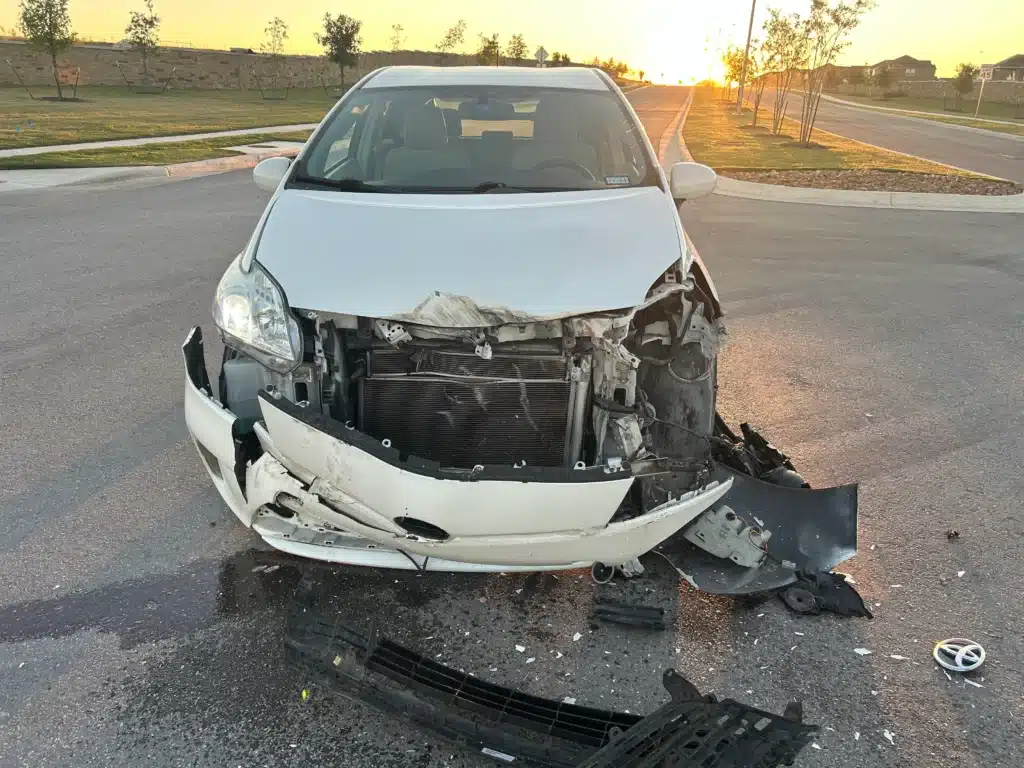
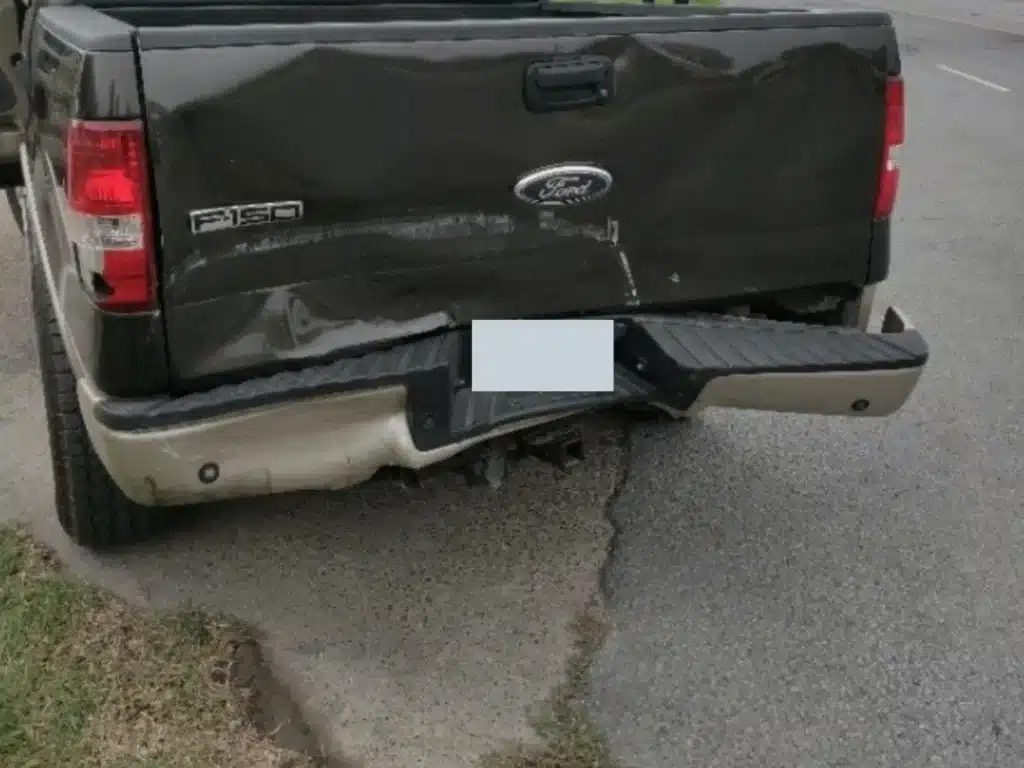
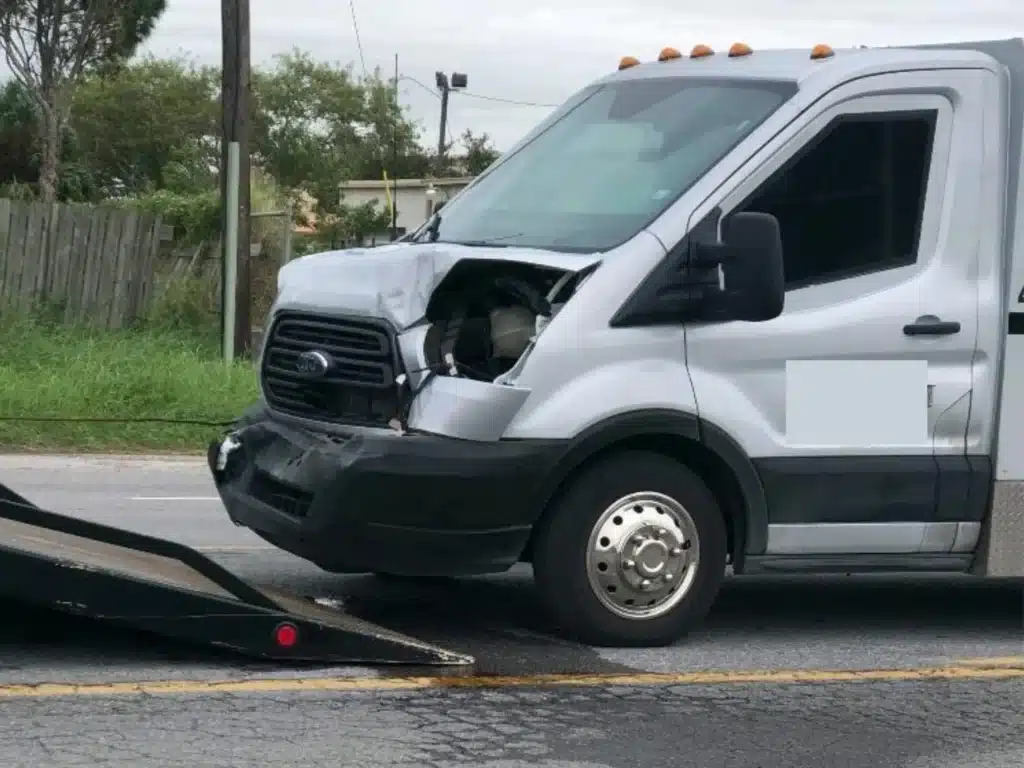
A father was easing toward a left turn lane on East 14th Street, his two sons riding with him, when the armored van behind his pickup did not slow in time. The officer cited the van’s driver for failing to control speed.
- What the report gave us
The CR-3 named the vehicle, a Ford Transit, and the armored car company that owned it. From the start, the claim had a business behind it, not just one driver.
- Three claims
Each person in the pickup had a claim of his own. The father’s, built on about ten months of care that included a lumbar MRI, nerve testing and four epidural injections, settled before suit for $125,000. The two sons’ claims ended separately, at $9,000 and $28,000.
- Why it matters
When several people are hurt in one crash, their claims draw on the same policy. Learning the per person and per crash limits early tells everyone what is really there.
Past results do not guarantee a similar outcome. Separate injuries and records set each family member’s figure.
How Do You Ask the Insurer for the Limits?
Put every request in writing, keep copies, and follow these steps:
- Open the claim Report the crash to their insurer and get the claim number and the adjuster’s name in writing.
- Ask for the limits in writing Request the liability limits and the declarations page, plus any umbrella, excess, owner or employer coverage.
- Ask for the customer’s consent Many insurers will release the limits only after their policyholder signs off, so ask the adjuster to request it.
- Ask whether other coverage exists Before settlement, request written confirmation of the coverage the adjuster knows about, including umbrella, excess, owner or employer policies. A signed “no other coverage” statement is a common settlement term, not a legal duty.
- Send the answer to your own insurer Your UIM insurer will want proof of the limits before it agrees to a settlement; see why its written consent comes first.
If the insurer still says nothing, a lawyer’s written demand for the policy limits, backed by records showing your losses exceed them, puts the question to the insurer directly. A properly structured demand within the policy limits can create serious exposure for an insurer that unreasonably refuses it, but the rule is technical; our guide to the Stowers demand in Texas explains the requirements.
How Do You Find a Commercial Truck’s Insurance Coverage?
Trucking companies must file proof of insurance with regulators, and those filings are public.
- Interstate for hire carriers. Search the FMCSA Licensing and Insurance site by USDOT or MC number, or by company name. For each carrier it lists the insurer and policy number and, for bodily injury and property damage coverage, “the dollar amount of insurance that is required, and the dollar amount that is on file.” Federal minimums begin at $750,000 when a for hire carrier hauls ordinary freight in a vehicle of 10,001 pounds or more (49 CFR 387.9).
- Texas registered carriers. For carriers operating only inside Texas, their insurers file proof of coverage with the Texas DMV, whose Truck Stop lookup shows the insurer, policy number and filed amount. In the agency’s words: “We publish insurance data there, so anyone can look up whether a company’s filings are current.” The required minimum runs from $300,000 to $5,000,000 depending on the vehicle and cargo, with $500,000 for most trucks over 26,000 pounds (43 Texas Administrative Code 218.16).
Treat either number as the coverage on file with the regulator. A filing proves the required minimum; excess or umbrella policies can sit above it, and only the policy or the insurer confirms the full amount. A filing also does not prove the policy applies to your crash. A light pickup or van hauling ordinary goods may fall outside both tables; read about company vehicle crashes to see who else can answer for a work vehicle, and see commercial truck accident lawyers for heavier rigs.
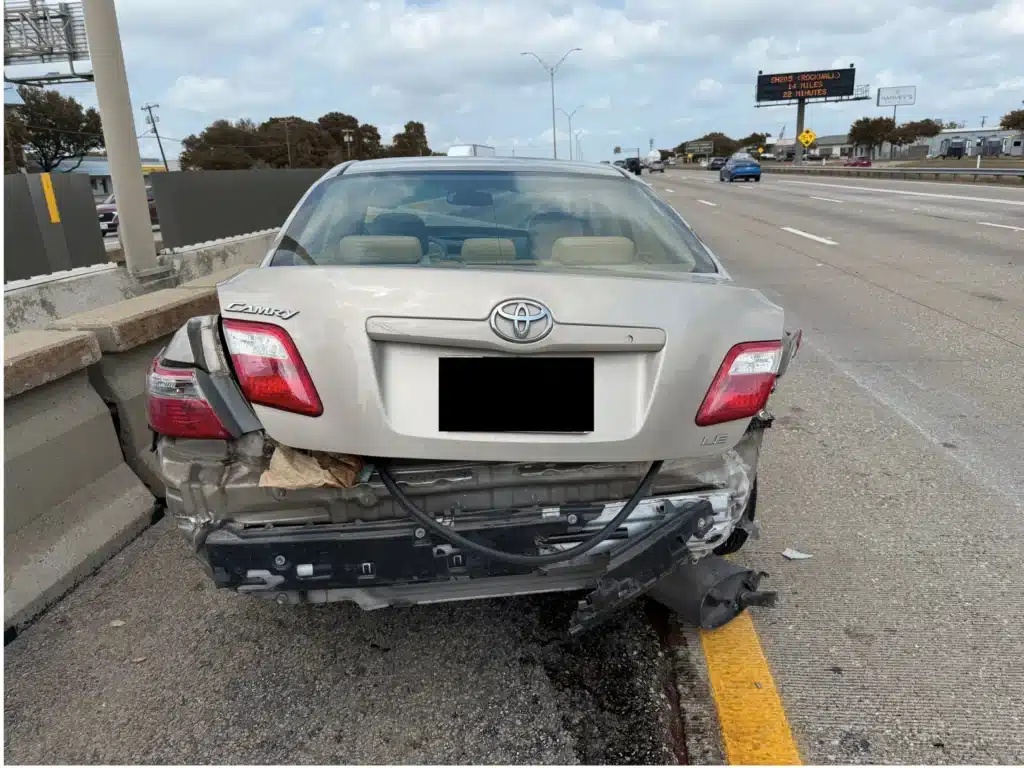
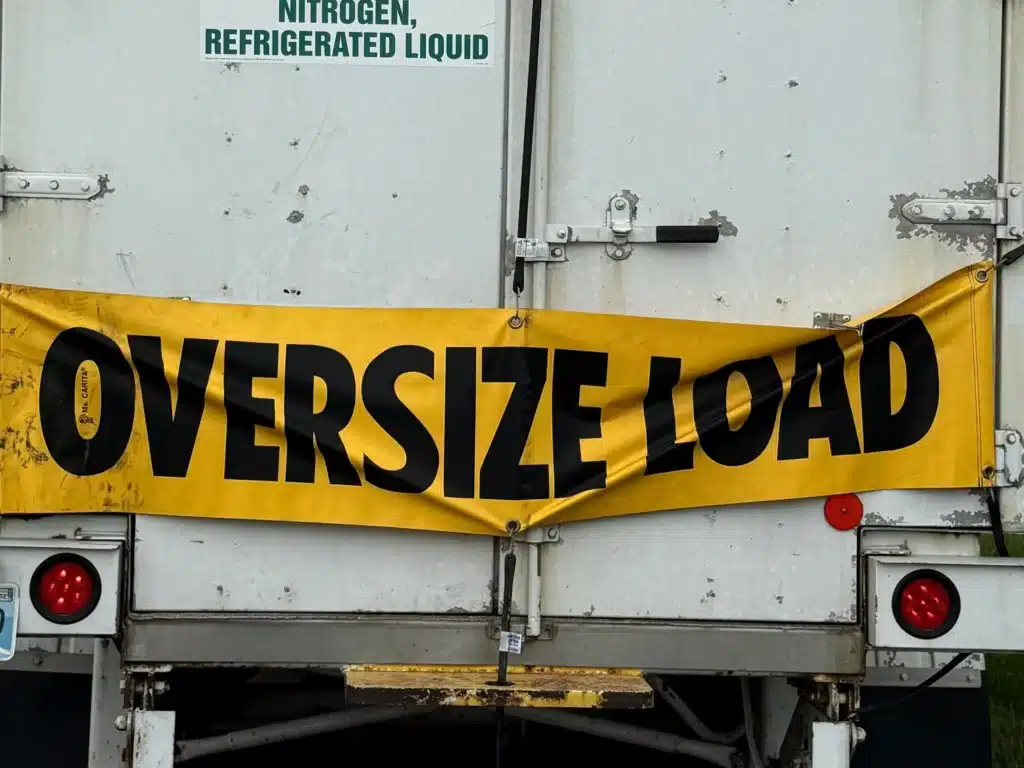
Our Mesquite truck case shows why the company behind a rig matters. On eastbound Interstate 30, the officer coded a 2024 Peterbilt tractor trailer for changing lanes unsafely and failing to control its speed when it struck our client’s Camry, and the injuries kept our client in the hospital for five days. The claim ran against the trucking company’s insurer, whose opening offer fell short of the evidence. It resolved for $600,000.

Attorney’s note
“A commercial collision may involve a driver, a motor carrier, a trucking company, vehicle owner, broker, maintenance provider, cargo company, shipper, employer, and several layers of insurance.”
“I look for every person, business, insurer, policy, and decision that may have contributed to the harm.”
Josh Alexander
Founder and Managing Attorney
Rideshare crashes run on their own coverage stages (Insurance Code 1954.052 and 1954.053), and what the app showed when the collision happened decides which one applies, as our Texas rideshare insurance page explains. In Josh Alexander’s words, “A rideshare driver may be covered by more than one policy.”
When Must a Texas Defendant Disclose Its Insurance?
The limits stop being optional. Within 30 days after the first answer or general appearance, unless the parties agree or the court sets another date, each side must hand over “any indemnity and insuring agreements described in Rule 192.3(f)” without being asked (Texas Rule of Civil Procedure 194.2). Rule 192.3(f) reaches “any indemnity or insurance agreement under which any person may be liable to satisfy part or all of a judgment,” so umbrella and excess policies come out too. The same rule adds that this information “is not by reason of disclosure admissible in evidence at trial.”
The 30 days run from the defendant’s answer, not from the day you file. Suing the driver usually has a two year deadline that starts on the crash date, so check Texas car accident filing deadlines and what discovery forces the other side to produce.
Several of our commercial vehicle cases resolved only after a lawsuit was filed.

Cases handled by Laura Rivas
A tractor trailer pulled across the path of a construction worker’s pickup in Hood County, where U.S. 377 crosses State Highway 171 outside Cresson. Laura Rivas took the case into litigation and settled it on September 1, 2026, for $325,000.
On State Highway 205, in Rockwall County, a driver in a commercial vehicle came up too fast behind our client’s stopped car and started a chain reaction involving five vehicles. EMS had to lift her out, and her ankle surgery came with a 12 day hospital stay. Laura settled that case during litigation for $600,000.
Laura Rivas
Senior Associate Attorney
Not Sure What Coverage the Other Driver Has?
Send us what you have: the insurance card photo, the crash report, any letter from the adjuster. We will request the limits, check the regulator filings when a commercial vehicle was involved, and look for every other policy that could pay. It is the promise Josh Alexander makes every client: “We will examine every applicable insurance policy.” If the limits turn out to be smaller than your losses, our guide to what happens when the at fault driver’s insurance is not enough covers what comes next.
24/7 · Free consultation · No fee unless we win
A Free Review of the Coverage Behind Your Claim
J. Alexander Law Firm serves injured clients throughout Texas: Dallas · Houston · San Antonio · Fort Worth · Arlington · Canton. Se habla español.