



Short answer
What is the difference between mental anguish and emotional distress?
You might call what you are feeling after a crash emotional distress. If a careless driver injured you, we may seek payment for your emotional distress too. In my request for payment, I use the Texas legal term mental anguish.
Your injury claim can include payment for emotional distress, which Texas law calls mental anguish. Our Midland client's claim included her post traumatic stress symptoms, and callers have described panic or shock at the scene. Being badly upset by a careless driver, by itself, does not give you a claim under Texas law. Under Boyles v. Kerr, 855 S.W.2d 593 (Tex. 1993), a driver usually does not have to pay someone who was upset but not injured based on that distress alone. So my first question is whether you were also physically hurt.
At medical appointments, please mention symptoms such as nightmares, panic or avoiding the car. Your doctor cannot put them in your records without knowing about them.
Can you sue for emotional distress without a physical injury in Texas?
Sometimes. I check whether the driver crashed into you on purpose or whether you have a bystander claim because you saw a close relative suffer a traumatic injury.
Texas law allows payment for mental anguish in only a few situations when a crash causes emotional distress without physical injury. Those situations were discussed by the Texas Supreme Court in In re Richardson Motorsports (2024). One is when someone hurts you on purpose. In Twyman v.
Twyman (1993), the Texas Supreme Court recognized a separate claim when intentional or reckless conduct is extreme and outrageous and causes severe emotional distress. Another is gross negligence, when a person recognizes an extreme danger to others and disregards it.
A third is when someone deliberately ignores your rights. A fourth is when the circumstances assure a court that the anguish is genuine. A bystander claim can fit one of these situations. I check what happened in your crash against each one.
An ordinary rear end crash that leaves you shaken but not injured does not seem to fit those exceptions. Still, see a doctor. An exam may uncover an injury, and mental anguish could then be part of your claim.
Ask our team whether an exception might apply to your crash.
What is a bystander claim in Texas?
A bystander claim may seek damages for mental anguish if you witness a close relative suffer serious injuries in a crash another person negligently caused. A judge weighs three factors to decide whether this claim applies.
If you were hurt as a passenger, I would consider an injury claim as well as a separate bystander claim. That is a claim for the distress of seeing a close relative hurt. Say your sister was driving and you were riding with her when a crash badly hurt her. A judge considers three factors when deciding if Texas law allows your claim against the motorist responsible for the wreck. In Freeman v. City of Pasadena (1988), the Texas Supreme Court adopted three factors, then restated them in United Services Automobile Ass'n v. Keith (1998):
- Where you were. I check whether you were close to the scene or far away.
- What you saw. You need to have been shocked by seeing the crash happen, not by hearing about it later.
- Who was hurt. Was the injured person a close relative, like a sibling, or a stranger or distant relative?
A 2024 example
In Richardson Motorsports, a girl sued after watching her younger brother die. The defense did not dispute where she was or their relationship. According to the Texas Supreme Court, a judge decides if her bystander claim can go forward. The judge decides whether the law required the defendant to take care for her safety, and the jury does not decide that question separately. That decision includes whether her shock came from seeing the crash herself or hearing about it later.
How to prove PTSD after a car accident?
A diagnosis from a doctor or qualified mental health provider helps me document your PTSD. You do not need a diagnosis before asking for help.
A PTSD diagnosis requires symptoms that last longer than a month and interfere with your life. If notes from the first weeks after the crash describe your symptoms, I can use them to help establish their duration.
When we talk, I ask about symptoms in the four groups used to identify PTSD in adults:
- Nightmares, flashbacks or unwanted memories can make you relive the event.
- You may avoid reminders, such as the road, intersection or car involved in the crash.
- Negative thoughts or moods can include losing interest or feeling cut off from others.
- Feeling on edge can bring trouble sleeping or make you easily startled.

"It's just a natural reaction that I have now for some reason. And I wish I didn't have it."
Lauren, a client of J. Alexander Law Firm. Watch Lauren tell it
Can you be traumatized without PTSD after a car accident?
Yes. We can include anxiety or depression in your injury claim without a PTSD diagnosis.
Many people have symptoms after a frightening event, but fewer than half develop PTSD. PTSD symptoms often start soon afterward, though they can first appear months or years later. If I know when each symptom started, I can better understand how your symptoms changed over time.
PTSD care may include talk therapy, medication or both. Some types of therapy focus on the traumatic experience.
During the lawsuit, our client told us they would consider therapy because the wreck had left them afraid to drive:
From a call
"So I would probably do therapy because I'm afraid to drive because of that accident."
Caller, 2026
What are the effects of depression after a car accident?
Depression may leave you feeling down, uneasy, or hollow for an extended time, or less interested in activities you once enjoyed. Depression and PTSD are separate conditions, though one person can experience both. Ask your provider to record each condition separately.
For a depression diagnosis, symptoms must persist for at least two weeks and be present most of each day, nearly every day. One symptom must be a depressed mood or a loss of interest or pleasure in most activities. Notes made during those weeks help me understand when you had symptoms.
A primary care doctor, psychiatrist, or psychologist can review your symptoms and consider whether a medicine or thyroid condition could explain them. Having that visit documented early may help if the other side later points to a different cause.
For crisis support, call or text 988 if you are struggling or thinking about suicide. For a threat to someone's life, dial 911.
How to prove mental anguish after a car accident?
To help prove mental anguish, I use dated treatment notes, prescription records, a journal and accounts from people who noticed changes in you.
In our Midland claim over a rear end crash, a neurologist recorded signs of recent trauma that included fear of driving. The claim included those symptoms, along with headaches and disc findings. The neurologist did not diagnose a brain injury, so we did not claim one based on that note.
Our client in the Texas lane change crash claim told her chiropractor about stress, poor sleep and anxiety while driving at her first appointment. Her claim reached a settlement before anyone filed suit.
As a lawyer defending insurance companies, Matthew Graham saw how they could more easily dismiss an account without treatment notes to support it. For that reason, we ask for notes with dates that describe how you felt. In Parkway Co. v.
Woodruff (1995), the Texas Supreme Court described mental anguish as serious distress beyond ordinary anger or disappointment. Direct evidence of its character, length and severity can sustain an award if daily life was substantially disrupted. A scan cannot show your nightmare.
A dated note can document that bad night, just as an X ray can reveal a broken bone. The note gives the insurer something to consider alongside your account.
Records made soon after your crash can help me understand what changed for you and when. To explain your emotional harm to the insurer, our attorneys use records collected by our case managers:
Mental Anguish in Our Cases
In these cases, our clients' records documented distress after a crash.
Midland, at the intersection of S. Midland Drive and W. Thomason Drive
Driving Anxiety After a Pickup Hit Her
While our client sat in her SUV at a red light, a pickup struck it from behind. The officer noted the driver's intoxication and reported that no one was injured.
The next morning, she went for urgent medical care because of lower back pain. About nine months later, the neurologist noted recent trauma symptoms that included driving anxiety.
Her claim also addressed back and neck disc findings and headaches. It settled at mediation.

A Texas highway
Poor Sleep and Driving Anxiety Following a Collision
On a Texas highway, our client encountered a vehicle towing another that moved unsafely into her lane. She could not keep control of her car and struck two signs.
The following day, head pain and discomfort affecting her neck, left shoulder and elbow led her to seek emergency care.
She also reported stress, sleep trouble and driving anxiety during her first visit to a chiropractor. She said she missed work for five to six days.
The parties settled her claim before anyone filed a lawsuit.
Talk with our team about what happened. Call 469-807-7480
Can the other driver's lawyer see my counseling records in Texas?
Yes. Under Richardson Motorsports, relevant counseling records may be disclosed when a claim relies on a psychologist's testimony to prove mental anguish. I keep that possibility in mind when planning your claim.
Texas does not require a medical professional's testimony to recover mental anguish damages. Asking for payment for mental anguish does not by itself give the other side access to your counseling records.
If we rely on a diagnosis or your treatment to prove the claim, the defense may be able to ask for related records. When we consider asking a counselor to testify, I weigh which records the defense might request.
If the other side says something besides the crash caused part of your distress, it may ask a judge to review your counseling records. The judge may then release only the relevant parts. In Richardson Motorsports, the defense argued that later events contributed to a girl's anguish.
For her records, the Texas Supreme Court told the trial judge to decide which parts could be shared. The Court also noted that an earlier mental health condition may be unrelated to the claim or the defense.
Our Texas prior conditions article explains how earlier health issues may be handled in an injury claim.
What callers tell us
One October call showed us that mental health struggles made daily tasks hard, including getting the car's body work done. We ask about mental health history and earlier counseling from the first conversation, so we can separate records about the crash from records about an earlier condition.
Has someone requested your counseling records? Bring the authorization, and our team will read it with you to see which records it covers.
Call 469-807-7480How long do you have to sue for emotional distress after a car accident in Texas?
For a crash injury claim, Texas Section 16.003 generally sets a two year filing limit. Anxiety that starts later does not by itself extend that time. We track your filing deadline.
Care takes time, but the filing deadline keeps running while you get it. Our guide to filing a Texas crash claim on time covers some exceptions to the usual time limit. I check whether any of those exceptions might apply to what happened to you.
I weigh your emotional distress with the rest of your injury claim instead of assigning it a separate figure. Our pain and suffering guide explains how emotional distress fits into my assessment.
Texas law sets no ceiling on mental anguish damages in an ordinary crash claim against a private driver. The evidence shapes the amount I ask for, as our guide to the types of damages explains.
My advice is not to post about your mental health on social media. Your posts could be seen by the other driver's insurer. For more, see our guide on talking with insurers.
Example
Emotional distress after a rear end crash
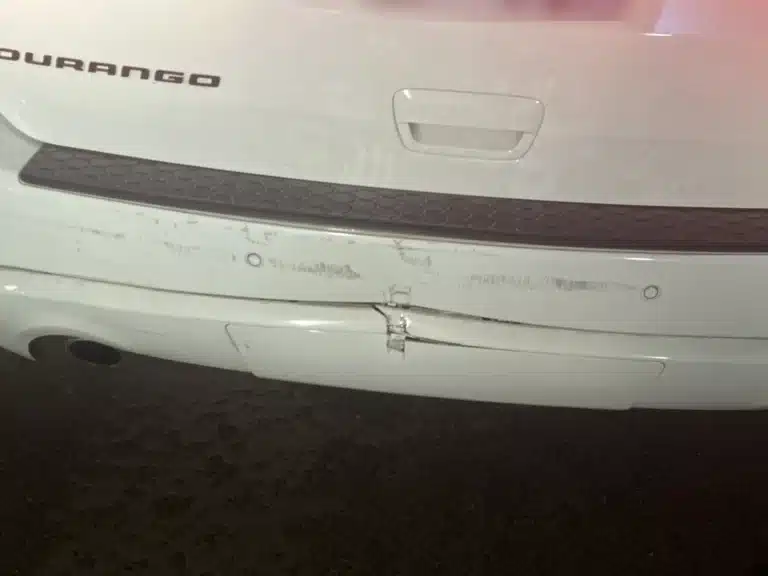
Say you are in a waiting room three weeks after a rear end crash. Your neck is healing, but you wake from nightmares and take a longer route to work to avoid the intersection. You ask me whether that counts or whether you are being dramatic.
My first question is whether the crash physically hurt you. Under Boyles v. Kerr, Texas does not recognize a general claim for emotional distress caused by carelessness alone.
When a careless driver causes a physical injury, mental anguish can also be considered as part of the injury claim. The evidence still matters.
Tell your doctor about the nightmares and the route you now take. A dated treatment note can record what you were experiencing and when. I also want to understand how much the distress disrupted your daily life and how long it lasted.
Think of a weather station recording a storm: readings taken on the days it happened give details that a description months later may miss. A short journal can do something similar for your bad nights. A person who knew you before the wreck can also describe changes they have noticed.
You are not being dramatic by bringing up what changed. Tonight, write down whether you woke from a nightmare, what you remember about it and how it affected your day.
24/7 | Free consultation | No fee unless we win
Tell our intake team about the sleep, the driving, the panic. We listen.
J. Alexander Law serves injured clients throughout Texas: Dallas | Houston | San Antonio | Fort Worth | Arlington | Canton. Se habla español.