


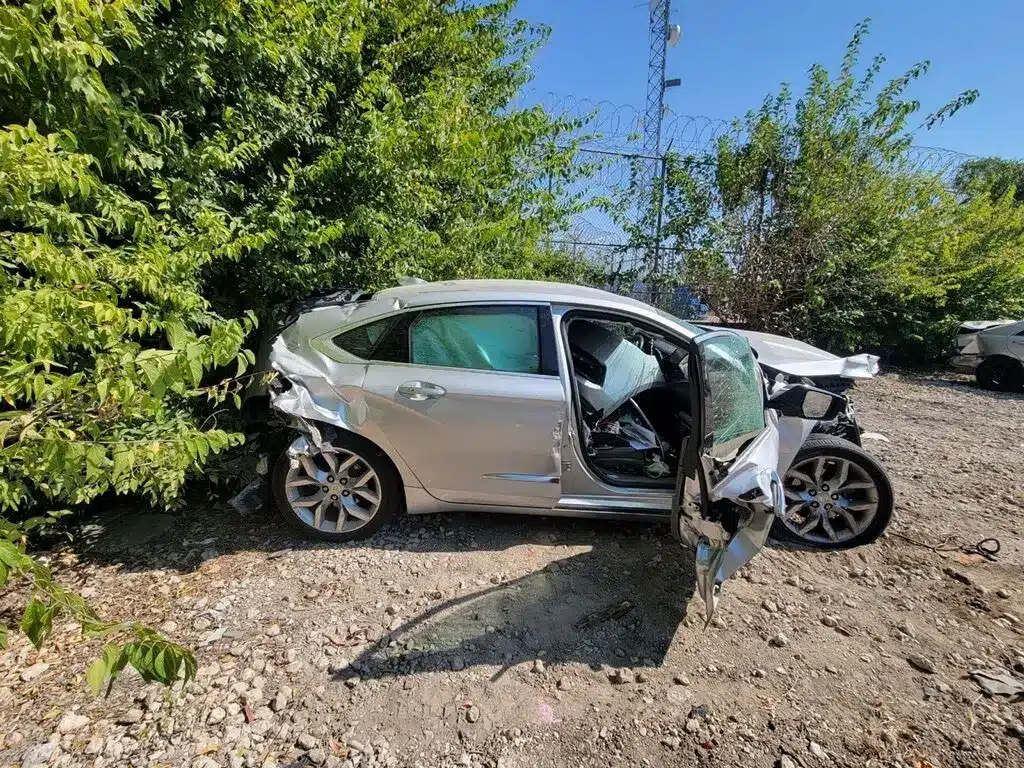
Personal injury protection, or PIP, is coverage on your own Texas auto policy. After a crash, it can pay reasonable medical and funeral expenses up to your PIP limit, whoever caused the crash. If you had paid work, it can also replace most of your lost income. If you did not, it may cover what you pay others for essential household chores your injuries keep you from doing. Texas policies include PIP unless it was turned down in writing, and insurers must provide $2,500 per person. In most crashes, using it does not lower what the at fault driver has to pay you.

How this guide was checked
Firm founder Josh Alexander reviewed this guide. The statutes, policy terms and court opinions behind each rule are listed at the end. Examples from our files give the month only, without names or identifying details, and every call quote is verbatim from our recordings. This is general information, not legal advice.
The short answer
What Does PIP Pay For After a Texas Car Accident?
Medical, hospital, ambulance, dental and funeral expenses for each injured person it covers; 80 percent of lost income for people who were working, under the standard Texas policy form; and essential household services for people who were not. It pays only for expenses incurred within three years of the crash, and only up to the PIP limit on the policy.
Those categories come from the Texas statute that defines PIP as payment of “all reasonable expenses” that arise from the accident and fall into three groups (Tex. Ins. Code § 1952.151). We read the Texas Personal Auto Policy, the form issued through the Texas Automobile Insurance Plan Association, line by line to see how an insurer turns them into benefits; other insurers file their own forms, so check yours. The required amount is $2,500 per person (Tex. Ins. Code § 1952.153), and you can buy more.
What PIP can pay, by category
- Necessary medical, surgical and dental care, X rays and prosthetic devices
- Ambulance rides, hospital stays and professional nursing
- Funeral expenses
- 80% of lost income from work, if you were earning income when you were hurt
- Paid help with essential household work you normally did yourself, if you were not earning income
- Only expenses incurred by the third anniversary of the crash
The 80 percent figure is not in the statute. It comes from that form, which pays “Eighty percent of a covered person’s loss of income from employment,” and the Office of Public Insurance Counsel gives the same number. Lost income means what you would have earned minus what you were actually paid during the disability, based on your salary or, if your pay varies, your average monthly income for up to 12 months before the crash. If a covered person dies, PIP does not continue lost income benefits; funeral expenses fall within the medical and funeral benefit.
If you had no paid work, PIP instead reimburses necessary and reasonable expenses for essential services you ordinarily performed for your household (Tex. Ins. Code § 1952.151). OPIC’s examples are child care and lawn care.
PIP has clear limits. It does not pay for:
- Pain, suffering or any other loss outside those categories
- Damage to your car, which collision coverage or the at fault driver’s insurer may cover
- Any amount above your PIP limit
- Injuries you caused yourself on purpose, or got while committing a felony or “seeking to elude lawful apprehension or arrest by a law enforcement official” (Tex. Ins. Code § 1952.158)
A $2,500 PIP limit can run out quickly after even a moderate crash, as this illustration shows.
Worked example · Illustration
One Crash and a $2,500 PIP Limit
- $750Urgent care visit and X rays
- $1,000One week of pay missed at work
- $1,200Six physical therapy visits
- $2,500The PIP limit for each person on the policy
What the crash cost, next to what PIP paid
Your losses: $2,950
Care $750Lost pay $1,000Therapy $1,200
PIP paid $2,500, its full limit, and left $450 unpaid
Care $750Pay at 80% $800Therapy $950Not paid $450
PIP paid the urgent care bill in full and the lost week at 80 percent, $800 of the $1,000. Paid in the order the bills came in, it reached its $2,500 limit during therapy. The last $250 of therapy and the $200 of lost pay above PIP’s 80 percent share are losses you can still claim from the at fault driver, if another driver was to blame. To pay the income share, the insurer may require reasonable medical proof that the injury caused the lost income (Tex. Ins. Code § 1952.154).
Do You Have PIP If You Never Chose It?
You do, unless someone rejected it in writing. Texas bars an insurer from issuing an auto liability policy without PIP (Tex. Ins. Code § 1952.152(a)), and the Texas Department of Insurance says so plainly in its auto insurance guide: “All auto policies in Texas include PIP coverage. If you don’t want it, you must tell the company in writing.”
Most callers never ask about it. We searched our recordings of 155 crash calls, from June 13 through September 29, 2026, for PIP and MedPay: they came up by name in 6 calls, and in 4 of those, our staff raised them first.
In September a woman called about her mother, who had hit a bridge support alone on a rain slick road. “She has full coverage,” she said, then added: “But not personal injury.” The result: “Her medical bills or loss of wages aren’t being covered.”
Full coverage has no set meaning in Texas law. As our 30/60/25 guide explains, the phrase says nothing certain about PIP.
How to check, and what to do if PIP is missing:
- Find the PIP line on your declarations page. A dollar amount there means you have it. When callers cannot find theirs, our intake staff offer to request it, and our guide to drivers who leave, lie or carry no insurance lists the other entries worth finding there.
- If PIP is missing, ask for the signed rejection. Only a rejection made in writing counts, so when nobody remembers declining PIP, we ask the insurer to produce the signed form.
- Know who could have signed it. Any insured named in the policy can reject PIP, and a spouse can count. In Old American County Mutual v. Sanchez (Tex. 2004), a wife’s rejection left her husband without PIP. A check mark next to “reject” on a signed application was enough in Ortiz v. State Farm (Tex. App. 1997).
- Expect a rejection to carry into renewals. The same company need not restore PIP at renewal unless the named insured asks for it in writing (Tex. Ins. Code § 1952.152(b)). In Cain v. Progressive County Mutual (Tex. App. 2014), a rejection signed in 2003 still applied to a 2007 crash after years of renewals.
Does PIP Pay Even If You Caused the Crash?
Yes. Texas law makes PIP payable without regard to “the fault or nonfault of the named insured or recipient in causing or contributing to the collision” (Tex. Ins. Code § 1952.155). That matters most in crashes nobody else caused.
The September caller’s mother hit the bridge support with no other car involved, so we could not take her case; as a staff member explained, “When it comes to a single car accident, you would just go with your insurance.” Had her policy carried PIP, it could have paid medical and income benefits up to its limit, subject to its terms and proof of the claim, even though she lost control herself. Without PIP, her own policy did not provide these medical or income benefits; her collision coverage addressed damage to the car.
Shared blame does not change that. Under the Texas 51 percent bar, anyone judged more than 50 percent to blame collects nothing from the other driver, yet that person’s own PIP still pays.
Getting in or out of a vehicle can count, too. In Texas Farm Bureau v. Sturrock (Tex. 2004), the Texas Supreme Court held that a man hurt while climbing out of his parked truck had a “motor vehicle accident” under his PIP coverage.
Whose PIP Covers Passengers, Family and Pedestrians?
Your PIP covers you, the relatives you live with and anyone riding in your car with your permission (Tex. Ins. Code § 1952.151). Under the standard form, it covers you and those relatives in any vehicle, or on foot when a vehicle strikes you, with one exclusion: an injury in, or from being struck by, a vehicle you or a relative in your household owns that is not a covered auto on the policy.
When you ride in a car you do not own, your own PIP is backup coverage. The standard form makes it “excess over any other collectible Personal Injury Protection insurance,” so the PIP on that car, if it has some, pays first.
Whose PIP pays first · standard Texas policy form, Part B
| Where you were | Whose PIP pays |
|---|---|
| Driving or riding in your own car | Your own policy |
| A passenger in a friend’s car | The friend’s PIP, if the car has it, pays first; your household policy may cover remaining eligible expenses, up to its limit. |
| Walking or cycling when a car hit you | Your household’s policy, including a relative’s you live with; the driver’s PIP does not cover you |
| A friend you let ride in your car | Your policy pays first; the friend’s own PIP may cover the rest, up to its limit |
Each injured person has a separate limit: the form calls it the “maximum limit of liability for each person injured in any one accident,” however many vehicles or premiums the policy lists. On a July file, our negotiator learned from the adjuster at our client’s own insurer that the policy carried “PIP available in the amount of 5,000 each for her and for [her daughter].”
One catch for passengers: if you collect PIP from the driver’s policy and later bring an injury claim against that same driver, the driver or the driver’s insurer is entitled to “an offset, credit, or deduction” for the PIP already paid (Tex. Ins. Code § 1952.159).
PIP or MedPay: What Is the Difference in Texas?
PIP comes with each Texas auto liability policy unless it was declined in writing, and it also replaces lost income. MedPay, short for medical payments coverage, is optional and pays medical and funeral bills only. Like PIP, it pays regardless of fault, including, TDI notes, “if you’re hurt while riding in someone else’s car or while walking or biking.”
PIP and MedPay side by side · Insurance Code, TAIPA form, OPIC
| Question | PIP | MedPay |
|---|---|---|
| Is it on your policy? | Yes; only a written rejection removes it | Only if bought; insurers need not offer it |
| Medical and funeral bills | Yes | Yes |
| Lost income | 80 percent, under the standard form | No |
| Household services | Yes, for people not earning income | No |
| Time limit on expenses | Incurred within three years | Set by the policy; OPIC warns some pay for only one year |
| Can the insurer get its payment back? | Generally no; the exceptions are an uninsured at fault driver and a passenger’s suit against the driver of the same car | Depends on the policy’s wording; the PIP repayment ban does not cover MedPay |
Some drivers carry MedPay without knowing it, and the same July client did. Our negotiator told her, “He was telling me you have personal injury protection and MedPay. And so we can use both.” Her answer: “I didn’t know I had the med pay.” We sent demands under both coverages. If your policy carries both, ask the adjuster in writing how they coordinate, because whether both can pay the same bill depends on the policy’s wording.
Do You Need PIP If You Have Health Insurance?
Usually yes. Health insurance pays doctors, but it does not replace a paycheck, and PIP replaces most of one. PIP also pays whether or not another source covers the same care: Texas law makes it payable without regard to “any collateral source of medical, hospital, or wage continuation benefits” (Tex. Ins. Code § 1952.155).
How much it pays still depends on the bill. “Have you ever heard of insurance companies not covering the remaining medical bills? Like they’re only considering a certain portion?” a caller asked us in July. Your PIP limit is not automatically a cash payment. It pays covered expenses you actually incurred. If a health plan paid a provider a lower negotiated amount and the provider accepted that as full payment, PIP may use that lower amount.
The Texas Supreme Court took up a version of that question in Farmers Texas County Mutual v. Beasley (Tex. 2020):
What one Texas driver’s PIP paid · Texas Supreme Court, 2020
| What happened | Amount |
|---|---|
| Charged by his providers at list rates | $2,662.54 |
| Paid by his health insurer at negotiated rates, accepted as payment in full | $1,068.90 |
| Paid to him by his PIP insurer | $1,068.90 |
| His PIP limit | $2,500.00 |
| Left for him to recover in that case | Nothing; suit dismissed |
Because his providers had accepted the negotiated amount and he owed nothing more, the Court dismissed his suit for the rest of the limit, noting that a health insurer’s negotiated discounts “do not constitute a collateral source of benefits to the insured in this context.” He still collected PIP after his health plan had paid. That result turned on his policy and how his providers were paid, so yours may differ.
How Do You File a PIP Claim, and How Fast Must It Pay?
File with the insurer whose policy covers you as soon as you can: usually your own, or, if you were a passenger, the insurer of the vehicle you were riding in. Keep copies of everything you send. Your policy may add its own notice and proof requirements, and these deadlines apply:
PIP claim deadlines
- 15 days after the insurer receives your written claim, it must acknowledge the claim (standard form).
- 15 business days after it receives the information it asked for, it must tell you in writing whether it will pay or deny the claim, or needs more information. If it gives reasons for needing more time, it must approve or deny the claim within 45 days (standard form).
- 30 days after it receives satisfactory proof of a claim, payment is due; the statute has PIP paid “periodically as claims for those benefits arise” (Tex. Ins. Code § 1952.156(a)).
- Six months after the crash is the shortest time a policy may allow for your original proof of loss: the statute lets it set “a period of not less than six months after the date of an accident” (Tex. Ins. Code § 1952.156(b)(1)).
- Notify the insurer. Give prompt notice of how, when and where it happened. TDI warns that “Most companies have deadlines for filing claims.”
- Send proof as it comes in. Submit bills and records as you receive them, plus wage records such as pay stubs or a note from your employer. A written assignment lets the insurer pay a doctor or other provider directly.
- Answer the insurer’s requests. The standard form lets the insurer ask for medical authorizations, an exam by a doctor it selects, and a sworn proof of loss. If treatment stops and the injury flares up later, the statute lets the insurer require reasonable medical proof of that recurrence before paying more (Tex. Ins. Code § 1952.156(b)(2)).
- If payment is late. When an insurer fails to pay PIP benefits when due, you can sue on the policy to recover them (Tex. Ins. Code § 1952.157(a)). If the insurer is required to pay, you are also entitled to “reasonable attorney’s fees, a penalty of 12 percent, and interest at the legal rate from the date those amounts became overdue” (Tex. Ins. Code § 1952.157(b)). TDI also takes written complaints; our page on escalating with an insurer covers that route.

From our founder
“List every loss since the crash, including the ones without receipts, before any adjuster asks you to summarize. The missed shifts, the ride to every appointment, the chores you now pay someone else to do. If it never gets written down, it never gets paid.”
Josh wrote that for our company vehicle accident page. On a PIP claim, the missed shifts are the income benefit, and the chores you now pay for are the household benefit for people who were not working.
Josh Alexander
Founder and Managing Attorney
PIP usually arrives in pieces, often before the rest of the claim is resolved. The July client’s first PIP check, for $814.25, was in the mail within days of our request, and our negotiator told her to expect more: “They just send them separately, so you’re probably gonna get multiple amounts.” On a September file, another client’s own insurer had paid a $2,500 PIP check before her larger claim was paid.
Does Using PIP Lower Your Injury Claim?
Usually not. In most crashes, your PIP insurer cannot demand its money back from the at fault driver, as long as that driver was insured, and that driver usually gets no credit for PIP benefits you received. The July client’s claim was against her own insurer’s uninsured motorist coverage, and its adjuster treated PIP as separate money, as our negotiator relayed it: “He’s like, I’ll give her 7,000 on top of whatever PIP pays out.”
The legal term is subrogation (an insurer’s right to collect from whoever caused the loss), and the statute takes it away for PIP: an insurer that pays PIP “does not have a right of subrogation or claim against any other person or insurer” to recover those benefits (Tex. Ins. Code § 1952.155(b)). The standard form adds that its repayment clause “does not apply to this coverage.” The other driver gets no credit under Texas’s collateral source rule: “a wrongdoer should not have the benefit of insurance independently procured by the injured party,” the Texas Supreme Court said in Brown v. American Transfer and Storage (Tex. 1980).
Matthew Graham, our Managing Litigation Attorney, used to run subrogation litigation across ten states for the country’s second biggest auto insurer. Under Texas PIP, the exceptions are narrow:
- The driver at fault had no insurance or other proof of financial responsibility under Transportation Code chapter 601. Your PIP insurer can then pursue that driver for what it paid (Tex. Ins. Code § 1952.155(c)). Our uninsured driver guide covers the rest of that claim.
- You sue the driver you rode with. The passenger offset described above applies.
- Your uninsured or underinsured motorist claim. That coverage will not pay again for losses PIP already paid; the Texas Supreme Court enforced that policy term in Mid-Century Insurance Co. v. Kidd (Tex. 1999). Our guide explains how UIM pays.
Frequently Asked Questions
Will a PIP Claim Raise My Insurance Rates in Texas?
It can. TDI’s tip on claims and premiums notes that premiums may rise after claims, and says the effect “depends on the type of claim and how many you file.” Texas does protect renewals in one way: an insurer cannot refuse to renew your policy over a claim from a crash that “can’t reasonably be blamed on you,” unless you have more than one such claim in 12 months.
Can I Add PIP After the Crash and Use It?
Not for that crash. The standard form “applies only to accidents and losses” that happen during the policy period shown on the declarations page. If PIP was rejected before, a named insured can ask the insurer in writing to put it back; under the statute, it must then return by the next renewal at the latest (Tex. Ins. Code § 1952.152(b)).
How Much PIP Should You Carry?
That depends on what else would cover you. Insurers must include $2,500 per person unless PIP was rejected in writing, and the statute requires no more. A higher limit buys more of the same benefits, so it matters most if your health plan has a high deductible, you have no paid sick leave, or you would lose income while you recover. Your agent can price the difference.
Does PIP Cover Rideshare or Delivery Driving?
Often not. TDI lists crashes while driving for a ride hailing service, or delivering food or other items for a fee, among the things most personal policies leave out. Our Texas rideshare insurance guide explains whose coverage applies instead.
Questions About Your PIP Claim?

From our managing litigation attorney
“For more than a decade, I worked the other side of these deadlines for one of the largest auto insurers in the country. The lesson stuck with me: the calendar is the cheapest defense an insurance company has.”
“Everyone watches the two year date. The deadlines that quietly decide cases are the short ones in the first few weeks: the notice your policy requires, the notice a city requires, the evidence that has to be preserved before it is gone.”
Matthew wrote that about crash claims in general, for our filing deadline guide. On a PIP claim, the short deadlines include the prompt notice your policy requires and any deadline it sets for the first proof of loss.
Matthew Graham
Managing Litigation Attorney
If your insurer is slow to pay PIP, or you are not sure the coverage is even on your policy, send us the declarations page and your bills. We will review what your own policy should pay and how those benefits sit alongside any claim against the other driver.
24/7 · Free consultation · No fee unless we win
A Free Review of Your Coverage and Your Claim
J. Alexander Law Firm serves injured clients throughout Texas: Dallas · Houston · San Antonio · Fort Worth · Arlington · Canton. Se habla español.