


Chain Reaction Accident Result
We Recovered the $30,000 Policy Limit for a Driver Struck Twice in a Four Car Chain Reaction in Uvalde
A driver stopped on East Main Street in Uvalde in 2023 was rear ended by a pickup and pushed into the car ahead in a four car chain reaction accident.
Her SUV was hit from behind and driven into the car in front of it, and the officer cited only the pickup driver. His insurer paid the whole $30,000 limit on his policy, the Texas minimum, with no lawsuit filed.
On This Page
Stopped in Traffic, Then Hit From Behind
This four car accident happened in 2023 in the early evening, in clear daylight on a dry road. On the 300 block of East Main Street (US 90) near North Wood Street, a two way road with a signal at the intersection and a posted limit of 30 mph, four vehicles sat westbound in the inside lane. Five people were in them. The first two vehicles were stopped. Our client, driving a small SUV, came to a stop behind them. The Uvalde Police Department crash report tells the rest.
Unit 1 was stopped at the 300 block of East Main Street facing west bound on the inside lane. Unit 2 was stopped behind Unit 1 at the 300 block of East Main Street facing west bound on the inside lane. Unit 3 was travelling west bound on the 300 block of East Main Street inside lane. Unit 3 came to a stop behind Unit 2. Unit 4 was travelling west bound on the 300 block of East Main Street inside lane. Unit 4 struck Unit 3 causing Unit 3 to collide with Unit 2 which Unit 2 then collide with Unit 1.
The officer charged only the pickup driver, with “Failed To Control Speed,” and listed failed to control speed as that driver’s contributing factor. No factor was listed for anyone else. That is the most common finding in this kind of crash. Failed to control speed is also the most cited factor statewide: in 2025 it appeared in 89,553 of 136,250 Texas rear end crashes, 65.7%, according to the TxDOT data behind our rear end crash index.
The Report Shows She Was Hit Twice
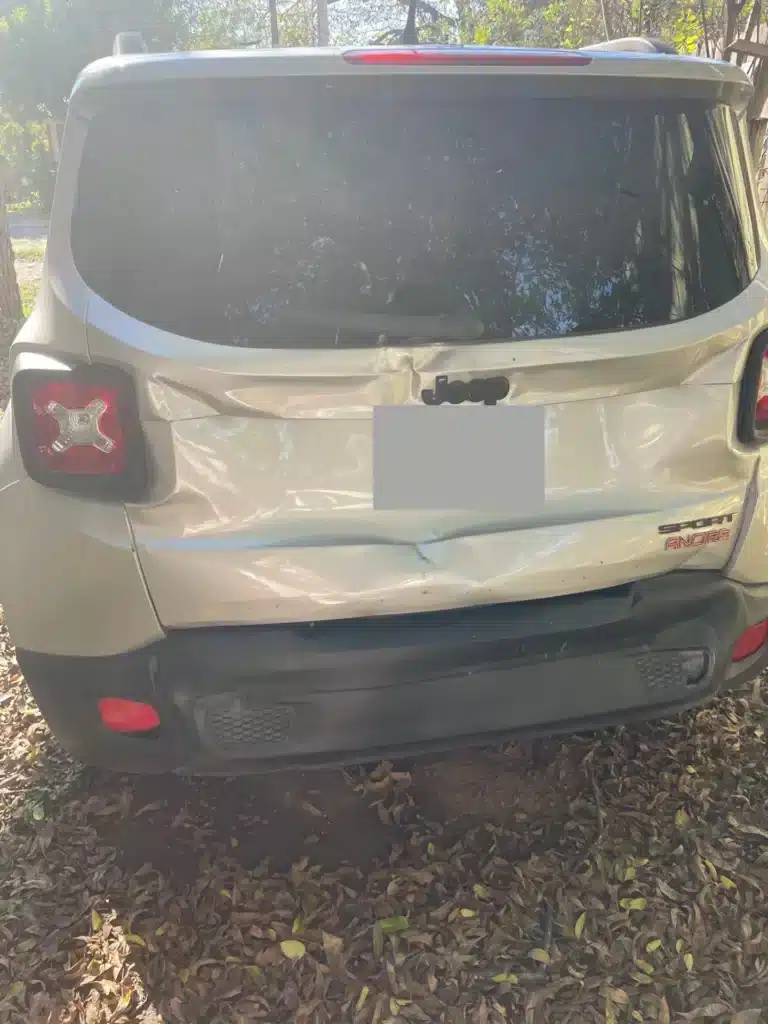
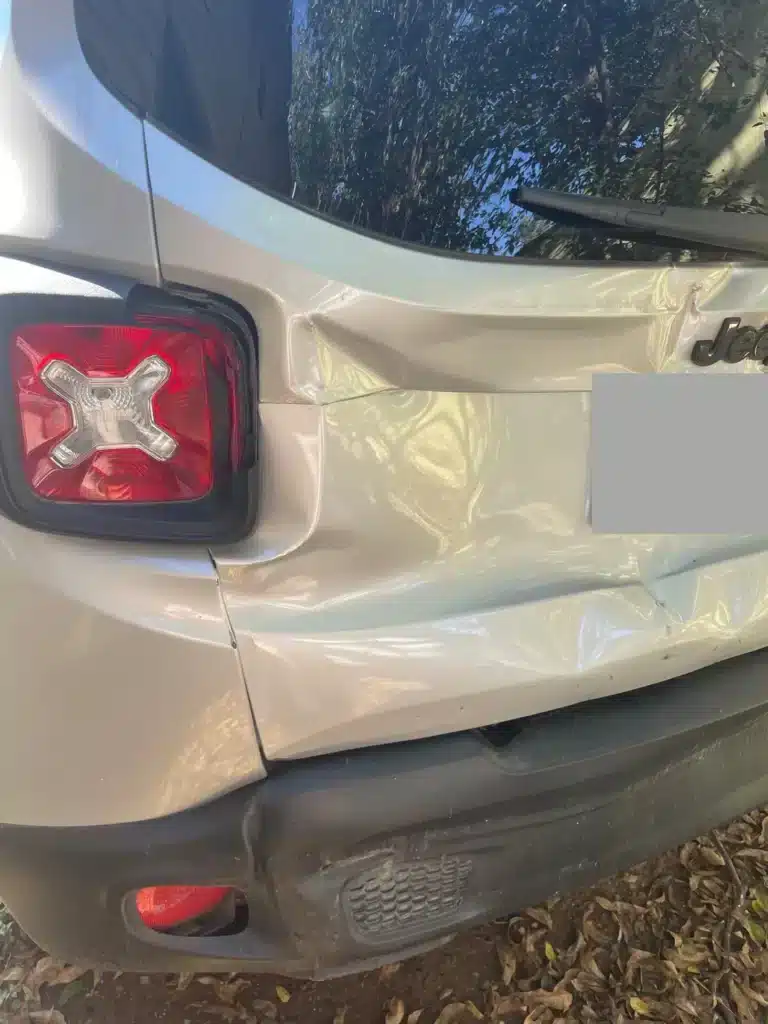
The narrative describes the chain, and the vehicle damage fields confirm it on her SUV alone. The first damage rating is “12 FC 3,” force from 12 o’clock, front center, severity 3. The second is “6 BC 2,” force from 6 o’clock, back center, severity 2. On the Texas crash report, severity runs from 0 to 7. Our crash report decoder explains these codes. A wrecker towed her SUV from the scene.
Both impacts on her SUV trace back to the same driver: she was stopped, and the officer listed a factor only for the pickup driver. A chain reaction accident can look like one event, yet this report records two separate forces on her vehicle. We saw the same push in our San Antonio three car case, where a car was driven into the one ahead.
One Minimum Policy, One Cap Per Collision
Transportation Code § 601.072(a-1) sets the minimum coverage at “$30,000 for bodily injury to or death of one person in one collision” and “$60,000 for bodily injury to or death of two or more persons in one collision.” In a chain crash, everyone hurt by the same driver may be claiming against the same policy, and a minimum policy caps the total for one collision at $60,000.
That cap is why the policy matters from the start. Our Texas minimum insurance guide explains what these limits cover, and our multi car accident guide covers how responsibility works when several vehicles are involved.
Sore That Evening, Better by Summer 2024
She was sore by that evening, and the next day an emergency room saw her for low back pain. Her X rays came back normal. The report had coded every driver, her included, as not injured, and nobody was taken away by ambulance. Soreness can build in the hours after a crash, and a box filled in at the roadside is not a medical record.
Pain management care, MRIs, chiropractic visits and injections followed over several months. By the summer of 2024 she reported more than 70% improvement, and she was cleared to come back only as needed.
Looking Past the First Explanation
Her claim ran on two tracks, the injury and the car, with one small policy behind the pickup. This is how we handled it.
Read every part of the chain
Josh Alexander, the firm’s founder, says on his published bio: “That is why I do not stop at the first apparent explanation. I look for every person, business, insurer, policy, and decision that may have contributed to the harm.” Here that meant reading the narrative, the damage codes and the policy together.
Keep the car claim separate
Her SUV had its own claim, apart from her injuries. While an insurer weighs whether to fix a car or total it, the storage bill at a tow yard keeps running, so the car question gets asked on the first call.
Hold out for what the file supports
An early offer below what the records justify is one we decline, even when taking it would close the file sooner. With a minimum policy, the file has to show why the full limit is the right number.
$30,000 Paid, the Full Policy Limit
$30,000
Policy limit paid before suit
That $30,000 is a gross number, and attorney fees and expenses were subtracted before she was paid. Her result came from the facts of this chain crash, and it cannot tell another driver what a different claim will bring.
Three Points for Drivers Pushed Into Another Car
- Read the damage codes on the report. A front rating and a rear rating on the same vehicle show it was hit from both directions.
- A listed factor for one driver is worth noticing. Ask how the officer coded each unit before accepting that a stopped car shares the blame.
- A minimum policy can be shared across a collision. Ask early what limits apply, and whether a car claim and a tow yard bill are running beside the injury claim.
Attorney Review

Reviewed by: Josh Alexander, Founder and Managing Attorney
Published and reviewed on
Other Crash Results From Our Clients
- $15,000,000I-45 truck crash wrongful deathSettled in litigation
- $5,000,000Northlake forklift wrongful deathSettled in litigation
- $850,000Pasadena red light crashSettled in litigation
- $600,000Rockwall County five vehicle crashSettled in litigation
- $600,000Mesquite 18 wheeler crashTruck accident settlement
- $325,000Hood County commercial truck crashSettled in litigation
- $175,000Round Rock construction vehicle crashSettled before suit
- $130,000Redwater head on, two limitsBoth limits, before suit
- $125,000Brownsville armored truck rear endSettled before suit
- $105,000Texas highway unsafe lane changeSettled before suit
- $105,000Three vehicle crash in DallasPolicy limits recovery
- $100,000Rear end, no police reportSettled before suit
- $95,000Midland company truck left turnSettled before suit
- $89,000San Antonio 3 car chain reactionSettled before suit
- $85,000Farmers Branch left turn, UIMSettled in litigation
- $82,500Plano company truck left turnSettled in litigation
- $80,000Jersey Village U turnSettled in litigation
- $60,000San Antonio rear end, UIMTwo policy limits, pre litigation
- $60,000Fort Worth trailer hitch rear endTwo limits, before suit
- $60,000DeSoto stop sign, broken wristTwo limits, before suit
- $50,000Allen rear end crashPolicy limits settlement
- $50,000La Porte red light T boneFull policy limit, before suit
- $32,500Uninsured driver, UM and PIPUM limit plus PIP, before suit
- $30,000San Antonio rotator cuff tearPolicy limit, before suit
- $30,000Houston hit and run recoveryUM policy limits
- $30,000Richardson apartment exit crashPolicy limits, pre litigation
10Contact
Hit From Behind and Shoved
Hit From Behind and Shoved
Into the Car Ahead?
Send us your crash report and tell us where your car is sitting today. We will go through the report with you and explain which policy limits may apply.
No fee unless we recover · Se habla español · Proudly Serving All of Texas