


Case Result
$195,000 Commercial Vehicle Accident Settlement for a Rear End Claim With a Concussion and No Police Report
We represented a driver who was stopped in traffic in Texas when a vehicle insured to a business hit the car from behind. We had three disputes to solve, which were fault with no police report, a concussion that left nothing to photograph, and a commercial limit the insurer had not disclosed. The claim settled for $195,000, a gross amount.
Rear ended by a work vehicle, and no officer wrote it up? Tell us what you remember and send us the photos you took.
On This Page
The Case at a Glance
- Outcome
- Settlement with the commercial insurer
- Amount
- $195,000, gross, before fees and costs
- Case type
- Rear end collision with a business vehicle
- Injury
- Concussion, neck injuries, upper back and shoulder sprains
- Location
- Texas
- Firm’s role
- We represented the injured driver
- Central disputes
- Fault with no police report, a concussion with no visible injury, and an undisclosed commercial limit
- Verification
- Firm reported result, the client’s photos, and the demand letter in our file, with no police report
Stopped in Traffic, Hit From Behind by a Business Vehicle
Our client was at a complete stop in traffic when another driver came up from behind and hit our client’s car. The vehicle was insured to a business, so we knew a commercial policy stood behind the driver.
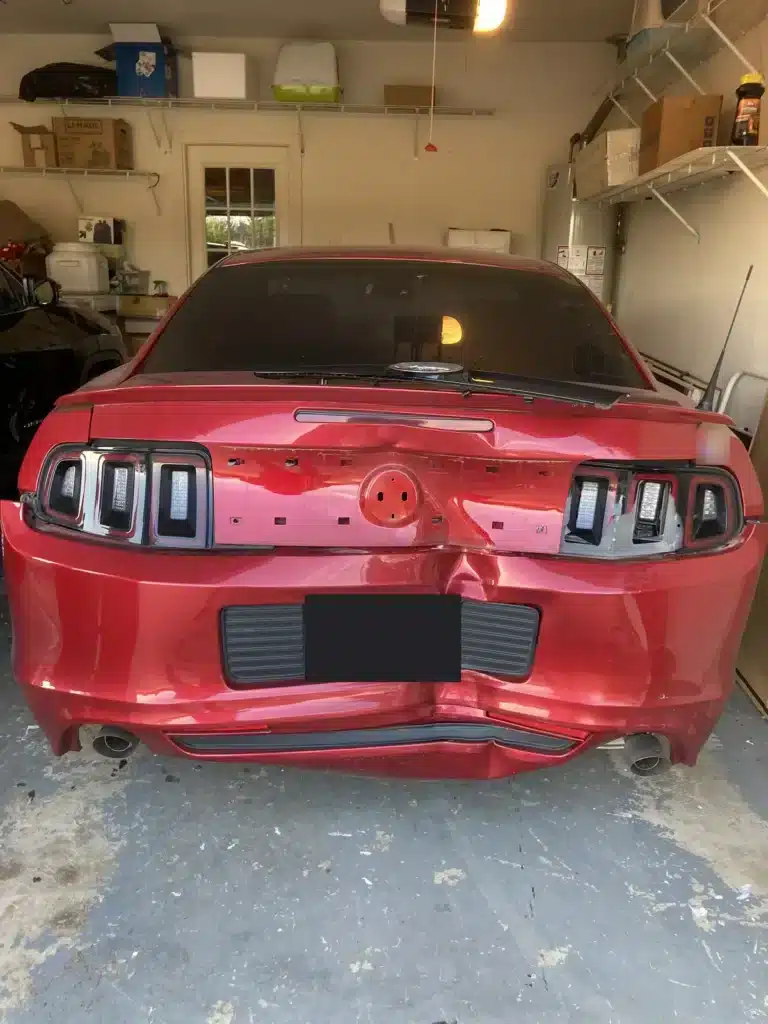
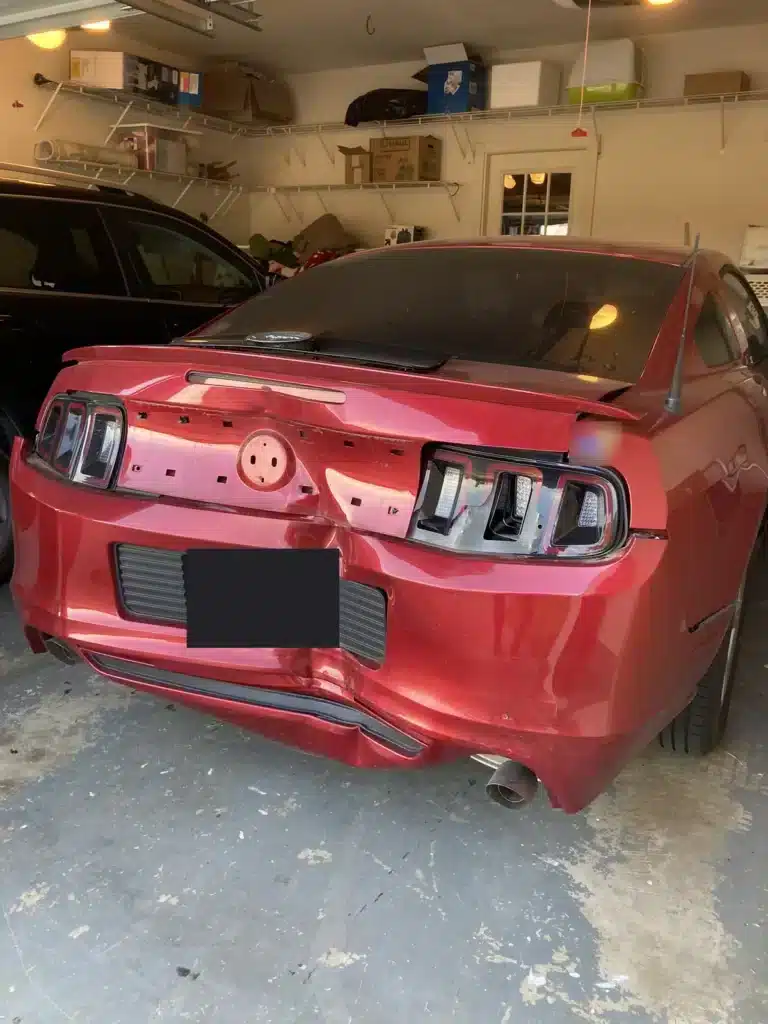
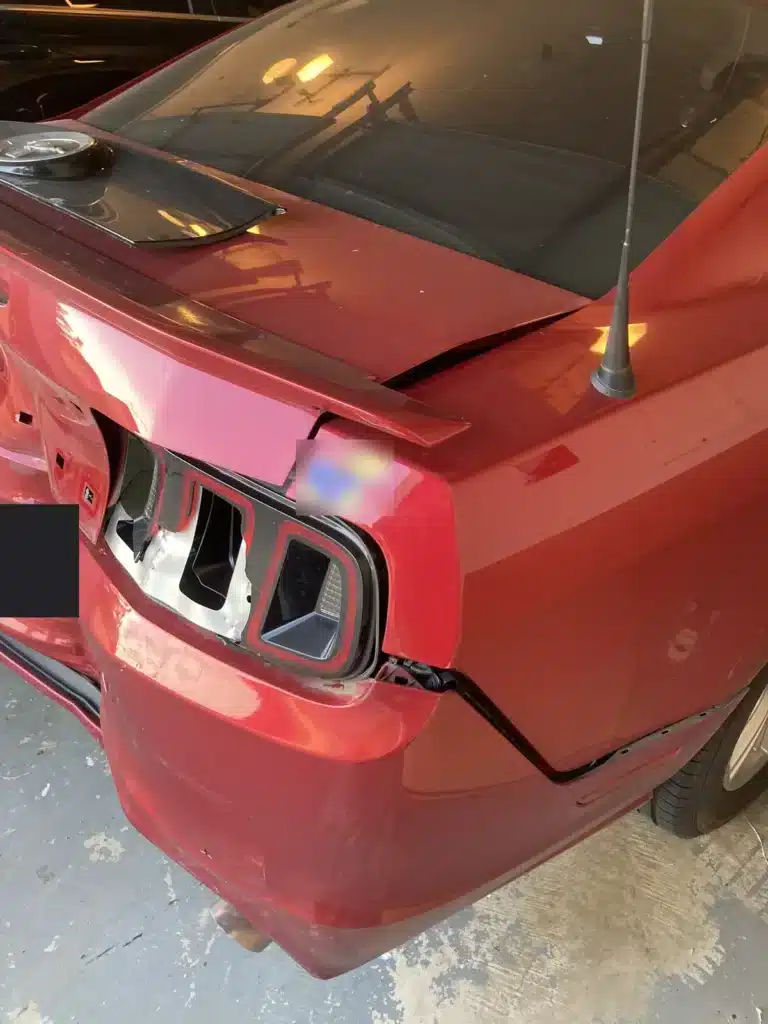
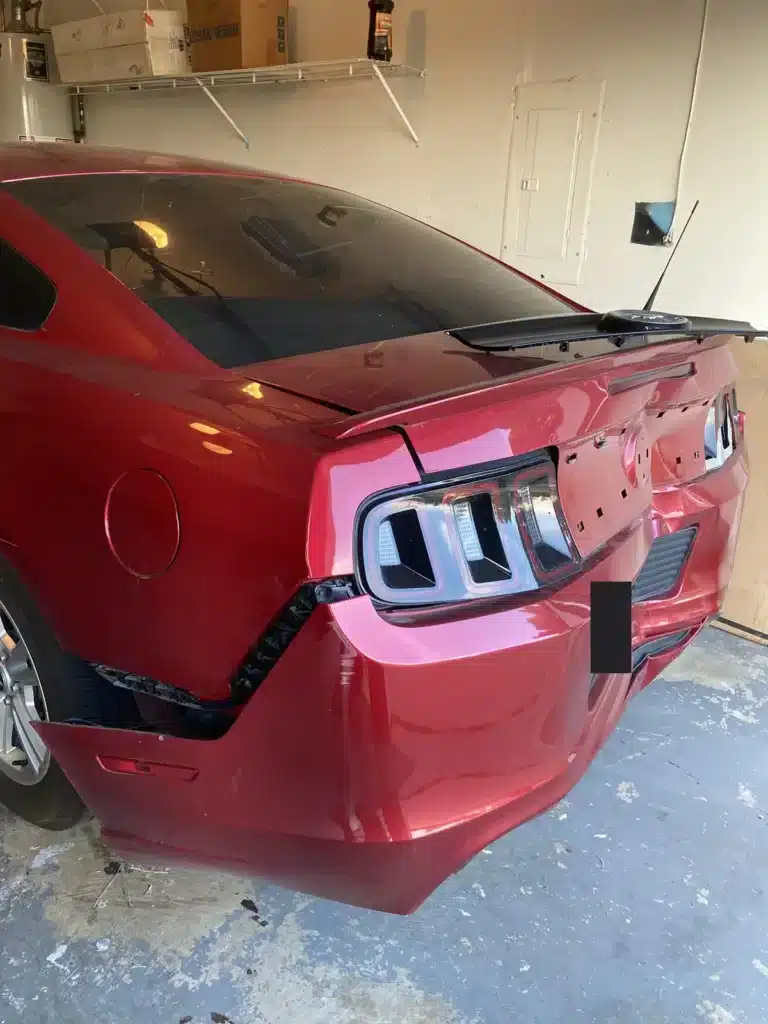
No officer wrote a report. What we had of the scene was the photos taken afterward. They show the trunk lid buckled, the rear bumper caved in at the center and pulled loose at the side, and a tail lamp shattered.
Three Problems the File Presented
The first problem was fault. Texas does not treat a rear end crash as proof of fault. In Pearson v. DeBoer, Inc., the court of appeals in Corpus Christi wrote, “The mere occurrence of a rear-end automobile accident is not of itself evidence of negligence.” With no report, no officer had recorded a finding on fault. We had our client’s account, the photos and the statute.
The second problem was the injuries. A concussion and neck injuries leave nothing to photograph. A buckled trunk lid shows a hard hit, but it says little about headaches or trouble sleeping. We knew the case for those injuries would rest on the care records and how they fit together.
The third problem was the policy. The vehicle was insured to a business, and a business policy can be larger than the Texas minimum. The insurer had not disclosed the limit when we had to write the demand, so we wrote it without knowing the ceiling.
Five Pieces of Proof Behind the Claim
- Our client’s account of being stopped
- The car was at a full stop when it was hit. With no report, this account was where fault started for us, and we checked every other record against it.
- The photos of the crushed rear
- The buckled trunk lid, the caved in bumper and the shattered tail lamp show a hit from directly behind. This mattered to us because the photos were what we had of the scene.
- The Texas following distance rule
- This mattered to us because it is the rule we measured the other driver against. Tex. Transp. Code § 545.062(a) says an operator following another vehicle must “maintain an assured clear distance between the two vehicles so that, considering the speed of the vehicles, traffic, and the conditions of the highway, the operator can safely stop without colliding with the preceding vehicle.”
- The commercial policy
- The vehicle was insured to a business, which can mean coverage well above the Texas floor of $30,000. That mattered to us because it shaped how we wrote the demand. Our company vehicle accident page explains how claims against work vehicles differ.
- About nine months of documented care
- This was chiropractic care, neck injections from an orthopedic group, X rays, MRI studies and a brain injury clinic that followed the concussion symptoms. We leaned on it because it showed the injuries being treated over time.
If you need the photos worth taking, our guide to crashes with no police report covers them. We also handled a $100,000 result when a driver was struck from behind and no report was made. Both are background and neither is evidence in this case.
How We Addressed Fault, the Injuries and the Policy
“When someone sits across from me after a serious crash, they are usually not asking for a speech about the law. They want to know what happens next.” I wrote that on my bio, and it is why this page gives you the plain version first. Here are the three issues, in the order we weighed them.
Fault when no officer wrote a report
What we expected the insurer to argue. That a rear end collision alone proves nothing about the following driver. We also expected an attempt to blame our client for stopping, a comparative negligence argument.
What we had. We read Pearson closely. It says a plaintiff must prove specific acts of negligence and proximate cause, and that breaching the following distance statute “does not create per se negligence,” “but instead creates the same duty of reasonable care as under the common law.” In our file, our client was at a complete stop in traffic and the damage sits on the rear of the car, which fits a hit from directly behind.
The choice in front of us. Rest fault on the statute alone, or tie it to our client’s account and the photos. A duty of reasonable care is proved by specific facts and not by the name of a statute, so we gave the second more weight.
What we did. We built the liability section of our demand on the stopped car, the photos and the following distance duty.
What we can’t share. How the insurer answered on fault. This page does not show it.
A concussion and neck injuries with nothing to see
What we expected the insurer to argue. That concussion and neck complaints are subjective, that symptoms can have other sources, and that treatment ran longer than the impact justified.
What we had. Our file showed about nine months of care that included chiropractic treatment, neck injections from an orthopedic group, X rays, MRI studies and a brain injury clinic that followed headaches and trouble sleeping. Several providers documenting care over that stretch gave a reviewer something to test. We did not treat it as proof of proximate cause on its own.
The choice in front of us. Summarize the treatment in a paragraph, or lay it out provider by provider. The second takes longer to write, but it lets a reader check each step of care against the injuries claimed.
What we did. We laid out the care provider by provider over about nine months in the demand.
What we can’t share. The records and what is in them. They stay confidential.
A commercial limit the insurer had not disclosed
What we expected the insurer to argue. That a demand sent before the limit was disclosed was premature, or that its terms were not ones a prudent insurer had to accept.
What we had. We worked from the Texas Supreme Court’s 1994 Garcia decision, which sets three conditions before the Stowers duty applies. The policy covers the claim, the demand stays within the limits, and a prudent insurer would accept the terms given how likely, and how large, a judgment over the limits could be. A demand meant to trigger that duty must offer a full release, and it can name the amount as “the policy limits,” as our Stowers guide explains.
The choice in front of us. Wait for the insurer to disclose the limit, or demand the limit by name before we knew it. Waiting leaves the claim without a deadline. A demand for the policy limits sets a response window whatever the number turns out to be.
What we did. We sent a Stowers demand for the insured’s policy limits, open for about two weeks.
What we can’t share. The limit itself, so this page cannot say whether $195,000 matched it.
$195,000 From the Business Vehicle’s Insurer
$195,000
Settled with the commercial insurer
The claim settled for $195,000, gross, with the insurer of the business vehicle. That amount is before attorney fees and case costs.
We don’t claim our demand alone produced that number, because many things go into any settlement. We also can’t say on this page whether the amount matched the policy limit.
Hit from behind by a work vehicle, with no report and a concussion nobody can see? Tell us how it happened and we will go through it with you.
Talk Through Your ClaimReading This Result With Care
- The $195,000 is gross. Fees and costs come out first, so our client’s own share was smaller.
- With no police report, we built the facts from our client, the photos and the care records.
- A commercial policy does not mean a larger result. It only means a larger policy may exist.
- This page is our own account of the result. It is not an independent review.
- Your claim will be worth what its own facts support, because each crash and each injury differs.
Where This Page Gets Its Facts
- The client’s photos of the car, with plates and identifying marks covered
- Our demand letter and the care records it summarized, which are not published
- Tex. Transp. Code § 545.062
- Pearson v. DeBoer, Inc., No. 13-01-827-CV (Tex. App. Corpus Christi 2003)
- Garcia (Texas Supreme Court, 1994), the Stowers prerequisites, as our guide explains them
- The Stowers rule from the 1929 Texas case, as our Stowers guide explains it
Attorney Review

Reviewed by: Josh Alexander, Founder and Managing Attorney
Published and reviewed on
More Claims We Have Resolved for Texans
- $15,000,000I-45 truck crash wrongful deathSettled in litigation
- $5,000,000Northlake forklift wrongful deathSettled in litigation
- $850,000Pasadena red light crashSettled in litigation
- $600,000Rockwall County five vehicle crashSettled in litigation
- $600,000Mesquite 18 wheeler crashTruck accident settlement
- $325,000Hood County commercial truck crashSettled in litigation
- $175,000Round Rock construction vehicle crashSettled before suit
- $150,000Odessa company pickup, two clientsCommercial policy, before suit
- $130,000Redwater head on, two limitsBoth limits, before suit
- $125,000Brownsville armored truck rear endSettled before suit
- $105,000Texas highway unsafe lane changeSettled before suit
- $105,000Three vehicle crash in DallasPolicy limits recovery
- $100,000Rear end, no police reportSettled before suit
- $95,000Midland company truck left turnSettled before suit
- $89,000San Antonio 3 car chain reactionSettled before suit
- $85,000Farmers Branch left turn, UIMSettled in litigation
- $82,500Plano company truck left turnSettled in litigation
- $80,000Jersey Village U turnSettled in litigation
- $60,000San Antonio rear end, UIMTwo policy limits, pre litigation
- $60,000Fort Worth trailer hitch rear endTwo limits, before suit
- $60,000DeSoto stop sign, broken wristTwo limits, before suit
- $60,000Hit walking her dog, UIM on footTwo limits, before suit
- $50,000Allen rear end crashPolicy limits settlement
- $50,000La Porte red light T boneFull policy limit, before suit
- $32,500Uninsured driver, UM and PIPUM limit plus PIP, before suit
- $30,000San Antonio rotator cuff tearPolicy limit, before suit
- $30,000Houston hit and run recoveryUM policy limits
- $30,000Richardson apartment exit crashPolicy limits, pre litigation
- $30,000Uvalde chain reaction, hit twicePolicy limit, before suit
- $30,000El Paso right turn, no UIMPolicy limit, before suit
- $30,000Grand Prairie red light, driver sideFull policy limit
11Contact
Rear Ended by
Rear Ended by
a Work Vehicle?
Tell us what happened, even if no officer came out. Your own account and photos are enough for us to start.
No fee unless we recover · Se habla español · Proudly Serving All of Texas